

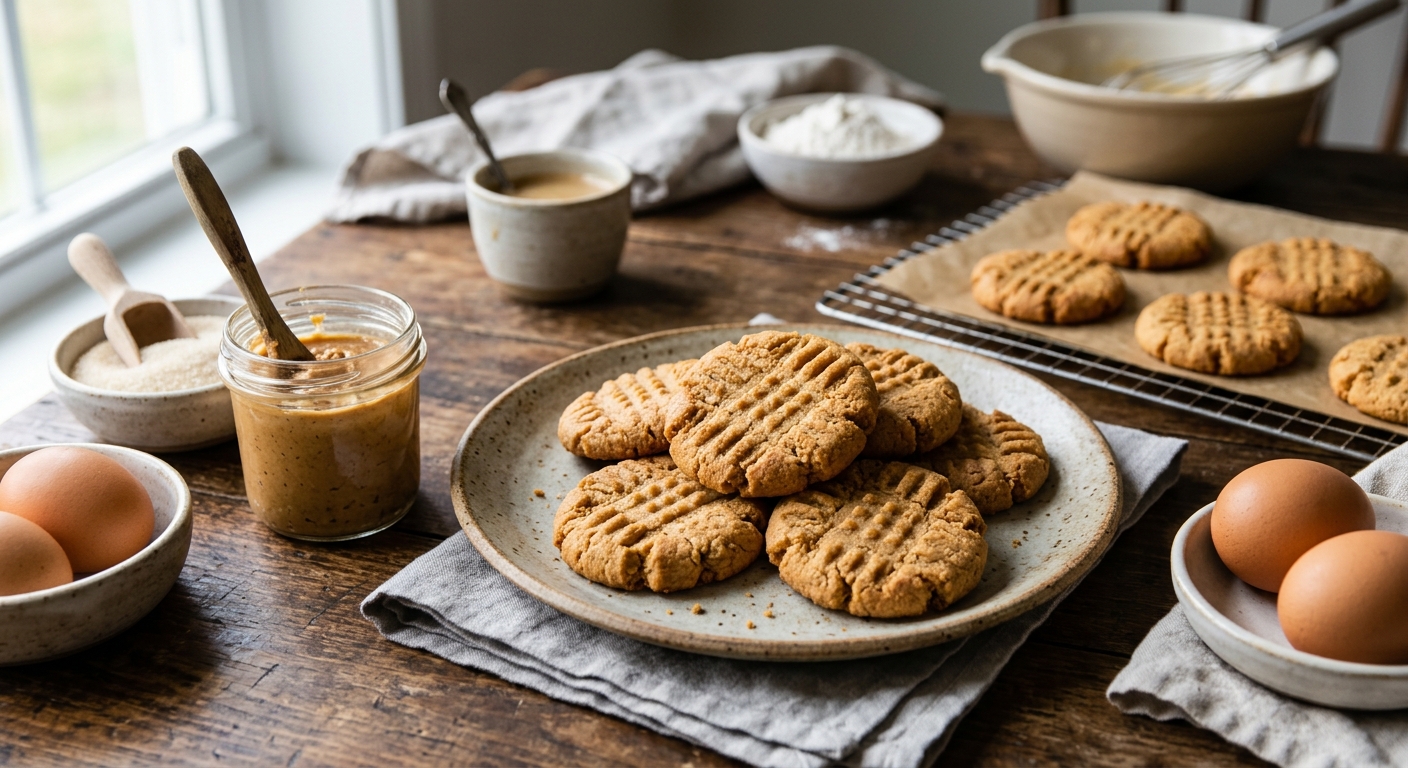
3-Ingredient Peanut Butter Cookies: The Only Recipe You’ll Ever Need
What if the best cookie you’ve ever baked required absolutely no flour, no butter, no chilling time, and barely any cleanup? That’s exactly what you get with this remarkably simple peanut butter cookie recipe. Using just three everyday pantry staples — peanut butter, sugar, and an egg — you can have warm, golden, chewy cookies on the table in under 30 minutes. Whether you’re a first-time baker or an experienced home cook who just doesn’t feel like pulling out the stand mixer, this recipe consistently delivers satisfying results with minimal effort.
These cookies have quietly become a household staple for good reason. They’re naturally gluten-free, kid-friendly, and endlessly adaptable. This guide walks you through every detail — from the science behind each ingredient, to baking tips, creative variations, nutritional highlights, proper storage, and honest answers to the most frequently asked questions.
Why This Three-Ingredient Formula Actually Works
At first glance, a cookie made without flour seems like a culinary impossibility. Yet these cookies hold their shape, develop golden edges, and stay soft in the center. The secret lies in how each of the three components functions at a chemical and structural level during baking.
The Role of Each Ingredient
- Peanut Butter: This is the backbone of the recipe. Peanut butter contributes fat, protein, moisture, and — most importantly — the body of the dough itself. Because it is dense and thick, it replaces what flour would normally provide in a traditional cookie. Commercial peanut butter brands (such as Skippy or Jif) work best due to their consistent emulsification and moisture levels. All-natural or separated peanut butter tends to produce inconsistent results because of variable oil content.
- Granulated Sugar: Beyond sweetness, sugar plays a structural role. It interacts with the fat in peanut butter to create texture and spread. Granulated white sugar is ideal because it dissolves evenly into the dough and helps produce slightly crispy edges while maintaining a chewy center. Brown sugar is a workable substitute and adds a subtle molasses depth. You can also reduce the quantity to suit your preference for sweetness.
- Egg: The egg is the binder that holds everything together. It provides structure, hydration, and the slight chew that distinguishes a cookie from a crumble. A room-temperature egg disperses more evenly throughout the dough, leading to a better texture. It’s best to use a single large egg for the standard batch.
Together, these three elements create a dough that is firm enough to roll into balls, press flat, and bake into a cookie that’s soft in the middle and gently crisp at the edges — exactly the texture a great peanut butter cookie should have.
Ingredients & Quantities at a Glance
| Ingredient | Amount | Notes |
|---|---|---|
| Peanut Butter (creamy or chunky) | 1 cup | Use a commercial brand for consistent results. Avoid all-natural varieties. |
| Granulated White Sugar | ¾ cup | Reduce to ½ cup for a less sweet cookie. Brown sugar also works. |
| Large Egg | 1 | Room temperature preferred. Acts as binder and provides structure. |
Yield: Approximately 20–24 cookies | Prep Time: 5 minutes | Bake Time: 10–12 minutes | Total Time: Under 30 minutes
Step-by-Step Baking Instructions
You won’t need a stand mixer, a sifter, or even multiple bowls. Here’s exactly how to bring these cookies to life:
- Preheat your oven to 350°F (177°C). Line one or two baking sheets with parchment paper or silicone baking mats. This prevents sticking and makes cleanup effortless.
- Mix the dough. Combine the peanut butter, sugar, and egg in a large mixing bowl. Stir with a rubber spatula or wooden spoon until the mixture is fully uniform and no streaks remain. The dough will be thick and slightly sticky — this is normal.
- Portion the dough. Use a tablespoon-sized cookie scoop or a regular tablespoon to measure out equal portions of dough. Roll each portion into a ball using your palms. Aim for roughly 1 to 1.5 tablespoons per cookie.
- Space them out. Place the dough balls at least 2 inches apart on the prepared baking sheet. These cookies spread slightly during baking, so give them room.
- Create the crosshatch pattern. Using the tines of a fork, press each dough ball down to about ¼-inch thickness. Press once vertically and once horizontally to create the signature grid pattern. This step also ensures even baking.
- Bake for 10–12 minutes, or until the cookies appear set in the center and the edges begin to look firm. The centers may look slightly underdone — that’s intentional. They firm up as they cool.
- Cool on the pan. Remove from the oven and allow the cookies to cool on the baking sheet for 15–20 minutes before transferring to a wire rack. These cookies are fragile when hot and will firm beautifully as they come to room temperature.
Pro Tip: Spray the inside of your measuring cup with non-stick cooking spray before scooping the peanut butter. It slides out cleanly with no waste and no frustration.
Flavor Variations & Creative Add-Ins
While the three-ingredient base is perfect on its own, it also serves as a wonderfully flexible canvas. Here are some ways to customize the recipe:
- Vanilla Extract: Add 1 teaspoon of pure vanilla extract to round out the peanut butter flavor and add warmth.
- Sea Salt Finish: Sprinkle a pinch of flaky sea salt on top of each cookie just before baking. The contrast of salty and sweet is addictive.
- Chocolate Chips: Fold in a handful of semi-sweet or dark chocolate chips into the dough before scooping. Chocolate and peanut butter are a timeless pairing.
- Cocoa Powder: Add 2 tablespoons of unsweetened cocoa powder to the dough for a double chocolate-peanut butter twist.
- Chunky Peanut Butter: Swap creamy for chunky peanut butter if you enjoy a bit of peanut texture in every bite. Both varieties bake up beautifully.
- Almond or Sunflower Seed Butter: For those with peanut allergies or who simply prefer variety, other nut butters and seed butters can be substituted in equal quantities.
- Brown Sugar Swap: Substituting brown sugar for white sugar yields a slightly denser, more caramel-flavored cookie with a hint of molasses depth.
Nutritional Snapshot: What’s Actually in Your Cookie
These flourless peanut butter cookies aren’t just easy — they come with a more nutritious profile than many traditional baked treats. Peanut butter is a powerhouse ingredient: according to USDA FoodData Central data, smooth peanut butter contains approximately 22.6% protein and 51.1% fat, of which a significant portion is heart-healthy unsaturated fat.
Peanuts and peanut-based products contain monounsaturated fatty acids (MUFAs) and polyunsaturated fatty acids (PUFAs), and research has associated peanut consumption with a reduced risk of cardiovascular disease and Type II diabetes. Peanut butter is also a notable source of dietary fiber, vitamin E, niacin, folate, magnesium, manganese, and phosphorus.
| Nutrient | Approximate Amount Per Cookie |
|---|---|
| Calories | ~140–160 kcal |
| Protein | ~4 g |
| Total Fat | ~8 g |
| Carbohydrates | ~14–15 g |
| Sugar | ~12–13 g |
| Fiber | ~1 g |
Values are approximate and vary based on peanut butter brand, sugar quantity, and cookie size. Data informed by USDA FoodData Central.
It’s worth noting that these cookies are calorie-dense and relatively high in sugar, so moderation is key. A serving of 1–2 cookies fits well as an occasional treat within a balanced diet. Choosing a peanut butter with fewer additives and reducing the sugar to ½ cup can make them a slightly lighter option.
Storage, Make-Ahead, and Freezing Guide
Room-Temperature Storage
Once fully cooled, store cookies in an airtight container at room temperature. They will stay soft and fresh for up to 4–5 days. Avoid storing them while still warm, as trapped steam can make them sticky.
Refrigerator Storage
If your kitchen runs warm, refrigerating cookies in an airtight container can extend freshness up to a week. Allow them to come to room temperature before serving for the best texture.
Freezing Baked Cookies
These cookies freeze exceptionally well. Place cooled cookies in a single layer in a freezer-safe zip bag or container, separated by parchment paper. They can be frozen for up to 2 months. Thaw at room temperature for 30–45 minutes before enjoying.
Freezing the Dough
You can also freeze the raw dough. Scoop, roll into balls, flatten into discs, and freeze on a lined baking sheet. Once solid, transfer to a zip freezer bag. When ready to bake, place frozen dough on a lined tray and let it rest at room temperature while the oven preheats, then bake as directed.
Who Should Make This Recipe?
- Beginner bakers: With no complicated techniques and a single bowl, this is widely regarded as one of the best “first recipes” for anyone new to baking.
- Parents and kids: Children love pressing the crosshatch pattern into each cookie ball — it’s a hands-on task that even toddlers enjoy with supervision.
- Gluten-intolerant individuals: Because there’s no flour involved, these cookies are naturally and completely gluten-free, making them a safe dessert option for those with celiac disease or gluten sensitivity.
- Busy households: When a craving hits and you have 30 minutes, this recipe delivers without requiring a grocery run.
- Anyone who loves peanut butter: The pure, unmasked flavor of peanut butter shines with no competing flavors from butter or flour. If you love peanut butter, you will adore these.
Frequently Asked Questions (FAQs)
Can I use natural or organic peanut butter?
It is generally not recommended for this recipe. Natural peanut butter tends to have separated oil and inconsistent thickness, which can cause the cookies to spread excessively, crumble, or fail to hold their shape. Commercial brands with stabilizers produce the most reliable and consistent results.
Are these cookies gluten-free?
Yes! Because this recipe contains no flour of any kind, the cookies are naturally gluten-free. If you’re baking for someone with celiac disease, ensure your peanut butter and sugar are certified gluten-free to avoid cross-contamination.
My cookies are too crumbly. What went wrong?
This usually happens when the peanut butter used has too little moisture or oil, or if the dough was over-mixed. Make sure you’re using a standard commercial peanut butter and that all ingredients are thoroughly combined before scooping.
Can I make these without sugar?
You can substitute with sugar alternatives like coconut sugar or a granulated sweetener such as Swerve or monk fruit sweetener. Keep in mind that these swaps may affect the texture and spread of the cookies, so start with a smaller quantity and adjust to taste.
Why do my cookies seem underdone when I take them out?
This is intentional and correct. Peanut butter cookies continue to set and firm up as they cool on the baking sheet. Removing them when the edges are firm but the centers still look soft will result in the perfect chewy texture once cooled completely.
Can I double the recipe?
Absolutely. Simply double all three ingredients. The ratio is easy to scale: 1 cup peanut butter : ¾ cup sugar : 1 egg per batch, or adjust sugar to your preference. When doubling, bake in multiple batches for even heat distribution.
Can I add a flax egg to make these vegan?
Yes, a flax egg (1 tablespoon ground flaxseed + 3 tablespoons water, rested 5 minutes) can replace the chicken egg in this recipe. The texture will be slightly different — a bit softer and more fragile — but the result is still a tasty, plant-based peanut butter cookie.
Final Thoughts: Big Flavor, Minimal Effort
There’s something deeply satisfying about a recipe that proves less is truly more. These 3-ingredient peanut butter cookies cut through the noise of complicated baking techniques and bring the focus back to what matters most — bold, honest flavor and a texture that feels like it took way more effort than it did. They’re proof that great food doesn’t require a long ingredient list or hours in the kitchen.
Whether you’re baking them on a lazy Sunday afternoon, whipping up a quick treat for a gathering, or introducing a child to the joy of baking for the first time, this recipe will never let you down. Bookmark it, memorize it, and share it — because once you’ve made these, you’ll keep coming back to this simple, brilliant formula again and again.
References
- FoodData Central — Peanut Butter, Smooth (USDA Commodity) — U.S. Department of Agriculture, Agricultural Research Service. 2024. https://fdc.nal.usda.gov/food-details/174294/nutrients
- Dough Rheology, Physicochemical and Sensory Qualities of Muffins Made From Wheat–Partially Defatted Peanut Composite Flour — National Institutes of Health / PubMed Central. 2025. https://www.ncbi.nlm.nih.gov/pmc/articles/PMC12221554/
- Peanut Butter Nutrition Facts — USDA Foods Vendor Labels (Smooth, 2 Tbsp Serving) — U.S. Department of Agriculture, Food and Nutrition Service. 2015. https://fns-prod.azureedge.us/sites/default/files/resource-files/100396.pdf
- 3-Ingredient Peanut Butter Cookies Recipe — The Kitchn. 2024-11-08. https://www.thekitchn.com/3-ingredient-peanut-butter-cookies-recipe-23587590
