
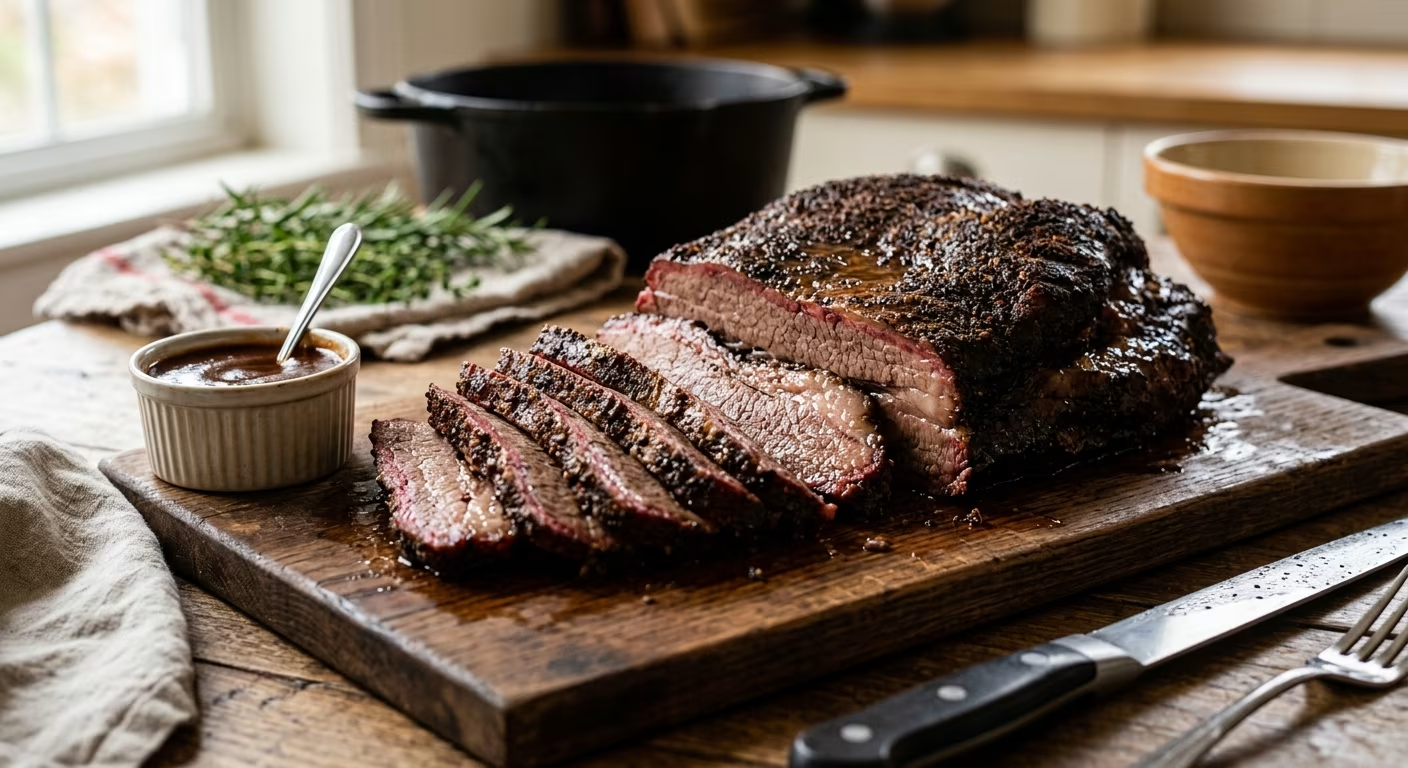
By a seasoned home cook and BBQ enthusiast with 20+ years in the kitchen
Let me be straight with you brisket used to scare me. I thought it was a cut reserved for Texas pitmasters with fancy smokers and 14-hour patience. Then one Sunday afternoon, I tried it in my home oven, and I never looked back. Today I’m sharing everything I know so your very first brisket (or your tenth!) comes out fall-apart tender, rich, and deeply satisfying.
The good news? You don’t need a smoker, fancy equipment, or a culinary degree. Total prep is all of 10 minutes, then the oven or slow cooker does the rest of the work in this easy-as-it-gets juicy brisket recipe.
🥩 What Is Beef Brisket?
Before we dive into cooking, let’s get to know our star ingredient. Brisket comes from the breast area or pectoral muscles of a cow, so it’s worked pretty hard and made up of lots of tough connective tissues that can only be dissolved by slow cooking.
The brisket is made up of two different muscles or parts: the point and the flat. The point cut is more elongated and is the fattier part of the brisket; the flat cut is a bit leaner and is more square/rectangular looking, allowing it to lay flat.
I personally prefer the flat cut for oven roasting it slices beautifully and feeds a crowd. I personally use a first cut or flat cut of brisket as I think it’s the best for roasting and slicing.
💡 Pro Tip: While you can use lean or fatty cuts of brisket, the fattier ones usually yield more flavorful and juicy brisket.
📋 Ingredients You’ll Need
This recipe uses simple pantry staples no exotic ingredients required. Here’s what I keep on hand:
| Ingredient | Quantity (for 3 4 lb brisket) | Purpose |
|---|---|---|
| Beef brisket (flat cut) | 3 4 lbs | The star of the show |
| Onion soup mix (or onion powder + garlic powder + salt) | 1 packet / 2 tbsp | Seasoning base |
| BBQ sauce or ketchup | 1 cup | Adds tang, sweetness, moisture |
| Worcestershire sauce | 2 tbsp | Depth of flavor |
| Brown sugar | 2 tbsp | Caramelization |
| Beef broth (optional) | ½ cup | Extra moisture |
| Salt, pepper, garlic powder, paprika | To taste | Dry rub |
🍽️ Step-by-Step: How to Cook the Easiest Beef Brisket
Step 1 Choose and Prep Your Brisket
Choose a beef brisket with a nice fat cap and good marbling. You want the sides of the brisket to not be any smaller than 1 inch at any part. You also want to make sure it has good coloring throughout the cut of meat.
Once home, pat it dry with paper towels. This helps the seasoning stick and promotes browning. Then mix your dry rub. A simple brisket rub combines salt, celery salt, onion powder, garlic powder, and sugar. Coat the brisket generously on all sides.
Step 2 Season and Marinate (Don’t Skip This!)
If time allows, marinate your brisket overnight in the refrigerator. After you have prepped the whole brisket, let it marinate overnight. The next morning, pull it out and let it come to room temperature while the oven preheats. This single step makes a huge difference in flavor depth trust me on this one.
Step 3 Set Up for Oven Roasting
Preheat your oven. Set the oven no lower than 325 degrees F. Place your brisket fat-side up in a roasting pan or baking dish. In the oven you should cook your beef brisket fat side up. When oven roasting the brisket, fat side up helps keep the top of the meat nice and tender with a slightly crunchy crust on the top.
Pour your sauce mixture (BBQ sauce, Worcestershire, broth) over and around the brisket. Now seal it tight. You can either wrap your brisket in foil or cover it with a lid when cooking in the oven. This traps the moisture and ensures your meat is juicy and tender.
⚠️ Common Mistake: Briskets turn out tough if there isn’t enough moisture, which is why it’s so important to cover your brisket before roasting in the oven.
Step 4 Low and Slow Is the Secret
Now comes the waiting game and it’s worth every minute. This large cut of meat requires long, slow cooking to break down the fibers for a succulent, melt-in-your-mouth result but it’s totally worth it.
At 325°F, plan on roughly 1 hour per pound. A 3-lb brisket takes about 3 hours; a 4-lb will need closer to 4 hours. Cooking brisket at 350 degrees Fahrenheit is low enough for the brisket to become soft and tender without drying out but high enough that it won’t take all day to cook.
Step 5 Check the Internal Temperature
This is where a meat thermometer becomes your best friend. Brisket is safe to eat when it reaches an internal temperature of 145 degrees F, as measured with a food thermometer. Allow the brisket to rest at that temperature for three minutes before serving.
However, for truly tender, pull-apart brisket, you want to go higher. Even though the legal safe temp is 145°F (with a 3-minute rest), that only ensures the meat is microbiologically safe. The brisket’s connective tissue (type I collagen) does not begin to dissolve until approximately 180°F, and the full gelatin conversion occurs between 190°F 210°F.
In general, it’s agreed that brisket should be cooked to no less than 190°F (88°C) and no more than 210°F (99°C). The sweet spot is right at 204°F (95°C) for the most succulent brisket.
🌡️ Brisket Temperature Quick-Reference Chart
| Internal Temp | Result | What to Do |
|---|---|---|
| 145°F | Food-safe (USDA minimum) but tough | Keep cooking! |
| 170 180°F | Getting there collagen starting to break down | Stay patient |
| 190 205°F ✅ | Tender, juicy, perfect | Rest and slice! |
| 210°F+ | Risk of drying out | Remove immediately |
✂️ Step 6 Rest, Then Slice Against the Grain
Don’t cut into your brisket right out of the oven! Transfer your brisket to a cutting board or serving tray and cover it loosely with a piece of foil. Let it rest for 15 30 minutes before you slice it against the grain.
During cooking, juices are pushed toward the surface. Resting allows those juices to redistribute throughout the meat. Cut too early and all those juices run out onto your cutting board instead of staying in the meat.
Always slice across the grain (perpendicular to the muscle fibers). This shortens the fibers and makes every bite melt in your mouth. If you’ve never done it before, look for the direction the lines run across the meat then cut 90° against them.
🔄 Slow Cooker Option (Hands-Off Method)
Don’t have 4 hours to babysit an oven? The slow cooker is your best friend. Cover and cook until the brisket is very tender, 6 to 8 hours on the LOW setting. Set it in the morning and come home to dinner. Beef brisket slow cooked until tender, then finished in the oven to get that gorgeous caramelisation is one of my all-time favorite techniques.
Making brisket a day ahead, letting it chill overnight, scraping away the hardened fat with a spoon, then reheating gently in a covered dish in the oven makes for an incredibly stress-free dinner party centerpiece.
🍴 What to Serve With Beef Brisket
Brisket is a crowd-pleaser that pairs beautifully with classic comfort sides. Here are my personal favorites:
- 🥔 Creamy mashed potatoes soaks up the pan juices perfectly
- 🌽 Cornbread a Southern BBQ classic
- 🥗 Coleslaw the cool crunch balances the rich meat
- 🫘 Baked beans smoky and hearty
- 🥦 Roasted vegetables you can even cook them in the same pan!
One of the best ways to serve leftover brisket is to make delicious sandwiches the next day with a slice of your favorite cheese and a slather of mustard. My kids absolutely love brisket tacos the next day just warm, shred, and pile into tortillas.
🧊 Storing and Reheating Leftovers
One of the best things about brisket is it stores and reheats beautifully. Refrigerate leftovers within two hours of cooking to prevent harmful bacteria from multiplying.
Allow the leftover barbecue brisket to cool completely before transferring it to a freezer-safe container or wrapping it tightly in freezer-safe packaging. Properly stored, the brisket can last in the freezer for up to 2 3 months. Thaw overnight in the refrigerator before reheating and serving.
To reheat: Heat the oven to 300°F. Scrape off and discard the hardened fat. Transfer the brisket and all its juices to a baking dish and cover tightly with a lid or two layers of aluminum foil. When reheating brisket before serving, remember to reheat to 165°F.
❓ FAQs Your Brisket Questions Answered
Q: Can I make brisket ahead of time?
One reason brisket is an excellent choice for entertaining is that it can be prepared in advance. In fact, you must prepare it in advance and cook it slowly to make it tender. Also, because it can be cooked ahead of time and it reheats well, brisket is a great cut of meat to serve to large groups.
Q: My brisket came out tough what went wrong?
Brisket that isn’t tender is tough and chewy but if you pull it out too early, don’t worry, just keep cooking! Tough brisket is almost always a result of pulling it from the oven too soon. Put it back in, covered, for another 30 60 minutes and check again.
Q: How do I know if brisket is truly done without a thermometer?
Internal temperature tells you the meat is safe, but tenderness tells you it’s ready. When your probe or meat thermometer slides into the flat and point with no resistance, like room-temperature butter, that’s your signal.
Q: How much brisket do I need per person?
A good rule of thumb: plan on about ½ pound of raw brisket per person (it shrinks significantly during cooking). For 6 people, buy a 3 4 lb brisket. A 10-pound brisket will feed 15 people or so with some leftovers.
✅ Expert Tips for the Best Brisket Every Time
- ✔️ Marinate overnight even 4 hours makes a difference in flavor
- ✔️ Always cover tightly foil or a lid locks in steam and moisture
- ✔️ Go low and slow rushing with high heat makes brisket chewy
- ✔️ Use a meat thermometer aim for 190 205°F internal temperature
- ✔️ Rest before slicing at least 15 30 minutes, no shortcuts
- ✔️ Slice against the grain this single habit transforms the texture
- ✔️ Cook a day ahead brisket is actually better the next day!
🏁 Final Thoughts
I’ve cooked brisket for Sunday family dinners, holiday gatherings, and even a neighborhood potluck where I made 10 pounds for 20 people. Every single time, the responses were the same people thought I’d spent the entire day slaving away. The truth? I prepped it in 10 minutes the night before and let the oven do all the heavy lifting.
Brisket is not scary. It just needs time, moisture, and a little patience. Follow these steps, trust your thermometer, and you’ll be rewarded with one of the most satisfying meals you’ve ever put on the table.
Give it a try this weekend, and let me know how it goes in the comments below! 🍖
References
- USDA Food Safety and Inspection Service “From Fridge to Table: Preparing Brisket Safely for Passover.” U.S. Department of Agriculture. Published March 26, 2026.
- USDA Food Safety and Inspection Service “Spring for Food Safety.” U.S. Department of Agriculture. (Includes brisket safe cooking temperature guidelines at 145°F internal and reheating to 165°F.)
- RecipeTin Eats “Slow Cooker Beef Brisket with BBQ Sauce.” RecipeTin Eats. Updated April 28, 2025.
- The Kitchn “Slow Cooker Beef Brisket and Onions Recipe (So Tender!).” The Kitchn. Updated September 3, 2025.
- House of Nash Eats “Easy Oven Roasted BBQ Beef Brisket.” House of Nash Eats. Updated February 3, 2025.