
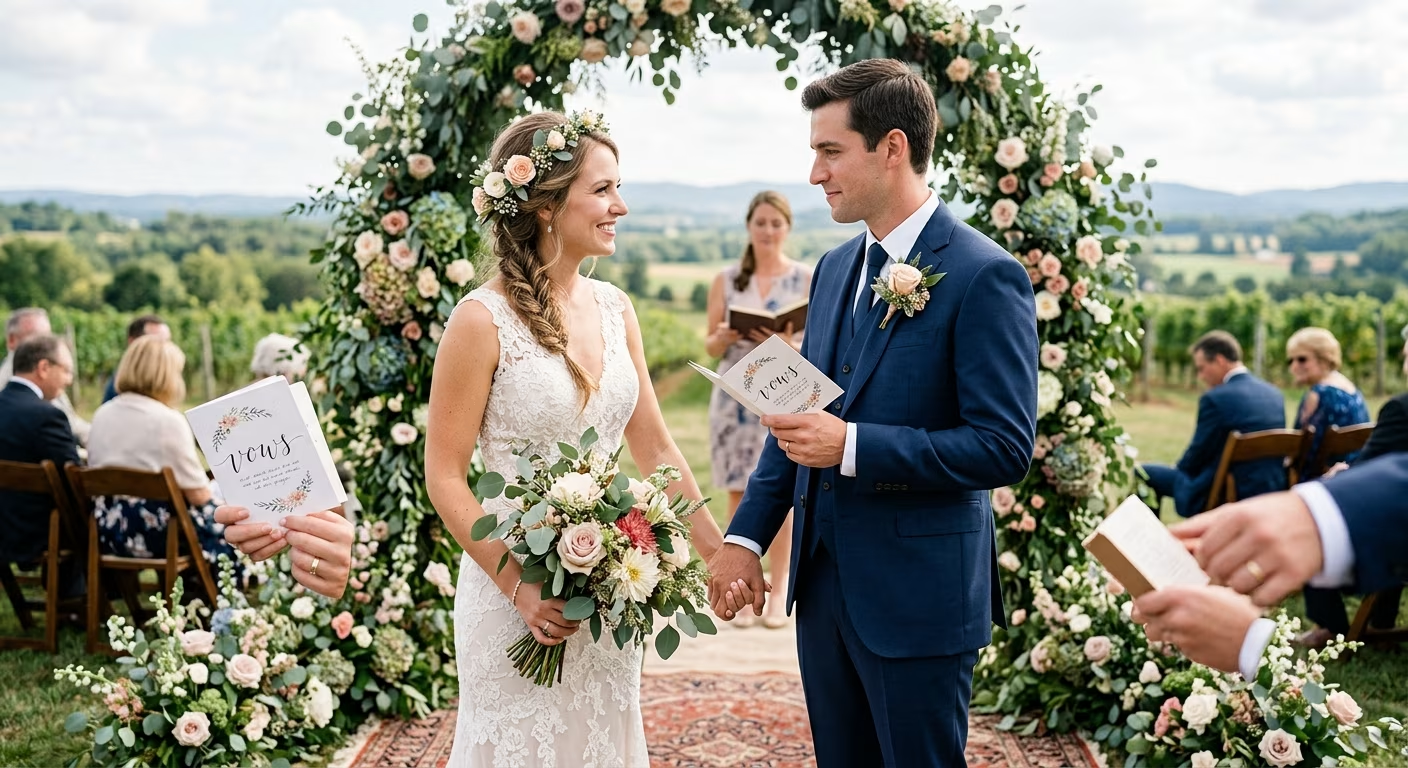
The moment you stand in front of your partner, holding their hands, the world narrows to just the two of you. And then you open your mouth and the words either come naturally, or you freeze. I’ve seen both happen. As someone who has spent years helping couples plan and officiate ceremonies, I can tell you this with complete confidence: the vows are the most powerful moment of any wedding. Not the dress, not the flowers, not even the cake.
This guide is here to make sure you don’t freeze. Whether you want to keep it traditional, go fully personal, add a touch of humor, or mix styles I’ve got you covered with real examples, practical tips, and a clear path forward.
Why Wedding Vows Matter More Than You Think
Wedding vows are more than ceremonial phrases. They are personal testaments of love and commitment, representing who you are as a couple. I’ve officiated ceremonies where the couple read straight from the Book of Common Prayer, and I’ve witnessed vows that were improvised, tearful, hilarious, and deeply unique. Both moved every single person in the room because the couple meant every word.
What separates forgettable vows from unforgettable ones isn’t poetic language. It’s specificity and sincerity. A groom once said to his bride: “There is a point where the idea of home changes from a place to a person. You are home to me.” The room went completely still. It worked because those words belonged to him and no one else.
“Your vows are meant for your team of two, so don’t alter your personality to be more serious or poetic than you are. The best vows are the most real ones!” Wedding officiant Daniela VillaRamos of Once Upon a Vow, via The Knot
The 6 Main Styles of Wedding Vows (At a Glance)
Before you write a single word, decide what style fits you best. Here’s a quick breakdown:
| Vow Style | Best For | Tone |
|---|---|---|
| Traditional | Classic, faith-based, or formal ceremonies | Solemn, timeless |
| Modern / Personal | Couples who want to tell their story | Warm, narrative, emotional |
| Religious | Faith-centered ceremonies | Reverent, spiritual |
| Funny / Lighthearted | Playful couples, casual settings | Humorous, fun, relaxed |
| Short & Sweet | Intimate elopements, minimalists | Concise, powerful |
| Hybrid | Couples who want the best of both worlds | Personal + structured |
You don’t have to pick just one. Many couples blend styles to find what feels authentic.
Traditional Wedding Vow Examples
Traditional vows carry the weight of generations. They’re elegant, reliable, and when delivered slowly, with eye contact still bring an entire room to tears. Don’t underestimate them.
Classic Traditional Vow:
“I, [Name], take you, [Partner’s Name], to be my lawfully wedded [wife/husband], to have and to hold, from this day forward, for better, for worse, for richer, for poorer, in sickness and in health, until death do us part.”
Simple Traditional Vow:
“I promise to be faithful to you, in good times and in bad, in sickness and in health. I will love you and honor you all the days of my life.”
A quick tip from years of experience: the couples who slow down and mean each individual word turn traditional vows into something just as powerful as any custom promise. Speed kills the moment. Pause. Breathe. Look at your partner.
Modern Wedding Vow Examples
Modern vows let you tell your actual story. They reflect your real partnership equal, evolving, and uniquely yours. Here are some examples to inspire you:
Modern Romantic Vow:
“I believe in you, the person you will grow to be, and the couple we will be together. With my whole heart, I take you as my partner, acknowledging and accepting your faults and strengths, as you do mine. I promise to be faithful and supportive and to always make our family’s love and happiness my priority. I vow to have the patience that love demands, to speak when words are needed and to share in the silence when they are not.”
Modern Equal-Partnership Vow:
“I vow to be your biggest supporter and your honest mirror. To celebrate your wins and hold you through your losses. To split the household chores, share the mental load, and build a truly equal partnership. I promise to love you fiercely and to choose you intentionally, every single day.”
Notice how these vows mention real, daily life? That’s the secret. Vows that reference actual promises not just sentiments are the ones people remember.
Funny & Lighthearted Wedding Vow Examples
Humor in vows isn’t unprofessional it’s honest. The best funny vows are funny because they’re true. Shared jokes and playful references make vows feel incredibly personal while still remaining deeply romantic.
Example 1:
“I vow to always let you have the last fry and to never steal your side of the bed unless it’s too cold on my side. I promise to love you even when you’re hangry, and to always share my snacks with you.”
Example 2:
“I promise to love you when you’re snoring at 3 AM, when you’re stressed about work, and when you insist that pineapple belongs on pizza (it doesn’t). I promise to be your biggest fan, your go-to person, and the one who always saves you the last piece of dessert.”
Pro tip: Keep humor in check. Stay clear of anything that might embarrass your partner or reference sensitive subjects. The goal is laughter together, not at anyone’s expense.
Short & Sweet Wedding Vow Examples
Sometimes less is more. Short vows are especially powerful at intimate elopements or when emotions run high and you need every word to land hard.
Example 1:
“I promise to laugh with you in times of joy and comfort you in times of sorrow. I will share in your dreams and support you as you strive to achieve your goals. I will listen and learn from you, and speak to you with encouragement.”
Example 2:
“On this day, I give you my heart. I promise to encourage your kindness and optimism, because they are what make you unique. I will nurture your dreams and support your goals, because now, they are mine as well.”
Target 150 to 300 words that’s roughly one to two minutes of speaking. Enough to say something real, short enough to survive your own emotions.
The Hybrid Approach: Best of Both Worlds
Here’s something I recommend to many couples: the hybrid vow. It solves one of the most common vow problems one partner writes a five-minute love letter while the other jots three sentences in the car on the way to the venue.
The format is simple:
- Start with 2 3 sentences of something personal your story, a specific memory, a real promise.
- End with a shared traditional commitment spoken together something like the classic “to have and to hold” phrasing.
This keeps personal sections naturally short, and the traditional section ensures both people make the same core promises. No one feels underprepared. Guests get the personal touch AND the structure they recognize from weddings past.
How to Write Your Own Wedding Vows: A Step-by-Step Process
I always tell couples: don’t start with a blank page and pressure yourself to write something perfect. Start with questions instead.
Step 1: Brainstorm First, Write Later
Ask yourself:
- When did I know this was the person I wanted to marry?
- What’s one small, everyday thing they do that makes my life better?
- What am I actually promising not in theory, but in real daily life?
- What do I never want to live without about them?
Write the ugliest first draft possible. Too long, too raw, too honest that’s perfect. Polish comes later. The raw material is everything. Then read it out loud. Every phrase that sounds borrowed from someone else’s wedding, every line you’d never actually say to this person in real life cut it. What’s left is your vow.
Step 2: Start Early
Start writing your wedding vows at least a month before the big day. Inspiration often comes in waves, and giving yourself time allows for thoughtful reflection and multiple edits. The last thing you want is to be scrambling the night before your wedding.
Step 3: Coordinate With Your Partner
Talk to your partner before you write a single word. Agree on tone (serious, funny, mixed?), length, and format. You don’t need to match exactly, but you want to be in the same ballpark one person shouldn’t have 30-second vows while the other speaks for 10 minutes. Deciding together whether your vows will be serious, lighthearted, or a mix of both keeps them cohesive during the ceremony.
Step 4: Structure Your Vows
A simple structure that works every time:
- Opening: A warm greeting, a nickname, or the moment you knew.
- The love: What you admire, what you are grateful for, what makes them uniquely them.
- The promises: Specific, real, actionable commitments not just “I’ll love you forever” but how.
- The close: A forward-looking statement about the life you’re building together.
Step 5: Practice Out Loud
Vows that read well on paper might feel awkward when spoken. Always practice reading your vows aloud to make sure they sound natural and flow well. You will probably cry pause, breathe, look at your partner, keep going. Nobody is judging you. And please: read from a card or small notebook, not your phone (it photographs terribly and risks a dead battery).
Do You Have to Write Your Own Vows?
Absolutely not. Traditional or repeat-after-me vows are meaningful, time-tested, and beautiful. Personal vows are one option, not a requirement. The best vows are whichever ones feel true to who you are.
If your ceremony is religious, check with your officiant first. Many houses of worship require you to say all or part of the traditional vows of that practice sometimes this means adding personal vows on top, sometimes it doesn’t.
And if you’re nervous about public speaking, consider “I Do” vows where the officiant asks a series of questions and you simply answer “I do.” Given the nerves of the big day, this format means you don’t have to worry about repeating something back incorrectly or blanking mid-sentence.
Quick-Reference Tips at a Glance
| Tip | Why It Matters |
|---|---|
| Start at least 4 weeks out | Gives you time to revise and refine without stress |
| Keep it 150 300 words | Long enough to be meaningful, short enough to deliver under emotion |
| Coordinate tone with your partner | Avoids awkward mismatches on the day |
| Use specific details, not generic lines | Specificity is what makes vows unforgettable |
| Practice out loud multiple times | Reveals awkward phrases and helps with pacing |
| Bring a written copy | Nerves erase memory always read from paper or a vow book |
| Share with your officiant in advance | They can flag timing or pacing issues before the big day |
Final Thought
You don’t need to be a writer to write great wedding vows. You just need to be honest. The most sacred and tender of all human relationships deserves words that feel true, even if they’re not perfect or polished. Whether that’s an epic love letter or three quiet sentences what matters is that you mean them.
Write from the place where you know them best. The rest takes care of itself.
References
- “Got Writer’s Block? These Vow Examples From Real Couples Are the Inspo You Need” The Knot, updated July 2025
- “How to Write Your Own Wedding Vows: Expert Tips & FAQs” The Knot, updated February 2024
- “Repeat-After-Me Wedding Vows vs ‘I Do’: Traditional & Modern Examples” Provenance, 2024
- “How to Write Wedding Vows: Examples, Templates & Writing Tips” Provenance, 2024
- “Wedding Vows: How To Write Them (Plus Examples)” A Practical Wedding, updated April 2021
- “Wedding Vows Examples” EventLive, February 2026