
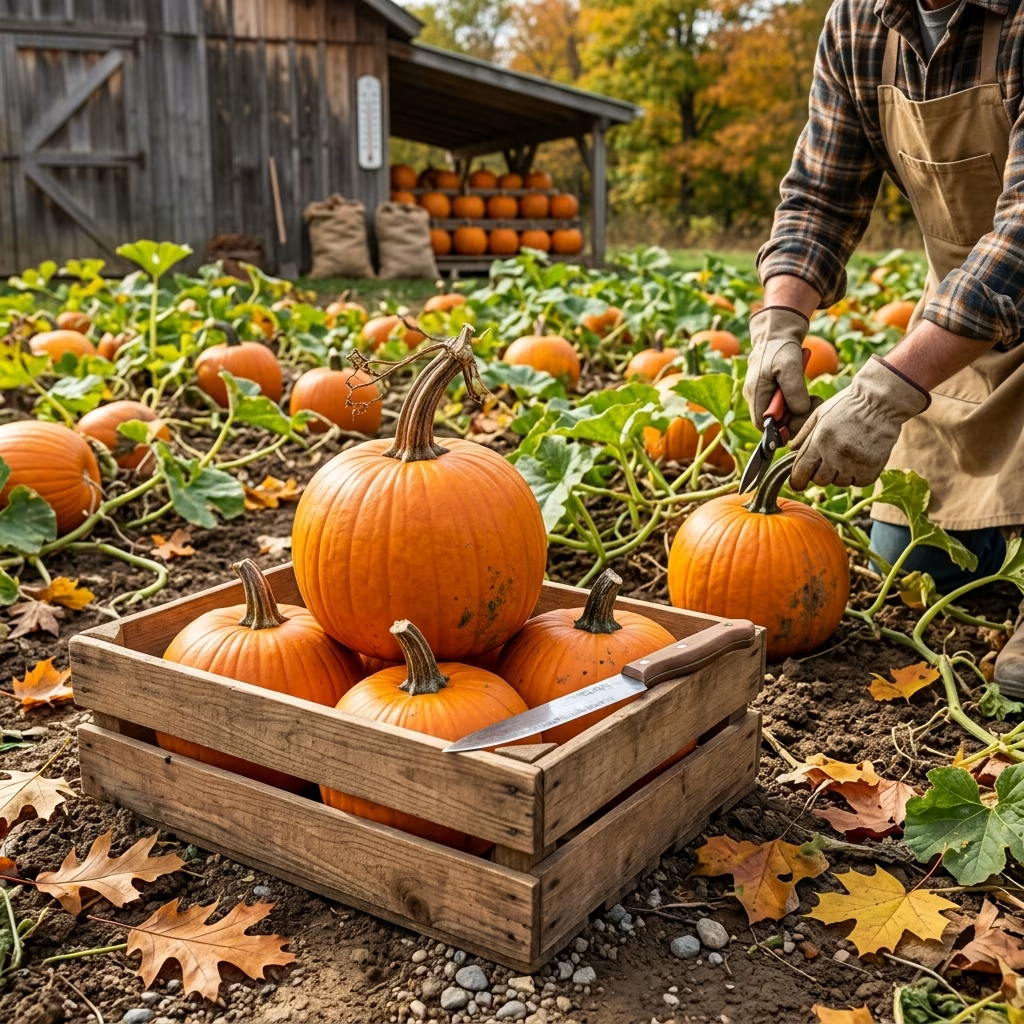
I’ll be honest the first time I grew pumpkins, I picked them too early. They looked big, they looked orange-ish, and I was excited. Two weeks later, they were soft, wrinkled, and on their way to the compost bin. That mistake taught me more about pumpkin harvesting than any book ever could. Now, after years of growing and harvesting pumpkins, I want to save you from making the same mistake.
Whether you’re growing pumpkins for carving, cooking, or décor knowing exactly when and how to harvest them makes all the difference. Get it right, and your pumpkins can last for months. Get it wrong, and you’ll be back at the pumpkin patch buying someone else’s.
Let’s walk through everything you need to know step by step, from vine to storage.
⏱️ When Are Pumpkins Ready to Harvest? (Timing Basics)
The first thing I always tell newer gardeners: don’t rely on size alone. A big pumpkin is not necessarily a ready pumpkin.
Most pumpkins take 90 to 120 days from planting to harvest. Your seed packet is your best friend here it will tell you the “days to maturity” for your specific variety. Mark your planting date on a calendar and start watching closely as you approach that window.
“Harvest on a dry day after the plants have died back and the skins are hard.” The Old Farmer’s Almanac
Days to Maturity by Pumpkin Type
| Pumpkin Type | Examples | Days to Maturity |
|---|---|---|
| Miniature / Decorative | Jack Be Little, Baby Boo, Autumn Gold | 75 90 days |
| Standard / Jack-o’-Lantern | Connecticut Field, Howden, Magic Lantern | 90 120 days |
| Pie / Cooking | Sugar Pie, Baby Bear, Hijinks | 90 110 days |
| Giant Varieties | Dill’s Atlantic Giant, Big Max, Big Moon | 120 150 days |
Most home gardeners aim for September or October harvest, depending on their growing zone and when they planted. If you want pumpkins ready for Halloween, count backward from late October and plant accordingly.
🔍 5 Signs Your Pumpkin Is Ready to Pick
I’ve learned to trust these signs far more than any calendar. Use all of them together not just one.
1. The Rind Is Hard (The Fingernail Test)
This is the most reliable test. Press your fingernail firmly into the skin of the pumpkin. If it dents or pierces easily, the pumpkin isn’t ready. A mature rind will resist pressure almost like pressing your nail into a baseball. This hardening happens as the outer skin (the exocarp) lignifies, forming a protective barrier that locks in flavor and keeps out rot.
Pro tip: Do the test on the underside or back of the pumpkin so any small mark won’t show if you’re displaying it.
2. Deep, Uniform Color
For classic orange pumpkins, the skin should be a deep, solid, consistent orange no green patches. For other varieties (white, blue-gray, red), the same rule applies: you want full, uniform color across the entire fruit. Always check the seed packet photo for what “mature color” looks like for your variety.
3. The Stem Has Turned Brown and Woody
This is one of my personal favorites to watch for. When the stem connecting the pumpkin to the vine shifts from green to brown and cork-like, that’s nature’s way of telling you the pumpkin has finished developing. A green, supple stem almost always means it needs more time on the vine.
4. The Nearest Tendril Is Drying Out
Look at the small curly tendril on the vine closest to your pumpkin. When a pumpkin reaches full maturity, this tendril will dry out, turn brown, and wither. This is one of the most overlooked signs but once you start looking for it, you’ll rely on it every season.
5. The Vine Is Dying Back
As fall approaches and the growing season winds down, the vines will naturally begin to die back. When the vines turn limp and start browning, your pumpkins are very close to ready. This often aligns with the days-to-maturity window on your seed packet.
🚫 What Happens If You Harvest Too Early or Too Late?
Both mistakes carry real consequences. I’ve made both.
- Too early: The rind stays thin and soft, the flesh is watery and bland, and the pumpkin will rot within a few weeks. Pumpkins, unlike tomatoes, do not ripen significantly once removed from the vine sugars stop converting and the fruit simply breaks down.
- Too late (after frost): Frost ruptures cell membranes, inviting fungal pathogens that cause rapid soft rot. Even a “light” freeze below 28°F can weaken the rind enough to dramatically shorten storage time.
The sweet spot is fully mature but pre-frost. If frost is coming, harvest even if you’re not 100% sure they’re fully ripe. A semi-ripe pumpkin brought indoors to cure is far better than a frost-damaged one left outside.
✂️ How to Cut Pumpkins from the Vine (Do This Right)
How you cut a pumpkin matters more than most people realize. A sloppy cut or worse, twisting or yanking creates open wounds that invite bacteria and trigger rot almost immediately.
Here’s exactly how I do it:
- Pick a dry day. Harvest in the morning after the dew has evaporated. Avoid cutting when vines or fruit are wet moisture on surfaces carries fungal spores.
- Use sharp bypass pruners or a clean, sharp knife. Dull tools crush vascular tissue. Sterilize your blades between plants with 70% isopropyl alcohol, especially if you’ve seen any disease on your vines.
- Leave 3 to 4 inches of stem attached. This is critical. A long, intact stem acts as a buffer it dries slowly and helps prevent the entry point from rotting. Cutting too close to the pumpkin shortens its storage life significantly.
- Never carry by the stem. Once cut, carry the pumpkin from underneath using both hands. The stem can snap off easily and that broken connection becomes an open door for rot.
- Handle gently. Bruises and nicks might seem minor, but any break in the rind skin will shorten storage time. Treat your pumpkins like you’d treat a carton of eggs.
🌞 Curing Your Pumpkins (Don’t Skip This Step)
Curing is the step most home gardeners skip and it’s the reason their pumpkins don’t last as long as they should. I skipped it for years. Once I started doing it properly, my pumpkins easily lasted into January and February.
What does curing do? It hardens the skin further, heals any small cuts or scratches on the rind, and importantly for cooking varieties concentrates the natural sugars, making the flesh taste sweeter and richer.
How to Cure Pumpkins:
| Factor | Ideal Condition | Duration |
|---|---|---|
| Temperature | 80 85°F (27 29°C) | 10 14 days |
| Relative Humidity | 80 85% | 10 14 days |
| Airflow | Good ventilation, not stacked | Throughout |
| Location | Sunny porch, garage, greenhouse | Throughout |
Place pumpkins on wooden pallets or shelving not directly on the floor or concrete, as moisture from the floor promotes spoilage. Make sure there’s space between each pumpkin for airflow. Flip them so the side that was resting on the ground is now facing up.
If rain or frost is forecast during your curing window, bring them indoors or into a covered area temporarily.
🏠 How to Store Pumpkins Long-Term
After curing, your pumpkins are ready for long-term storage. Done correctly, they can last 2 to 6 months depending on the variety.
Storage Conditions at a Glance:
- Temperature: 50 60°F (10 15°C). Below 50°F causes chilling injury; above 60°F accelerates decay.
- Humidity: 50 70%. Too dry causes shriveling; too humid encourages mold.
- Location: A cool basement, pantry, spare bedroom, or garage shelf works well.
- Spacing: Store in a single layer. Pumpkins should not touch each other contact creates heat and moisture that speeds up rot.
- Check weekly: Inspect every pumpkin for soft spots, mold, or decay. Remove any compromised fruit immediately before it affects its neighbors.
🎃 What If You Need to Harvest Pumpkins Early?
Sometimes you don’t get to choose your timeline. Frost is coming early, pests are hitting the vines, or disease is spreading. In those cases, here’s what to do:
- If the pumpkin has started to turn its mature color (at least partially orange for orange varieties), it can continue to ripen indoors. Place it in a warm, well-ventilated space at around 80°F with good humidity.
- If it’s still fully green with no color change at all, there’s little chance it will ripen properly off the vine. Semi-ripe pumpkins don’t store well and are best used quickly.
- You can also cover still-attached pumpkins with row covers or blankets if just a light frost threatens, then uncover them the next morning to let the sun continue ripening.
Quick Reference: Pumpkin Harvest Checklist
- ✅ Rind resists fingernail puncture
- ✅ Deep, uniform mature color
- ✅ Stem is brown and woody (not green)
- ✅ Nearest vine tendril is dried and brown
- ✅ Vine is dying back naturally
- ✅ Days-to-maturity window has been reached
- ✅ Hollow thump sound (secondary check)
- ✅ Harvest on a dry day with clean, sharp tools
- ✅ Leave 3 4 inches of stem
- ✅ Cure at 80 85°F for 10 14 days before storage
Final Thoughts
Harvesting pumpkins is one of those satisfying milestones in the gardening year. After months of watering, weeding, and waiting that moment when you carry a beautiful, fully ripened pumpkin in from the patch is genuinely rewarding.
Take your time, trust the signs nature gives you, use a clean sharp blade, and don’t skip the curing step. Do those things and your pumpkins will reward you with months of color, flavor, and use whether that’s a glowing jack-o’-lantern on your porch, a rich pumpkin soup in November, or a pie at Thanksgiving.
Have questions about your specific variety, or did something unexpected happen in your garden this season? Drop it in the comments I genuinely love hearing what’s going on in other people’s patches.
References
- Penn State Extension Harvesting and Storing Pumpkin and Winter Squash. Penn State University. Updated 2023.
- UMass Extension Pumpkin and Winter Squash Harvest, Curing, and Storage. University of Massachusetts Amherst, Center for Agriculture, Food, and the Environment. Updated October 2025.
- Illinois Extension Preserve Your Pumpkins This Fall. University of Illinois Extension. October 2022.
- Iowa State University Extension When Should I Harvest My Pumpkins? Yard and Garden. Updated December 2024.
- The Old Farmer’s Almanac Growing Pumpkins: How to Plant, Grow, and Harvest Pumpkins. Almanac.com. Updated May 2025.
- Oregon State University Extension Preserving Pumpkins and Winter Squash. OSU Extension Service. Updated November 2025.