
I’ve spent years working closely with cats and their owners, and one of the most common and worrying calls I get is: “My cat just won’t eat.” I understand the panic. Cats can be stubborn, mysterious, and sometimes downright infuriating at mealtimes. But here’s what I’ve learned: a cat refusing food is never something to brush off. And more often than not, there are practical things you can do to help. Let me walk you through what I know works.
First, Understand What’s Actually Happening
Before we dive into tips and tricks, I want you to understand one crucial thing. A cat that isn’t eating is telling you something. It might be something simple a new brand of food they hate, a noisy feeding spot or it might be something serious. International Cat Care describes this as inappetence a reduction in appetite that is one of the most common signs of illness in cats.
Unlike dogs, cats cannot safely skip meals for long. Even just two to three days of reduced eating can cause significant health problems. That’s not me trying to scare you that’s biology. Cats are obligate carnivores with a metabolism that depends on a steady caloric intake. When they stop eating, their bodies can begin breaking down fat reserves in a dangerous way, leading to a condition called hepatic lipidosis (fatty liver disease).
“Whatever its cause, anorexia can have a severe impact on a mature cat’s health if it persists for as little as 24 hours.”
Cornell University College of Veterinary Medicine
The good news? Once you understand why your cat isn’t eating, you can take targeted action. Let me break it all down.
Step 1: Rule Out a Medical Problem First
I cannot stress this enough: before you try any home tricks, speak to your vet. In my experience, people often spend weeks trying different foods before realising their cat had painful dental disease the whole time.
Common medical reasons cats go off their food include:
- 🦷 Dental pain tooth decay, gum disease, or a cracked tooth
- 🫘 Kidney disease especially common in older cats
- 🤢 Nausea or gastrointestinal issues including pancreatitis
- 🦠 Infections or illness respiratory, viral, bacterial
- 😰 Stress or anxiety caused by environmental changes
- 💊 Medications or recent vaccinations can temporarily suppress appetite
When to call the vet immediately:
| Situation | Urgency |
|---|---|
| Cat hasn’t eaten for 24 hours | ⚠️ Call your vet today |
| Kitten hasn’t eaten for 12 hours | 🚨 Emergency act immediately |
| Reduced appetite for 3+ days | ⚠️ Urgent vet visit needed |
| Not eating + vomiting, lethargy, hiding | 🚨 Emergency go now |
| Yellow gums or eyes (jaundice) | 🚨 Emergency go now |
| Skipped one meal, acting normal | 👀 Monitor closely for 12 hours |
Source: Cornell Feline Health Center & International Cat Care
Step 2: Practical Tips to Encourage Your Cat to Eat
Once your vet has ruled out (or is treating) an underlying illness, here are the strategies that I’ve seen work time and again.
🍗 1. Offer Strong-Smelling, Appealing Foods
Cats rely heavily on their sense of smell to decide whether food is worth eating. If their nose says no, their mouth won’t say yes. Try offering foods with a powerful aroma think fish, chicken, or a good-quality wet food. My go-to recommendation is to use something the cat has loved before rather than experimenting with something new when they’re already under the weather.
Pro tip: Even a tiny splash of tuna juice (in water, not oil!) over their regular food can work wonders for a reluctant eater.
🌡️ 2. Warm the Food Slightly
This is one of the simplest tricks and honestly one of the most effective. Warming food to just above room temperature releases its aroma, making it far more enticing. Think of it like this your cat is essentially a tiny predator, and fresh prey is warm. Cold food straight from the fridge? Not so appealing to their instincts.
A quick 10-second burst in the microwave (then stir and test the temperature) can make a huge difference. Important note: If your cat is feeling nauseous, strong smells can actually make them feel worse so check with your vet before warming food in that case.
🥣 3. Experiment With Bowl Type and Placement
This one surprises a lot of people, but I’ve seen it make a real difference. Some cats refuse to eat because they don’t like their bowl. Specifically:
- Deep bowls can cause whisker fatigue a cat’s whiskers are incredibly sensitive and pressing them against bowl sides is uncomfortable
- Reflective metal or plastic bowls can taint the smell and taste of food
- Ceramic or glass bowls are often preferred
Also, where you put the bowl matters. Keep it:
- Away from the litter tray (would you eat next to a toilet?)
- Away from the water bowl yes, cats actually prefer these separate
- In a quiet spot, away from household traffic and noise
🏡 4. Create a Calm, Safe Feeding Environment
Cats are creatures of habit and incredibly sensitive to stress. I’ve had clients whose cats stopped eating simply because a new cat moved in next door and could be seen through the window at feeding time. It sounds dramatic, but it’s real.
If you have multiple cats, feed them separately. Some cats like company at mealtimes; many do not. Some will even prefer to eat overnight when the house is quiet. Work with your cat’s preferences, not against them.
If stress is the suspected cause of your cat’s reduced appetite, the International Cat Care inappetence guide recommends identifying and reducing stressors, and possibly working with a clinical animal behaviourist.
🔄 5. Rotate Flavours and Textures
Cats can absolutely get bored. I know we sometimes think of them as robotic creatures of habit, but they can become disinterested in the same food served day after day. Try rotating between:
| Food Type | Best For | Notes |
|---|---|---|
| Wet / canned food | Most cats, especially picky eaters | Higher moisture, stronger aroma |
| Pâté texture | Cats who prefer smooth food | Easy to eat with dental issues |
| Chunks in gravy | Cats who like texture variety | Gravy adds scent appeal |
| Dry kibble | As supplement or standalone | Ensure stored in airtight container |
| Mixed wet + dry | Picky eaters needing variety | Can increase overall intake |
🤲 6. Try Hand Feeding (With Patience)
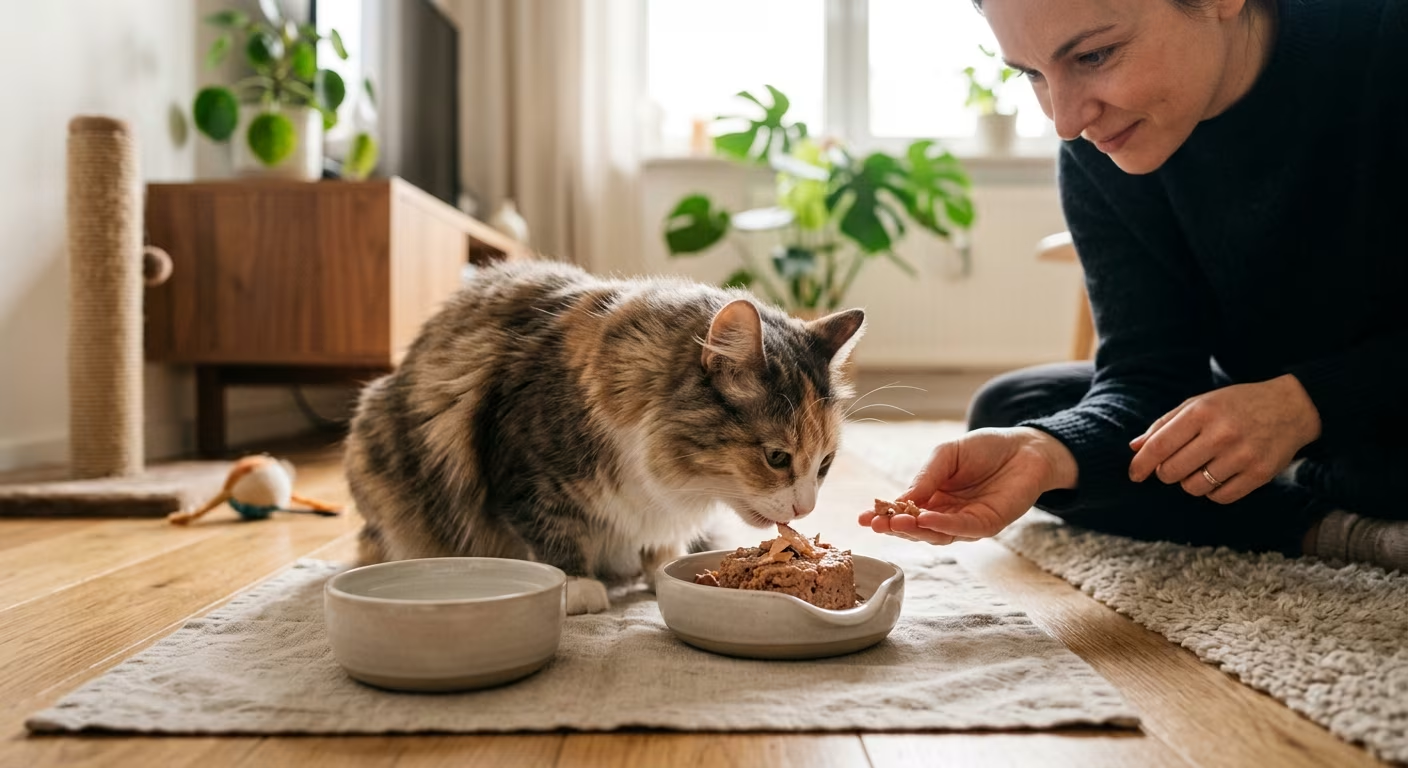
Some cats, particularly those who are unwell or anxious, respond beautifully to being hand fed small amounts. I’ve sat on the floor with many a poorly cat, offering tiny morsels on my fingertip. It’s not always glamorous, but it works. The key is gentle, patient encouragement.
What you must NEVER do: Force food into your cat’s mouth, or use a syringe to push food in. This is not only stressful for the cat it can cause severe medical complications and may actually put them off eating altogether for much longer.
📅 7. Establish a Proper Feeding Schedule
Free-feeding (leaving food out all day) sounds kind, but it can actually make a picky cat pickier. When food is always available, they never get truly hungry. Offer 2 3 meals at set times daily, give your cat about 15 20 minutes to eat, and then remove the food. This creates a rhythm and genuine appetite.
Keep dry food stored in an airtight container stale kibble is a very common but overlooked reason cats turn their noses up at meals.
Step 3: What NOT to Do
In my experience, well-meaning owners sometimes accidentally make things worse. Here are the key mistakes to avoid:
- ❌ Don’t introduce a prescription/special diet when a cat is already unwell and refusing food. If they associate that diet with feeling sick, they’ll reject it forever. Wait until they’re recovering and feeling better.
- ❌ Don’t offer treat-only foods long-term. Fish and chicken treats are great for tempting a sick cat, but they don’t provide complete nutrition. Use them to spark interest, not as a permanent solution.
- ❌ Don’t panic and offer a completely new food. Sudden food changes can cause further digestive upset. Introduce new foods gradually over 2 weeks.
- ❌ Don’t force feed. Ever.
Step 4: Monitor Weight and Hydration
Here’s something practical that many owners don’t do: weigh your cat regularly. Small weight changes can be easy to miss just by looking at your cat, especially if they have long fur. A standard baby scale (the electronic kind used for weighing infants) is perfect for this far more accurate than the classic “weigh yourself, then weigh yourself holding the cat” approach.
Also, don’t forget water. Cats who are eating less are also taking in less moisture from their food. Make sure fresh water is available in multiple spots around the home. If your cat is a fussy drinker, a pet water fountain can encourage them to drink more, as many cats are instinctively drawn to moving water.
Step 5: Medical Appetite Stimulants When Home Tricks Aren’t Enough
Sometimes, despite your best efforts, a cat simply won’t eat. This is when your vet may suggest an appetite stimulant. The most commonly used is mirtazapine, which works by affecting serotonin and histamine receptors in the brain to encourage hunger and it also helps with nausea, which is a bonus. It’s available as a tablet or a transdermal gel applied to the ear.
Another option your vet might discuss is capromorelin, a newer medication that mimics the hunger hormone ghrelin. Both should only be used under veterinary guidance and alongside treatment for the underlying cause they’re a support tool, not a cure.
In some cases, a feeding tube may be placed temporarily. I know that sounds frightening, but in the right situation it’s a genuinely life-saving intervention that takes the pressure off both cat and owner while recovery happens.
Quick-Reference Summary
| Tip | Why It Works | Difficulty |
|---|---|---|
| Warm the food | Releases aromas, mimics fresh prey | ⭐ Easy |
| Use a shallow ceramic bowl | Avoids whisker fatigue & taste taint | ⭐ Easy |
| Feed in a quiet location | Reduces stress & distraction | ⭐ Easy |
| Rotate flavours & textures | Prevents boredom, adds interest | ⭐⭐ Moderate |
| Set a feeding schedule | Creates genuine hunger at mealtimes | ⭐⭐ Moderate |
| Hand feed small amounts | Builds trust, encourages eating | ⭐⭐ Moderate |
| Offer aromatic treats/fish | Triggers appetite with smell | ⭐ Easy |
| Weigh cat weekly | Catches decline early | ⭐ Easy |
A Final Word From Me
I know how stressful it is when your cat won’t eat. You feel helpless, and you love them. But the most important thing you can do is act promptly, stay calm, and work with your vet. Home tricks absolutely help but they work best alongside proper veterinary care, not instead of it.
If you’re unsure whether your cat’s appetite change is serious, the answer is simple: call your vet. You won’t be judged for calling. You’ll be thanked for it by your cat’s health.
For more detailed guidance, visit the International Cat Care article on encouraging your cat to eat and their companion resource on inappetence in cats.
References
- International Cat Care “How to Encourage Your Cat to Eat.” International Cat Care (iCatCare). Reviewed 2024. https://icatcare.org/articles/how-to-encourage-your-cat-to-eat
- International Cat Care “Inappetence in Cats.” International Cat Care (iCatCare). Updated June 2025. https://icatcare.org/articles/inappetence-in-cats
- Cornell University College of Veterinary Medicine “Anorexia in Cats.” Cornell Feline Health Center. https://www.vet.cornell.edu/departments-centers-and-institutes/cornell-feline-health-center/health-information/feline-health-topics/anorexia
- PetMD Editorial Team “6 Reasons Why Your Cat Is Not Eating and What To Do.” PetMD. Updated August 2025. https://www.petmd.com/cat/nutrition/cat-not-eating-what-to-do
- Kingsdale Animal Hospital “How To Stimulate Appetite In Cats: Tips And Tricks.” Kingsdale Animal Hospital. February 2023. https://www.kingsdale.com/how-to-stimulate-appetite-in-cats-tips-and-tricks