
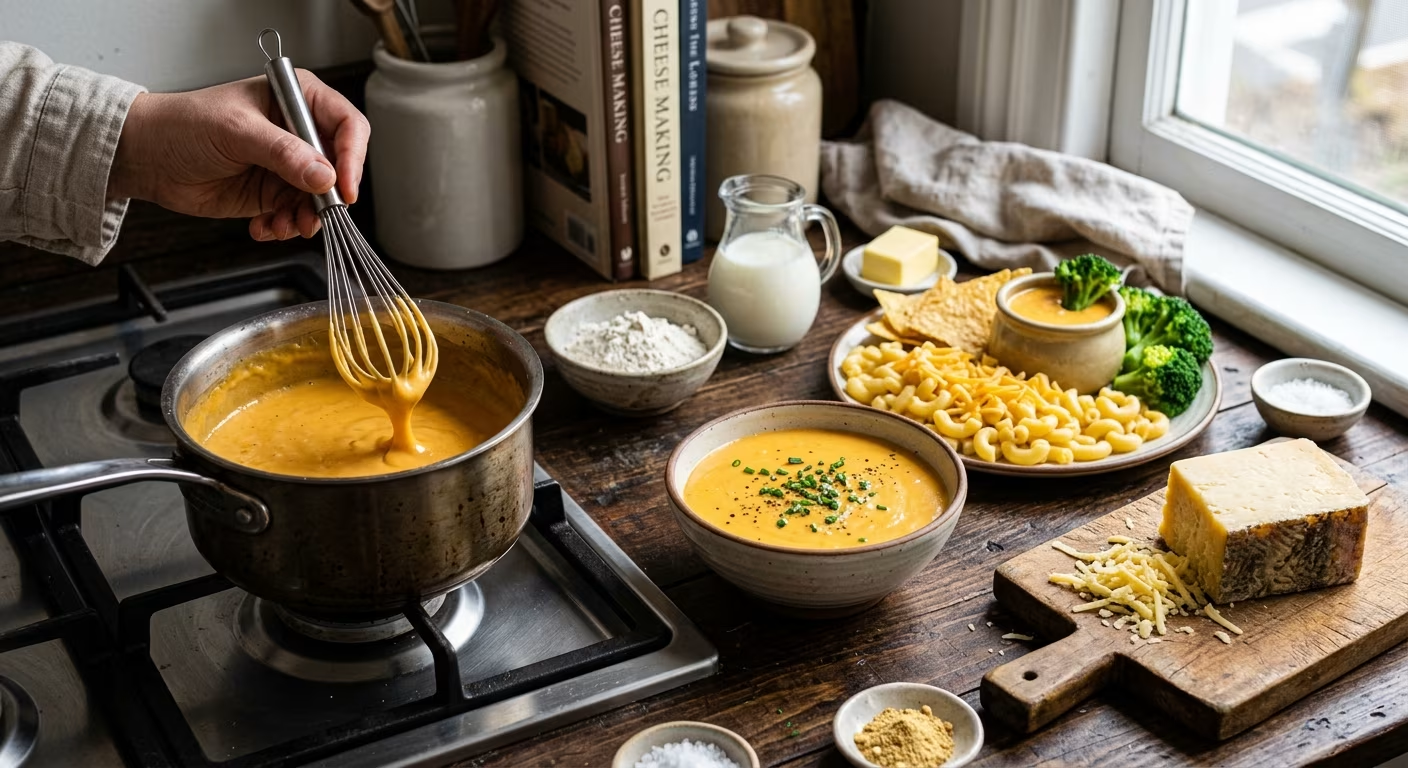
Let me be honest with you I have burned more roux than I care to admit. I’ve made grainy cheese sauces, lumpy cheese sauces, and sauces that could double as rubber cement. After years of cooking and testing dozens of variations, I finally nailed the perfect homemade cheddar cheese sauce. And today, I’m going to walk you through everything, so you don’t have to learn the hard way like I did.
Whether you want to drizzle it over steamed broccoli, stir it into pasta, or use it as a dip for soft pretzels and nachos a good homemade cheddar cheese sauce is one of those kitchen staples that changes everything. And the best part? It takes less than 10 minutes.
Why Make Homemade Cheddar Cheese Sauce?
You might be wondering why bother making it from scratch when you can grab a jar at the grocery store? Trust me, once you try homemade, you’ll never go back. Store-bought versions are loaded with artificial additives, preservatives, and stabilizers. Homemade cheese sauce uses real, whole ingredients you probably already have sitting in your fridge and pantry.
From a nutrition standpoint, cheddar cheese itself is genuinely good for you in moderation. According to the U.S. Dairy Association, cheese supports bone health, muscle growth, and immune function thanks to its calcium, protein, phosphorus, and vitamin A content. When you make your own sauce, you control exactly what goes in no mystery chemicals, no excess sodium.
Ingredients You’ll Need
This recipe is beautifully simple. Here’s what you need and why each ingredient matters:
| Ingredient | Amount | Why It Matters |
|---|---|---|
| Unsalted Butter | 2 tbsp | Builds the roux and creates a silky, smooth base |
| All-Purpose Flour | 2 tbsp | Thickens the sauce; cook it out to remove raw flour taste |
| Whole Milk | 1 cup | Gives creamy texture without excess calories |
| Sharp Cheddar Cheese (block, freshly grated) | 1.5 2 cups | The star fresh grating prevents graininess |
| Salt & Pepper | To taste | Season at the end, after cheese melts |
| Garlic Powder / Onion Powder (optional) | ¼ tsp each | Adds depth and a wonderful hit of umami |
| Dijon Mustard (optional) | 1 tsp | Adds color and depth of flavour without tasting mustardy |
Chef’s Tip: Always buy a block of cheddar and grate it yourself. Pre-shredded cheese contains anti-caking agents that can make your sauce gritty and clumpy not the silky dream you’re going for.
Step-by-Step Instructions
I want you to feel totally confident making this. Follow these steps and you’ll have a perfect sauce every single time.
Step 1: Make the Roux
Melt the butter in a medium saucepan over medium heat. Once it starts to bubble, whisk in the flour. Keep whisking constantly for about 60 seconds until a smooth paste forms this is your roux. This step cooks out any raw flour flavour and is the secret to a lump-free sauce.
Step 2: Add the Milk Slowly
Pour in the milk a little at a time, whisking continuously after each addition. This is where most people go wrong they dump all the milk in at once. Don’t do that. Adding it slowly ensures the sauce stays smooth. Keep whisking for about 2 4 minutes until the sauce thickens. The key here: never let the milk boil. Keep it at a gentle simmer really, just the occasional bubble.
Step 3: Add the Cheese Off the Heat
This is the most important step. Turn the heat to its lowest setting (or off entirely), then add your freshly grated cheddar a handful at a time, stirring as you go. Adding cheese to a screaming-hot sauce is a recipe for a grainy, broken mess. Residual heat will do the work beautifully.
Step 4: Season and Serve
Add garlic powder, onion powder, mustard, salt, and pepper if using. Taste it and adjust. Then pour it over everything. Seriously everything.
The Most Common Mistakes (And How to Fix Them)
I’ve made every single one of these mistakes myself at some point:
| Mistake | Why It Happens | Fix It |
|---|---|---|
| Grainy, gritty texture | Using pre-shredded cheese or overheating | Use freshly grated cheese; add it off the heat |
| Lumpy sauce | Adding milk too fast to the roux | Add milk slowly, whisk continuously |
| Sauce too thick | Too much flour or not enough milk | Add a splash of warm milk and whisk |
| Sauce too thin | Insufficient roux or milk not reduced | Cook the sauce a minute or two longer before adding cheese |
| Raw flour taste | Roux not cooked long enough | Cook the roux for a full 60 seconds before adding milk |
Cheese Varieties: Mix It Up!
Cheddar is classic, but this sauce is incredibly versatile. Once you master the base technique, you can get creative with your cheese choices:
- Mild Cheddar Subtle, family-friendly flavour
- Mature/Sharp Cheddar Bold, robust, deeply cheesy
- White Cheddar Elegant and creamy white sauce
- Gruyère Nutty and sophisticated, perfect with pasta
- Monterey Jack / Pepper Jack Melts beautifully; adds mild heat
- Gouda Silky and buttery with a slightly sweet note
Pro Tip from Experience: I’d avoid mozzarella in a cheese sauce it creates a stretchy, stringy texture that just doesn’t work in a pourable sauce. Save it for pizza.
What to Serve With Cheddar Cheese Sauce
Honestly, the hardest part of this recipe is deciding what to pour it on first. Here are my favourite ways to use it:
- 🥦 Steamed or roasted broccoli A classic for a reason. Even picky kids eat their greens with cheese sauce involved.
- 🥔 Baked potatoes Load them up. Cheese sauce, bacon bits, sour cream. You’re welcome.
- 🍝 Macaroni & Cheese Stir it into cooked pasta for the best stovetop mac and cheese of your life.
- 🌮 Nachos & tortilla chips Better than any jarred queso, period.
- 🥨 Soft pretzels A thick, clingy sauce is absolutely perfect for dipping.
- 🍟 French fries or baked potato wedges Game-changing comfort food.
- 🌯 Breakfast burritos Add a drizzle and you’ve elevated your morning game.
Nutritional Notes: What’s in Your Cheese Sauce?
Let’s talk nutrition briefly, because I know many of you care about eating well. Cheddar cheese sauce is rich and indulgent and that’s okay in moderation. Here’s a quick breakdown of what you’re getting:
| Nutrient | Per Serving (approx. ¼ cup) | Benefit |
|---|---|---|
| Calories | ~165 kcal | Energy |
| Protein | ~8g | Muscle repair and growth |
| Calcium | ~238mg | Bone health and nerve function |
| Fat | ~13g | Satiety and flavour |
| Vitamin A | ~420 IU | Vision and immune support |
According to Harvard T.H. Chan School of Public Health, cheese is a nutrient-dense dairy food that provides protein, fats, and essential minerals. It also notes that cheese may be better tolerated than milk by some people, as it is lower in lactose. U.S. Dairy confirms that the calcium and phosphorus in cheese support healthy bones and teeth, while protein is essential for muscle repair and growth.
That said, cheese sauce is high in saturated fat and sodium, so enjoy it as a treat rather than an everyday indulgence. The good news? Making it at home means you control the portion and the ingredients no hidden junk.
How to Store and Reheat
One of the best things about this sauce is that it keeps well. Here’s what I do:
- Refrigerator: Store in an airtight container for up to 4 7 days.
- Reheat: Gently warm over low heat on the stovetop, whisking constantly. Add a splash of milk to loosen it back up it will thicken considerably as it cools.
- Freezer: Cheese sauces made with a roux can be frozen, but the texture may change slightly on thawing. I recommend making it fresh it only takes 10 minutes!
Dietary Variations
Gluten-Free
Simply substitute the all-purpose flour with a gluten-free all-purpose flour blend in a 1:1 ratio. Works perfectly.
Lighter Version
Use 2% milk instead of whole milk. You’ll sacrifice a little creaminess, but it still tastes great. I wouldn’t go lower than 2% skim milk produces a noticeably thinner, less satisfying sauce.
Keto-Friendly
Skip the flour entirely. Make a sauce using heavy cream, butter, and cheese the cream reduces and thickens naturally. You get a rich, ultra-decadent sauce with minimal carbs.
Spicy Version
Add a pinch of cayenne pepper, chili powder, or a splash of hot sauce (like Sriracha or Tabasco). Swap half the cheddar for pepper jack for a nacho-style kick that’s absolutely addictive.
Quick Recap: Keys to the Perfect Cheese Sauce
- ✅ Always grate your cheese fresh from a block
- ✅ Cook the roux for a full 60 seconds
- ✅ Add milk slowly, whisking continuously
- ✅ Never let the milk boil gentle simmer only
- ✅ Add cheese off the heat or on the lowest setting
- ✅ Season last, after the cheese melts
- ✅ Too thick? Splash of warm milk fixes it
Final Thoughts
There is something deeply satisfying about making a great cheese sauce from scratch. It’s one of those fundamental kitchen skills once you’ve got it, you’ll use it constantly. It’s faster than a trip to the store, cheaper than any jarred version, and it tastes about a thousand times better.
Start with a sharp cheddar, take your time with the roux, and trust the process. Your family, your dinner guests, and honestly yourself you all deserve the real thing.
Got questions or want to share your own twist on this recipe? Drop a comment below I’d love to hear how yours turned out!
References
- “Cheese” Harvard T.H. Chan School of Public Health, The Nutrition Source. Last reviewed November 2024.
- “Cheese Benefits & Nutrition Facts” U.S. Dairy / Innovation Center for U.S. Dairy. Accessed June 2026.
- “Cheese Health Benefits” American Dairy Association Northeast. Last updated April 2026.
- “Easy White Cheddar Cheese Sauce Recipe” Cabot Creamery Co-operative. Last updated April 2026.
- “Easy Cheddar Cheese Sauce 5 Ingredients” Iowa Girl Eats. Last updated April 2026.