
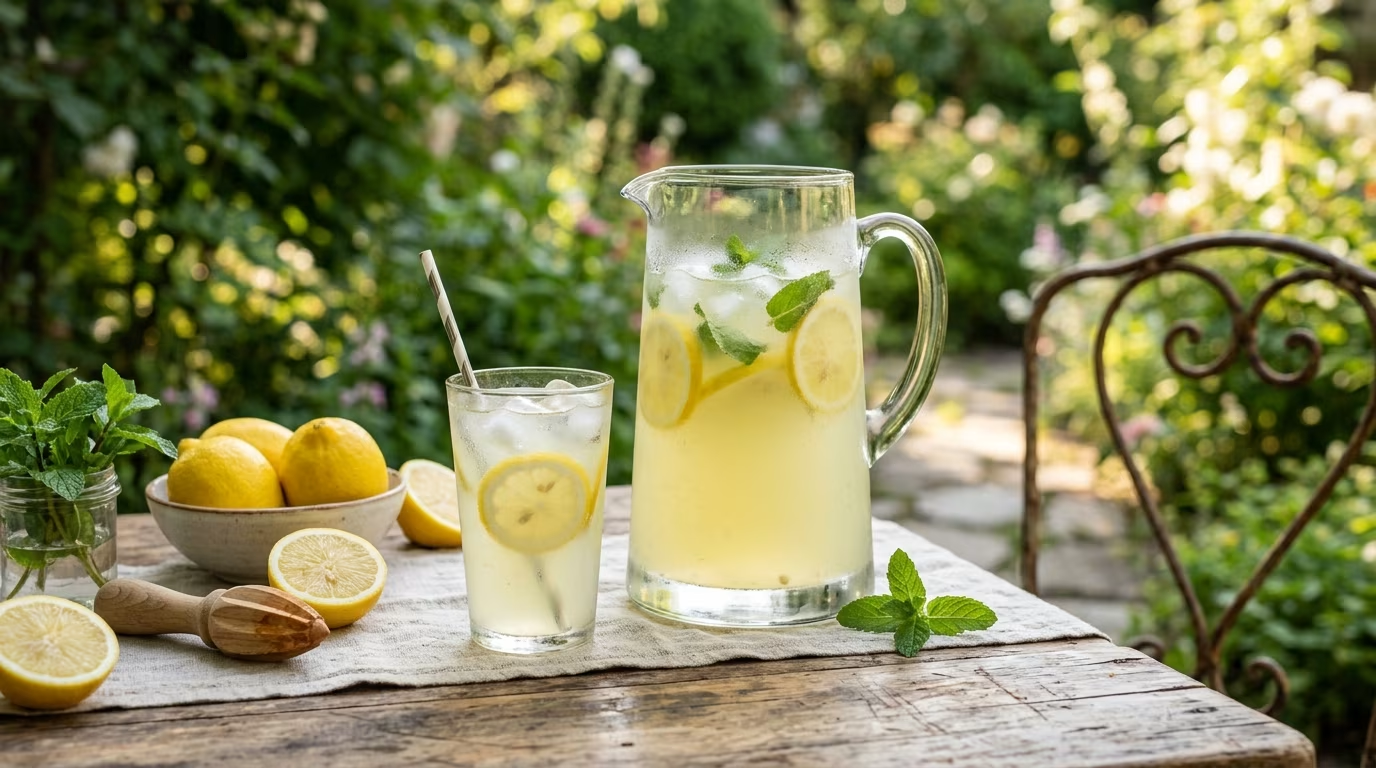
There’s a moment every summer you’re outside, it’s hot, and you want something cold and real. Not a powder mix. Not a store-bought bottle with a long ingredients list. Just lemons, sugar, water, and a little know-how. I’ve been making homemade lemonade since I was a kid, and over the years I’ve learned every trick in the book to get it right. This guide will walk you through everything from squeezing your first lemon to storing your pitcher like a pro.
Why Homemade Lemonade Beats Store-Bought Every Time
I know it’s tempting to grab a carton off the shelf. But trust me once you make lemonade from scratch, you won’t go back. The difference is dramatic. Fresh-squeezed lemons deliver a bright, complex flavor that no bottle or powder can replicate. You control the sweetness, the tartness, and the quality.
Here’s a simple truth I’ve learned from years in the kitchen: the best drinks are the simplest ones, made with real ingredients. And lemonade is proof of that.
💡 Fun Fact: The oldest known version of lemonade dates back to 12th or 13th century Egypt, made with lemon, dates, and honey proof that humans have been obsessed with this drink for nearly a thousand years!
Ingredients You’ll Need (Just 3!)
You don’t need a shopping list with 15 items. This recipe keeps it beautifully simple:
| Ingredient | Amount | Notes |
|---|---|---|
| Fresh Lemons | 6 8 medium lemons | Yields about 1 cup of juice |
| White Granulated Sugar | 1 cup | Used to make simple syrup |
| Cold Water | 5 6 cups total | 1 cup for syrup + rest for pitcher |
Optional garnishes: Fresh mint sprigs, lemon slices, ice cubes.
Step-by-Step: How to Make Old-Fashioned Lemonade
Step 1 Make the Simple Syrup (This Is the Secret!)
Here’s the #1 mistake I see people make: they dump sugar directly into cold water and stir until their arm falls off. It never fully dissolves. You end up with a gritty glass of lemonade where all the sweetness is pooled at the bottom.
The fix? Simple syrup. In a small saucepan, combine 1 cup of sugar and 1 cup of water. Heat over medium heat, stirring constantly, until all the sugar has fully dissolved and the liquid is completely clear. Do not boil it hard a gentle simmer is all you need. Remove from heat and let it cool for 10 15 minutes before using.
Why does this matter? Because when you heat water and dissolve sugar into a simple syrup, it sweetens your drink evenly without any sugar granules settling to the bottom.
Step 2 Juice Your Lemons (The Right Way)
Before you cut a single lemon, do this: roll it firmly on your counter with the palm of your hand. Press hard. You’re breaking up the internal membranes, which releases significantly more juice. I promise this one tip alone will change your lemonade game.
Also, make sure your lemons are at room temperature cold lemons from the fridge are harder to juice and give you less liquid. Juice your lemons through a strainer into a large pitcher until you have about 1 cup (roughly 6 8 medium lemons).
💡 Pro tip: Be wary of very large lemons. They often have a thick white pith inside, meaning less juice than you’d expect. Medium lemons are your best bet.
Step 3 Combine and Taste
Pour your cooled simple syrup into the pitcher with the lemon juice. Add 4 5 cups of cold water. Stir well, then taste it. This is important lemonade is personal. Want it sweeter? Add a bit more simple syrup. Too sweet? Add more water and a splash more lemon juice. Adjust until it’s perfect for you.
Step 4 Serve It Right
Serve over ice in individual glasses. Here’s a small but important detail: add ice to your glasses, not to the pitcher. When ice melts in the pitcher, it waters down the entire batch. Add lemon slices or mint sprigs to individual glasses as garnish right before serving for that picture-perfect look.
Quick Reference: The Full Recipe at a Glance
| Step | Action | Time |
|---|---|---|
| 1 | Make simple syrup (heat sugar + 1 cup water) | 5 min + 15 min cool |
| 2 | Roll & juice 6 8 lemons (1 cup juice) | 10 min |
| 3 | Combine syrup, lemon juice & 4 5 cups cold water | 2 min |
| 4 | Taste, adjust, serve over ice | 2 min |
Total Time: ~35 minutes (including cool-down) | Serves: 6 8 glasses | Difficulty: Easy
My Favourite Variations to Try
Once you’ve nailed the classic, the fun begins. Here are the variations I make most often:
- 🍓 Strawberry Lemonade: Add 1 cup of blended strawberry purée to your pitcher. The color alone is worth it.
- 🌿 Mint Lemonade: Muddle a handful of fresh mint leaves and add to the pitcher. Incredibly refreshing.
- 🫧 Sparkling Lemonade: Swap still water for sparkling or soda water. Make only what you’ll drink immediately it goes flat quickly.
- 🍋 Limeade Twist: Replace lemons with limes for a sharper, more tropical flavour.
- 🍯 Honey Lemonade: Swap the sugar for honey in your simple syrup for a more natural, floral sweetness.
How to Store Your Homemade Lemonade
Made a big batch? No problem. Store your lemonade in a sealed pitcher or jar in the refrigerator for up to 7 days. It actually tastes even better on day two once everything has fully blended together.
Pro storage tip: Make a lemonade concentrate (just syrup + lemon juice, no added water) and store it in the fridge for up to 2 weeks. Then just mix 1 part concentrate with 2 parts cold water per glass whenever you need a fresh serving.
Health Benefits of Fresh Lemon Juice
Beyond being delicious, there are real reasons to feel good about drinking lemonade made with fresh lemons. Here’s what the science says:
- 🍋 Rich in Vitamin C: A quarter cup of lemon juice provides approximately 31% of the recommended daily intake of Vitamin C, which supports immune function, collagen production, and bone health.
- 🫘 Kidney Stone Prevention: The citric acid in lemons helps block kidney stone formation and can break up smaller stones before they develop. Research published by the University of Wisconsin School of Medicine found that lemon and lime juice are among the richest natural sources of citric acid at 1.44 g/oz.
- 💧 Supports Hydration: Lemon-infused water makes staying hydrated more enjoyable, which benefits digestion, energy, and skin health.
- 🫀 May Help Blood Pressure: Research suggests citric acid and potassium in lemon juice may have a positive effect on blood vessel flexibility and pressure levels.
⚠️ One caution: The citric acid in lemon juice can wear down tooth enamel over time. Rinse with plain water after drinking and avoid brushing teeth immediately afterward.
Common Mistakes (And How to Avoid Them)
| Mistake | Why It Happens | The Fix |
|---|---|---|
| Gritty sugar at the bottom | Adding sugar directly to cold water | Always use a simple syrup |
| Too little juice from lemons | Using cold or un-rolled lemons | Room temp + roll before squeezing |
| Lemonade tastes bitter | Lemon slices left in pitcher too long | Garnish individual glasses, not the pitcher |
| Watered-down lemonade | Ice melting in the pitcher | Add ice only to individual glasses |
| Too sweet or too tart | Not tasting as you go | Always taste and adjust before serving |
Frequently Asked Questions
Can I use bottled lemon juice instead of fresh?
You can, and it still makes a decent lemonade. But fresh-squeezed lemons have a brighter, more complex flavour that bottled juice simply can’t match. If you’re in a pinch, bottled works just use a high-quality, pure lemon juice with no additives.
How do I make it less sweet?
Simply reduce the amount of simple syrup you add, or increase the water slightly. Make the syrup separately so you can add it gradually and taste as you go that’s the whole advantage of this method.
Can I make it sugar-free?
Yes! You can substitute the sugar with natural sweeteners like honey, monk fruit sweetener, or stevia. Note that stevia is approximately 200 times sweeter than regular sugar, so use it very sparingly.
Can I make it ahead for a party?
Absolutely. In fact, I recommend it. Make the lemonade the night before and refrigerate it. Just hold the ice until serving time. It actually tastes better after chilling overnight as the flavours fully meld together.
How many lemons do I need?
For 1 cup of juice, plan on 6 8 medium lemons. Lemon sizes vary quite a bit if your lemons feel heavy for their size, they’ll have more juice. A good lemon juicer makes this process much faster.
Final Thoughts: Why This Recipe Never Gets Old
I’ve made fancy cocktails, blended smoothies, and elaborate punches but nothing gets the same reaction from family and friends as a tall, ice-cold glass of proper homemade lemonade on a hot day. There’s something about the combination of tart, sweet, and cold that hits different when you know every ingredient in the glass.
The simple syrup method, the rolling technique, and tasting as you go those three habits alone will take your lemonade from average to something people ask about. Start with the classic recipe, then make it yours.
Try it this weekend. You’ll wonder why you ever bought the powdered stuff.
References
- Penniston KL et al. “Quantitative Assessment of Citric Acid in Lemon Juice, Lime Juice, and Commercially-Available Fruit Juice Products” Journal of Endourology, University of Wisconsin School of Medicine and Public Health (PMC, 2008). Cited for citric acid content in lemon juice.
- Cleveland Clinic Health Essentials “What Are the Benefits of Drinking Lemon Water?” Cleveland Clinic (Updated August 2024). Cited for kidney stone prevention and hydration benefits of lemon juice.
- WebMD Editorial Team “Lemon: Health Benefits and Nutrition” WebMD (Updated March 2026). Cited for Vitamin C content and tooth enamel caution.
- Fujita T et al. “Antihypertensive and Vasorelaxant Effects of Citric Acid and Lemon Juice in Spontaneously Hypertensive Rats” National Library of Medicine / PMC (2023). Cited for blood pressure and potassium content in lemon juice.
- Healthline Nutrition “Citric Acid: What It Is, Benefits, Uses & Is It Bad for You?” Healthline (Updated April 2026). Cited for citric acid’s role in energy metabolism and kidney health.