
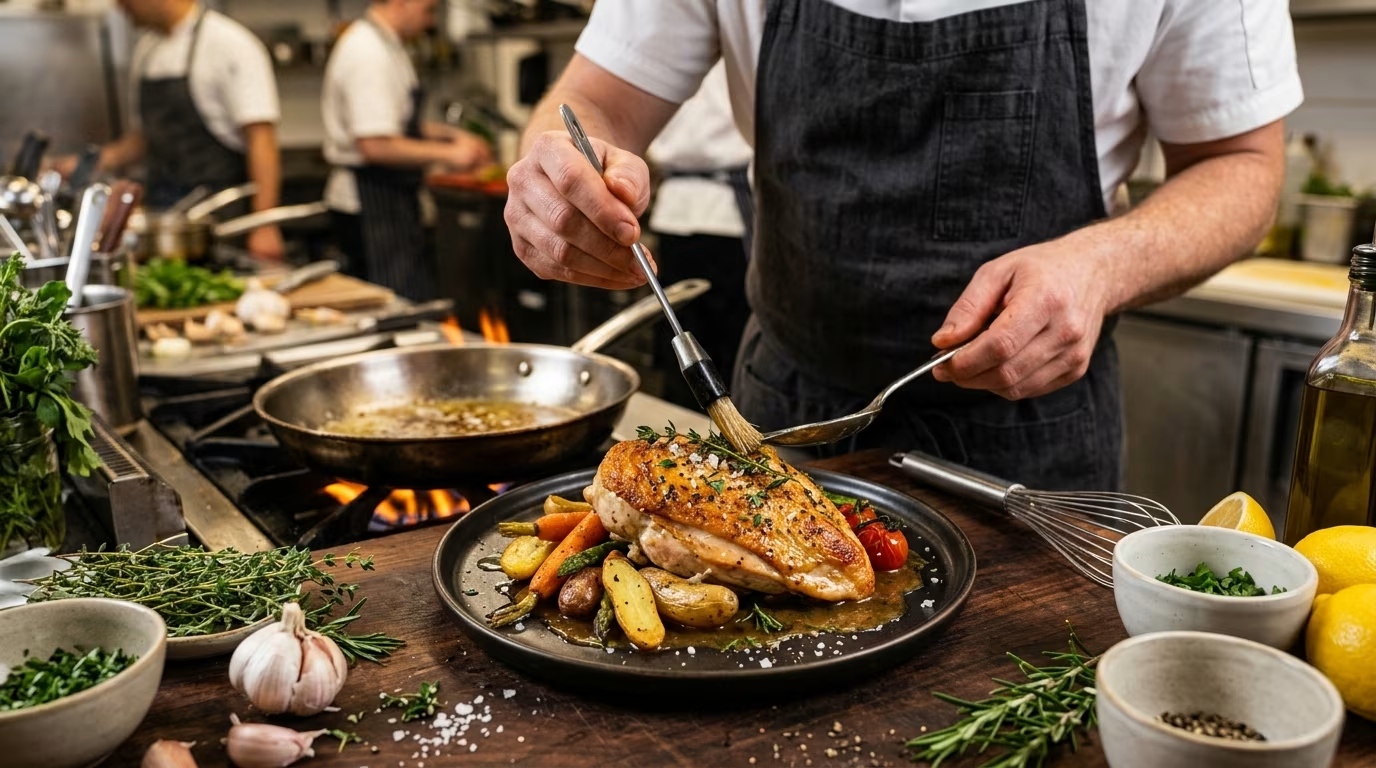
By a professional home cook & culinary educator with over 15 years in the kitchen
Let me be honest with you I burned, dried out, and under-seasoned more chicken than I care to admit before I finally cracked the code. Chicken is one of the most forgiving proteins on the planet, but it punishes you when you rush it or ignore a few simple rules. Today, I want to share everything I know so you skip the mistakes and go straight to the good stuff: juicy, flavourful chicken on your table every single time.
“Chicken is budget-friendly, family-friendly, and endlessly versatile.”
Whether you are a complete beginner wondering what temperature to cook chicken to, or an experienced home cook looking to expand your repertoire, this guide covers everything cuts, methods, nutrition, food safety, and my favourite go-to recipes.
Why Chicken Deserves a Spot on Your Table Every Week
Chicken is the number one protein consumed by Americans, and for good reason. It is affordable, widely available, and incredibly versatile. You can roast it, bake it, grill it, slow-cook it, stir-fry it, or throw it in a soup and it works beautifully every time. In my own kitchen, chicken appears on the dinner table at least three nights a week. Sometimes it is a quick 20-minute skillet meal, other nights it is a slow-roasted whole bird that fills the house with an unforgettable aroma.
Beyond convenience, chicken is a nutritional powerhouse. A 3.5-ounce (100g) serving of cooked, skinless chicken breast contains approximately 165 calories and 31 grams of protein making it one of the most protein-dense whole foods you can eat. It is also a complete protein, containing all nine essential amino acids your body needs for muscle repair, energy, and overall health.
Understanding Chicken Cuts: Which One Should You Use?
One of the biggest mistakes I see home cooks make is using the wrong cut for the wrong recipe. Here is a quick breakdown I use every week in my own cooking:
| Cut | Flavour Profile | Best Cooking Method | Cook Time (approx.) |
|---|---|---|---|
| Breast (boneless, skinless) | Mild, lean | Bake, grill, pan-sear | 20 30 min |
| Thighs (bone-in or boneless) | Rich, juicy, flavourful | Roast, braise, slow-cook | 35 45 min |
| Drumsticks | Juicy, slightly fatty | Bake, grill, fry | 35 45 min |
| Wings | Crispy, snackable | Bake, air-fry, deep-fry | 30 40 min |
| Whole Chicken | Full depth of flavour | Roast, rotisserie | 1.5 2 hrs |
| Ground Chicken | Neutral, adaptable | Burgers, meatballs, stir-fry | 10 15 min |
Pro tip: If you are new to cooking chicken, start with bone-in, skin-on thighs. They are the most forgiving cut harder to overcook, naturally moist, and packed with flavour. Once you nail those, everything else becomes much easier.
When it comes to casseroles, boneless, skinless breasts stay lean and mild, while thighs add more flavour and tenderness. Both bake well with pasta, rice, or vegetables.
The #1 Rule I Follow: Always Use a Meat Thermometer
If there is one thing I want you to take away from this article, it is this: stop guessing if your chicken is done by its colour. I spent years cutting into pieces of chicken to check the juices. It wasted time, let the steam escape, and I was still wrong half the time.
According to the USDA Food Safety and Inspection Service (FSIS), colour is not a reliable indicator of doneness. Studies have shown that using a food thermometer is the only way to confirm harmful bacteria have been destroyed yet only about 15% of people consistently use one.
The safe minimum internal temperature for all chicken breasts, thighs, wings, drumsticks, and whole birds is 165°F (74°C). Check the internal temperature in the thickest part of the breast and the innermost part of the thigh when cooking a whole bird.
💡 My go-to tip: Pull the chicken out of the oven at 160°F. Carry-over heat during the 3 5 minute rest will bring it up to the safe 165°F and your meat stays far juicier. Always let it rest before slicing.
The 5 Best Cooking Methods for Chicken (And When to Use Each)
1. 🔥 Pan-Searing (Stovetop)
Best for: Boneless chicken breasts and thighs on busy weeknights.
Heat a cast iron or stainless steel pan over medium-high heat. Add a tablespoon of oil, then place your seasoned chicken (patted dry!) skin-side down. Do not touch it for 5 6 minutes. That golden crust forms only if you leave it alone. Flip, reduce heat, and finish. I make this at least twice a week it is ready in under 20 minutes.
2. 🍳 Baking in the Oven
Best for: Bone-in pieces, sheet pan dinners, or large batches for meal prep.
Bake at 400°F (200°C) for most cuts. Sheet pan chicken with vegetables is the ultimate weeknight lifesaver everything cooks together, cleanup is minimal, and it feeds the whole family with ease.
3. 🌿 Slow Cooking / Braising
Best for: Thighs, drumsticks, and whole legs dishes where you want fall-off-the-bone texture.
Low and slow breaks down the connective tissue in dark meat and creates incredibly deep flavour. Think chicken adobo, braised chicken thighs, or coq au vin. I often prep this in the morning and come home to dinner already done.
4. 🍢 Grilling
Best for: Thighs, wings, and drumsticks great for outdoor cooking and summer BBQ.
Marinate overnight for maximum juiciness. Grill on medium heat to avoid charring before the inside cooks through. Always finish with a quick check of the internal temp before serving.
5. 💨 Air Frying
Best for: Wings, thighs, and chicken tenders crispy results with far less oil than deep frying.
Healthier cooking methods like air frying, grilling, or pan-searing with minimal oil help preserve nutrients while cutting down on unnecessary fats. My kids request air-fried wings every Friday, and they genuinely taste like restaurant-quality food at a fraction of the cost.
Chicken Nutrition: What You Are Actually Eating
I have worked with many home cooks who underestimate just how nutritious chicken really is. Here is a snapshot of what you get from a standard serving of cooked, skinless chicken breast (per 100g/3.5 oz) based on USDA FoodData Central data:
| Nutrient | Amount (per 100g) | % Daily Value |
|---|---|---|
| Calories | 165 kcal | ~8% |
| Protein | 31g | 62% |
| Total Fat | 3.6g | 5% |
| Vitamin B3 (Niacin) | High | ~92% |
| Vitamin B6 | Medium | ~53% |
| Selenium | Medium | ~50% |
| Phosphorus | Medium | ~18% |
Source: USDA FoodData Central. Values are approximate and may vary slightly by cooking method.
Dark meat (thighs and drumsticks) contains more calories but also higher levels of vitamins B6 and B12, plus minerals like iron and zinc. It is also juicier which is why so many experienced cooks actually prefer it. Do not write off dark meat as “unhealthy.” It is a nutrient-dense choice, especially when skin is removed before eating.
Chicken is also rich in tryptophan, an amino acid linked to serotonin production often called the “feel good” hormone. It is one of the reasons a warming bowl of chicken soup genuinely makes you feel better when you are run down.
My 3 Favourite Weeknight Chicken Recipes
🍋 Recipe 1: Creamy Lemon Garlic Chicken (30 Minutes)
This is my most requested recipe by far. Season chicken breasts with salt, pepper, and garlic powder. Sear in butter until golden. Remove. In the same pan, sauté minced garlic, add chicken stock, a squeeze of lemon, and a splash of cream. Return the chicken, simmer 5 minutes. Serve over pasta or rice. Done and the pan sauce is extraordinary.
🌶️ Recipe 2: One-Pan Balsamic Chicken Thighs
Marinate bone-in thighs in balsamic vinegar, olive oil, garlic, and rosemary for 30 minutes (or overnight). Roast at 425°F with cherry tomatoes and red onion for 35 40 minutes. The balsamic reduces into a sticky glaze that tastes like it took hours. It takes 10 minutes of active effort.
🍜 Recipe 3: Quick Coconut Chicken Curry
Dice boneless thighs into chunks. Sauté with onion, garlic, ginger, and curry powder. Add a can of coconut milk and simmer for 20 minutes. Finish with fresh coriander and lime. Serve over steamed rice. This is a crowd-pleaser in every household I have cooked it in, and it works beautifully for meal prep it actually tastes better the next day.
Food Safety: The Non-Negotiables
I have seen what happens when chicken is handled carelessly, and it is never worth the risk. Here are the food safety rules I treat as absolute every single time I cook:
- ✅ Store raw chicken at or below 40°F (4°C). Use within 1 2 days, or freeze immediately.
- ✅ Never wash raw chicken under running water it splashes bacteria onto surrounding surfaces. Pat dry with paper towels instead.
- ✅ Separate raw chicken from other foods on your cutting board and in your shopping bag.
- ✅ Cook to 165°F (74°C) always verified with a meat thermometer.
- ✅ Bacteria multiply rapidly between 40°F and 140°F. Do not leave cooked chicken sitting out for more than two hours.
- ✅ Refrigerate leftovers promptly and handle them with the same care as raw chicken.
Remember: appearance and colour are not reliable indicators of whether chicken is safely cooked. Only a food thermometer gives you certainty.
Chicken Meal Prep: Save Time All Week
One of the smartest things you can do in the kitchen is cook chicken in bulk. Many chicken recipes are meal-prep friendly cook a large batch on Sunday and use it across salads, soups, wraps, and casseroles throughout the week.
Here is how I personally do it:
- 🥗 Roast a whole tray of chicken thighs Sunday evening.
- 🥙 Use leftovers Monday in wraps with avocado and salsa.
- 🍲 Shred into a quick noodle soup on Tuesday.
- 🥗 Toss cold over a grain bowl with tahini dressing Wednesday.
One cook. Four meals. That is how you work smarter in the kitchen.
Quick Reference: Chicken Cooking Temperature Chart
| Chicken Type | Safe Internal Temp | Where to Check |
|---|---|---|
| Whole Chicken | 165°F / 74°C | Thickest part of thigh & breast |
| Chicken Breasts | 165°F / 74°C | Thickest part |
| Thighs & Drumsticks | 165°F / 74°C | Away from bone |
| Ground Chicken | 165°F / 74°C | Centre of patty |
| Stuffed Chicken | 165°F / 74°C | Centre of stuffing |
| Chicken Casseroles | 165°F / 74°C | Centre of dish |
Source: USDA Food Safety and Inspection Service (FSIS)
Final Thoughts: Trust the Process (and the Thermometer)
Chicken is the ultimate blank canvas in the kitchen. It absorbs whatever flavours you give it, works in virtually every cuisine from Asian to Italian to Middle Eastern, and can be ready in 20 minutes or slow-cooked for hours. The key is learning a few foundational rules the right temperature, the right cut for the right method, and a little patience after it comes off the heat.
I have been cooking chicken for over 15 years and I still reach for my thermometer every single time. It is not a lack of confidence it is the mark of someone who actually knows what they are doing. Start there, build your repertoire, and dinner on a busy Tuesday night will never feel like a chore again.
Now grab those thighs, fire up the pan, and go make something delicious. 🍗
References
- USDA Food Safety and Inspection Service (FSIS). “Chicken from Farm to Table.” U.S. Department of Agriculture. Reviewed 2023. https://www.fsis.usda.gov/food-safety/safe-food-handling-and-preparation/poultry/chicken-farm-table
- USDA Food Safety and Inspection Service (FSIS). “Doneness Versus Safety.” U.S. Department of Agriculture. https://www.fsis.usda.gov/food-safety/safe-food-handling-and-preparation/food-safety-basics/doneness-versus-safety
- FoodSafety.gov. “Cook to a Safe Minimum Internal Temperature.” U.S. Department of Health & Human Services. Updated November 2024. https://www.foodsafety.gov/food-safety-charts/safe-minimum-internal-temperatures
- National Chicken Council. “Nutrition & Health.” Reviewed 2025. https://www.nationalchickencouncil.org/policy/nutrition-health/
- USDA Agricultural Research Service. “FoodData Central.” Beltsville Human Nutrition Research Center. https://fdc.nal.usda.gov/