
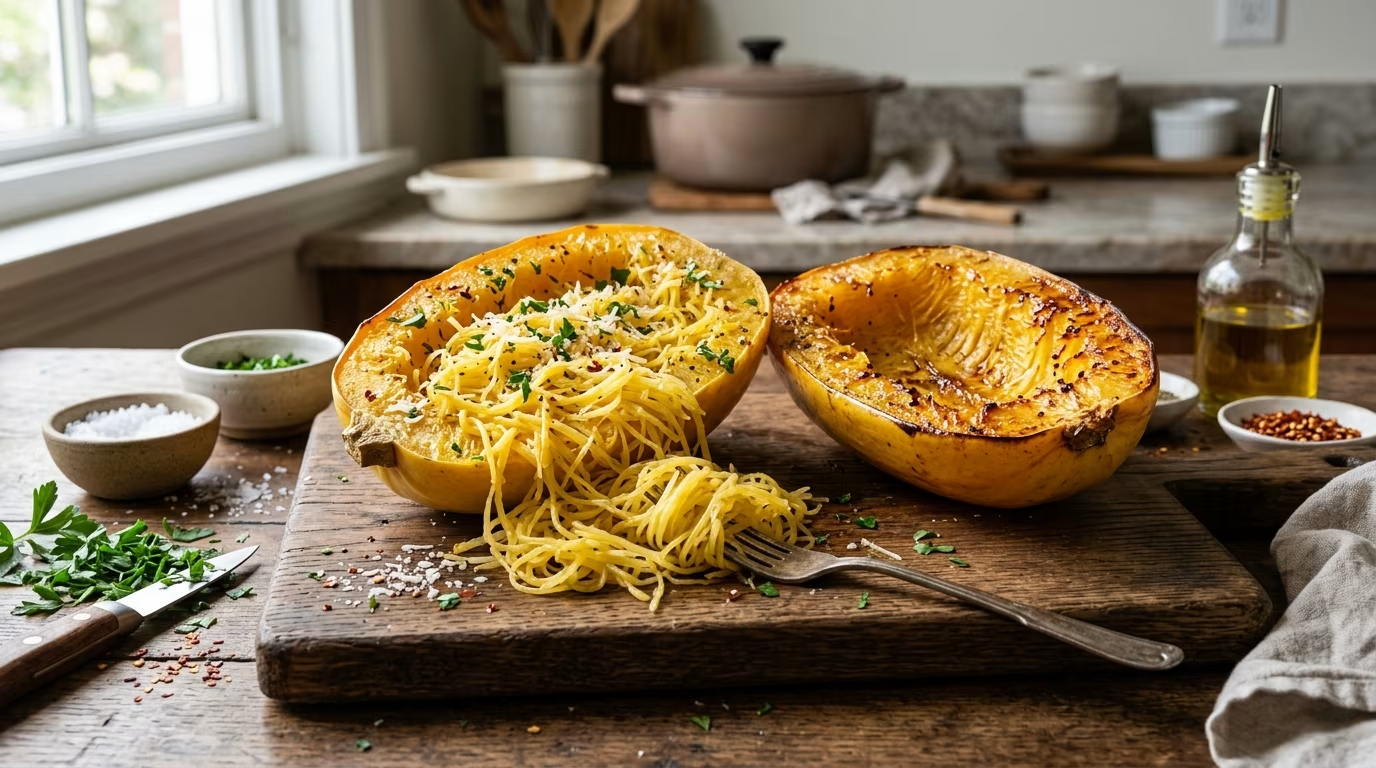
By a home cook and nutrition enthusiast with 10+ years of experience cooking seasonal vegetables
Let me be honest with you: the first time I tried to cook spaghetti squash, I made a complete mess of it. I hacked at it with a dull knife, nearly cut my hand, undercooked it, and ended up with crunchy, sad strands that nobody wanted to eat. Sound familiar?
Fast forward to today, and roasted spaghetti squash is one of my go-to weeknight staples. I make it almost every week in the fall and winter. Once you understand a few simple tricks the right temperature, which direction to cut, and how long to roast this vegetable becomes one of the most effortless, satisfying things you can cook.
This guide is everything I wish someone had told me on day one. Let’s get into it.
🥦 Why Bother With Spaghetti Squash?
Before we talk technique, let’s talk about why this vegetable deserves a permanent spot in your kitchen rotation.
Spaghetti squash is not just a trendy pasta swap it’s genuinely nutritious. Healthline notes that it’s a low-carb, low-calorie alternative to pasta that’s high in fiber and a great source of beta-carotene, vitamin C, and pantothenic acid. And the numbers back that up: University of Nebraska Lincoln Extension confirms that one cup of cooked spaghetti squash provides only about 42 calories and 10 grams of carbohydrates, along with vitamin A and potassium.
Compare that to a cup of regular pasta, which packs around 47 grams of carbs. That’s a dramatic difference if you’re watching your carb intake or simply want a lighter meal.
The Cleveland Clinic also highlights that because spaghetti squash is high in fiber and low in carbs, it won’t spike your blood sugar the way high-carb pasta can making it a smart choice for people managing blood sugar levels.
And let’s not forget: it’s delicious when roasted properly. The natural sugars caramelize in the oven, giving it a slightly sweet, nutty flavor that no boiled or microwaved version can match.
🛒 What You’ll Need
Here’s the beauty of this recipe you need almost nothing:
- 1 medium spaghetti squash (3 4 lbs)
- 1 2 tablespoons olive oil
- Salt and black pepper to taste
- A sharp chef’s knife
- A sturdy cutting board (non-slip preferred)
- A baking sheet lined with parchment paper or foil
- A large spoon or ice cream scoop (for seeds)
- A fork (for scraping strands)
Pro tip: An ice cream scoop is genuinely a game-changer for removing seeds cleanly. Don’t skip this if you have one.
🔪 Step 1 The Hardest Part: Cutting the Squash
I’m not going to sugarcoat it cutting a raw spaghetti squash is the most challenging part of this whole recipe. The shell is rock-hard. But with the right approach, it’s totally manageable and safe.
Here’s my method:
- Place the squash on a non-slip cutting board.
- Use a sharp chef’s knife to trim off both flat ends (the stem and base).
- Stand the squash upright on one flat end for stability.
- Carefully slice straight down through the center to divide it into two halves lengthwise.
If your squash is too hard to cut safely, here’s a trick I use regularly: microwave the whole squash (pierced with a fork several times) for 2 3 minutes first to soften it slightly. This makes the knife glide through much more easily and reduces the risk of slipping.
“The hardest part here is safely halving the squash. Otherwise the method was easy and gave great results.” Real user experience, Minimalist Baker
🥄 Step 2 Scoop Out the Seeds
Once cut in half, use a sturdy spoon or ice cream scoop to remove all the seeds and the stringy fibrous material in the center. Don’t rush this step leaving too many seeds behind makes the final strands messy and harder to scrape.
Tip: Don’t throw those seeds away! Toss them with a little olive oil and salt, spread on a baking sheet, and roast at 375°F for about 12 minutes until golden brown. They make a fantastic crunchy snack, similar to roasted pumpkin seeds.
🫒 Step 3 Season and Prep for the Oven
This is where flavor starts to develop. Here’s exactly what to do:
- Drizzle the cut side of each half with olive oil (about 1 teaspoon per half).
- Rub the oil all over the interior flesh.
- Sprinkle generously with salt and black pepper.
- Place both halves cut-side DOWN on your lined baking sheet.
Why cut-side down? Placing the squash face-down on the baking sheet traps steam against the flesh, helping it cook through evenly and creating beautifully tender strands. When cut-side up, the squash browns more on the edges but can sometimes dry out. Both methods work it’s a matter of preference.
🌡️ Step 4 Roast at the Right Temperature
Temperature makes a real difference here. Through years of testing, I’ve found that 400°F (204°C) is the sweet spot. It’s hot enough to caramelize the edges and cook through the flesh, but not so hot that it burns before the interior softens.
| Squash Size | Roasting Time | Result |
|---|---|---|
| Small (2 3 lbs) | 30 35 minutes | Al dente, firm strands |
| Medium (3 4 lbs) | 35 45 minutes | Tender, perfect strands |
| Large (4 5 lbs) | 45 55 minutes | Very soft, fork-tender |
Always check doneness with a fork the skin should pierce easily, and the flesh should feel tender when prodded from the outside.
🍴 Step 5 Scrape Into Strands
Remove the squash from the oven and let it cool for 5 10 minutes. It will be very hot straight out of the oven use tongs to flip the halves cut-side up. Then, take a fork and drag it along the flesh in a lengthwise motion. You’ll immediately see long, noodle-like strands appear. It’s genuinely satisfying every single time.
Want longer strands? Cut your squash crosswise (into rings) instead of lengthwise before roasting. This yields significantly longer noodles, though it makes the initial cutting a bit trickier due to the tough skin.
🍽️ Serving Ideas What to Do With Your Roasted Squash
This is where things get fun. Spaghetti squash is incredibly versatile it’s a mild, slightly sweet base that takes on whatever flavors you pair with it. Here are some of my personal favorites:
- 🍅 Classic marinara: A simple tomato sauce with fresh basil. Comfort food at its finest.
- 🧄 Garlic and butter: Toss the hot strands with a tablespoon of butter, minced garlic, salt, and pepper. Simple and incredible.
- 🌿 Pesto: Stir through a generous spoonful of basil pesto and top with toasted pine nuts.
- 🌶️ Burrito bowl style: Fill the shells with taco meat, black beans, salsa, and shredded cheese.
- 🍕 Pizza boats: Fill the shells with marinara, mozzarella, and your favorite toppings, then broil for 3 5 minutes.
- 🥣 Asian-inspired soup: Add the strands to ginger broth with mushrooms and scallions.
✅ Pro Tips From My Kitchen
- Don’t overcook it. If you roast it too long, the strands turn mushy and watery very unappetizing. Check it at the 30-minute mark for smaller squash.
- Use parchment paper. It prevents sticking and makes cleanup a breeze.
- Dry out extra moisture. If your strands seem wet, spread them on a baking sheet, drizzle lightly with olive oil, and roast at 400°F for another 10 15 minutes. This concentrates flavor and firms the texture beautifully.
- Season generously. Spaghetti squash is mild by nature it needs a confident hand with salt and pepper to sing.
- Think about sodium. If you’re adding a salty sauce like marinara, go easy on the salt during roasting to keep your total sodium in check.
🧊 Storage & Reheating
Roasted spaghetti squash stores beautifully, which is one of the reasons I love meal-prepping with it.
| Storage Method | How Long | Best Practice |
|---|---|---|
| Refrigerator | 2 5 days | Store in an airtight container |
| Freezer | 2 3 months | Use a freezer-safe sealed bag or container |
To reheat in the oven: Drizzle the strands with a little olive oil, cover loosely with foil, and warm at 375°F for 10 15 minutes.
To reheat in the microwave: Cover with a damp paper towel and microwave on medium power for 45 seconds, stir, then continue in 15 20 second bursts.
❓ Frequently Asked Questions
Q: Can I roast spaghetti squash whole?
A: Yes pierce it all over with a fork, place it in a baking pan with about 1 inch of water, and roast at 375°F for about 1 hour. This method avoids the dangerous raw-cutting step entirely and is a great option if you’re struggling with knife confidence.
Q: How do I know when it’s done?
A: The skin should pierce easily with a fork from the outside. The flesh inside will feel tender, and the strands will separate cleanly when you drag a fork through them.
Q: Why are my strands mushy?
A: It was likely overcooked. Start checking at the 30-minute mark and pull it out while it still has a slight firmness it will continue to soften slightly as it cools.
Q: Is spaghetti squash actually a good pasta substitute?
A: It won’t fool you into thinking you’re eating pasta the texture and flavor are quite different. But as its own thing, it’s delicious and satisfying. Think of it as a vessel, not a replica.
Q: Can I prep it ahead?
A: Absolutely. You can roast the squash up to 5 7 days ahead, store it in an airtight container in the refrigerator, and reheat when ready to serve. Perfect for weekly meal prep.
🌟 Final Thoughts
Roasting spaghetti squash is one of those kitchen skills that pays dividends for years. Once you nail the technique 400°F, cut-side down, 35 45 minutes you’ll find yourself reaching for this vegetable again and again. It’s cheap, it’s nutritious, it stores well, and it works with almost every flavor profile you throw at it.
The first time you scrape those golden strands out of the shell and they cascade into your bowl like a pile of noodles, you’ll understand why this vegetable has such a devoted following. Give it a proper chance, and I promise it will earn a permanent spot in your kitchen.
Have questions or a serving idea I haven’t covered? Drop it in the comments I’d love to hear how you’re using your roasted spaghetti squash!
References
- Spaghetti Squash Nutrition Facts: Calories, Carbs, and Uses Healthline, reviewed August 2025. Covers nutritional profile, fiber content, carb comparison to pasta, and health benefits of spaghetti squash.
- Spaghetti Squash University of Nebraska Lincoln Extension (UNL Food). Official university extension resource covering nutritional value, selection, and cooking methods for spaghetti squash.
- Amazing Health Benefits of Spaghetti Squash Cleveland Clinic, published April 2021. Registered dietitian perspective on vitamins, antioxidants, blood sugar impact, and caloric content of spaghetti squash.
- Roasted Spaghetti Squash Recipe The Kitchn, updated January 2026. Practical cooking guide covering roasting technique, temperature, timing, and slicing methods for spaghetti squash.
- Consider Health Advantages of Spaghetti Squash University of Illinois Extension, May 2014. University extension resource on nutritional advantages and preparation methods. Cited for foundational nutritional context; content remains accurate and is corroborated by more recent sources above.