
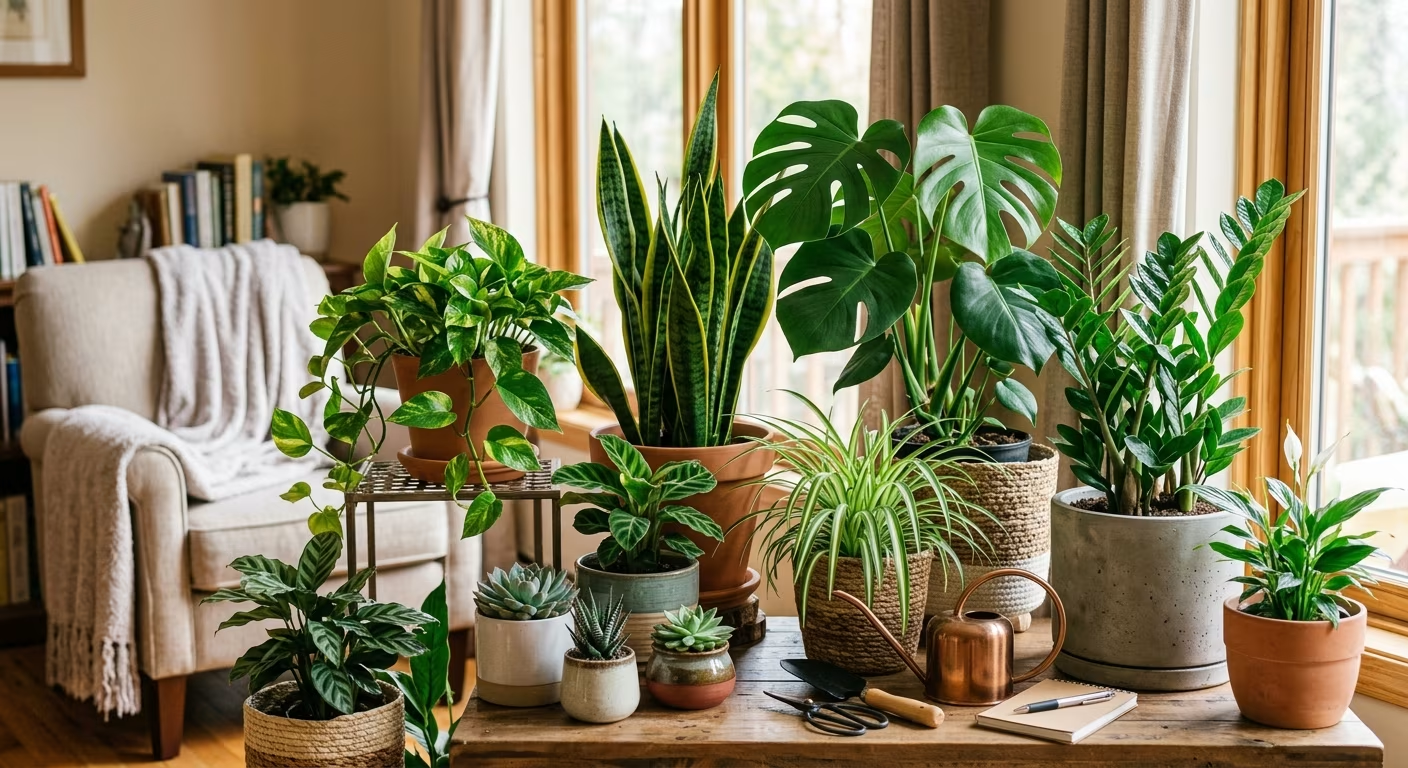
I’ve been growing houseplants for over 15 years from a single pothos on a rented apartment windowsill to a home now bursting with over 40 varieties. In that time, I’ve killed plants, revived others, and learned what actually works. This guide is everything I wish someone had told me on day one.
Whether you’re completely new to plants or you’ve tried and failed before, you’re in the right place. The truth is, you don’t need a green thumb you just need the right plant for the right spot. Let me show you how.
Why Bother With Houseplants?
Before we dive into which plants to choose, let’s talk about why they matter beyond just looking pretty on your shelf.
Most of us spend the vast majority of our lives indoors. Research published in Building and Environment (2025) confirms that indoor green infrastructure can improve air quality, regulate humidity, and enhance thermal comfort. And the psychological benefits are real too. A University of Reading study found that overall, participants perceived that all green and healthy plants would benefit their wellbeing with pothos, weeping fig, and palm delivering the greatest sense of wellbeing.
On a personal level, I noticed the difference within weeks of filling my home office with plants. Less stress, more focus. Science backs that up too a 2024 study in MDPI found that among indoor plant owners, the most commonly reported benefits were decorative and aesthetic value, improved air quality, and calming effects.
“For those of us who are stuck inside all day, houseplants are an easy way of connecting with nature.” Greater Good Science Center, UC Berkeley
How to Choose the Right Indoor Plant for You
Here’s the mistake most beginners make: they fall in love with a plant at the garden centre and bring it home without asking the most important question “Does my home suit this plant?”
Before buying anything, do a quick audit of your space:
- Light: Which direction do your windows face? South-facing = bright light. North-facing = low light.
- Humidity: Is your home dry (heated in winter) or naturally humid?
- Your lifestyle: Are you home daily or travelling often? Do you forget to water things?
- Pets or children: Some popular plants are toxic to cats, dogs, or small children.
My rule of thumb: always match the plant to your lifestyle, not your aspirations. I once bought a fiddle leaf fig because it looked incredible and killed it within three months. I now grow a ZZ plant in the same spot and it’s thriving two years later.
The 8 Best Indoor Plants for Beginners (From Experience)
These are the plants I recommend to every beginner I meet. They’re forgiving, beautiful, and actually enjoyable to grow.
1. 🌿 Snake Plant (Sansevieria / Dracaena trifasciata)
If I could only recommend one plant for a complete beginner, it would be the snake plant. Also known as Mother-in-Law’s Tongue, it thrives on neglect, needs watering only every 4 5 weeks, and tolerates both bright and low light. I have one in my bathroom no natural light, no fuss and it’s been going strong for three years.
| Care Factor | Details |
|---|---|
| 💡 Light | Low to bright indirect |
| 💧 Watering | Every 4 6 weeks |
| 🌡️ Temperature | 15 29°C (60 85°F) |
| ⚠️ Pet Safe? | No toxic to cats & dogs |
| 🏆 Best For | Bedrooms, offices, dark corners |
2. 🍃 Pothos (Epipremnum aureum)
Pothos is the plant that turned me into a plant person. It’s a trailing vine that just keeps growing train it up a shelf, let it cascade down a bookcase, or hang it by a window. Golden pothos has stunning yellow-green variegated leaves, while ‘Marble Queen’ is creamy white and green. It’s nearly indestructible and tells you when it needs water by letting its leaves droop slightly.
| Care Factor | Details |
|---|---|
| 💡 Light | Low to bright indirect |
| 💧 Watering | Every 1 2 weeks |
| 🌡️ Temperature | 18 29°C (65 85°F) |
| ⚠️ Pet Safe? | No toxic to pets |
| 🏆 Best For | Shelves, hanging baskets, offices |
3. 🌱 ZZ Plant (Zamioculcas zamiifolia)
The ZZ plant is practically indestructible, coping well with low light and infrequent watering (every 4 5 weeks). With its glossy, dark-green leaves and modern look, it’s one of my favourite statement plants for people who travel a lot or simply don’t have much time. I gifted one to a friend who describes herself as a “plant killer” two years on, it’s still thriving.
4. 🕷️ Spider Plant (Chlorophytum comosum)
The spider plant is a fast-growing, cheerful plant that produces little “babies” on long trailing stems these can be snipped off and propagated in water. Bright, indirect light is best, but it will also grow in shadier conditions. Its leaves can grow up to 18 inches long. It’s also on NASA’s original list of plants studied for air pollutant absorption.
5. ☮️ Peace Lily (Spathiphyllum)
The peace lily is known for its glossy green foliage and long-lasting white flowers. It’s one of the few flowering plants that does well in lower light perfect for a hallway or bedroom corner. It will actually droop dramatically when it needs water, then bounce back after a good drink. Don’t let that scare you it’s just communicating! Note: keep away from pets as it is toxic to cats and dogs.
6. 🌵 Aloe Vera (Aloe vera)
A robust succulent, Aloe Vera is considered one of the best plants for beginners; it’s super easy-care, and the gel-like substance in its leaves is valued for its medicinal properties handy for minor burns and skin irritation. Native to dry climates, it only needs water every couple of weeks and enjoys a sunny spot. I keep mine on my kitchen windowsill it’s both decorative and genuinely useful.
7. 🪴 Rubber Plant (Ficus elastica)
If you want drama without the drama of difficult care, the rubber plant delivers. Its large, glossy leaves which can be deep green, burgundy, or variegated make it a real statement piece. It prefers bright indirect light and moderate watering, and it’s surprisingly forgiving of occasional neglect. Mine grew from a 30cm pot plant to over 5 feet in just three years.
8. 🌿 Bird’s Nest Fern (Asplenium nidus)
For those who love a lush, tropical look, the bird’s nest fern is a fantastic choice. You’ll only need to water it once a week or two, and it fares best in indirect sunlight. It loves humidity, making it perfect for bathrooms or kitchens. Its bright green, rippled fronds are genuinely beautiful and make any space feel like a rainforest.
Quick Comparison: Best Plants at a Glance
| Plant | Light Needed | Watering Frequency | Pet Safe? | Difficulty |
|---|---|---|---|---|
| Snake Plant | Low Bright Indirect | Every 4 6 weeks | ❌ No | ⭐ Very Easy |
| Pothos | Low Bright Indirect | Every 1 2 weeks | ❌ No | ⭐ Very Easy |
| ZZ Plant | Low Medium | Every 4 5 weeks | ❌ No | ⭐ Very Easy |
| Spider Plant | Bright Indirect | Every 1 2 weeks | ✅ Yes | ⭐ Very Easy |
| Peace Lily | Low Medium Indirect | Weekly | ❌ No | ⭐⭐ Easy |
| Aloe Vera | Bright/Direct | Every 2 3 weeks | ❌ No | ⭐ Very Easy |
| Rubber Plant | Bright Indirect | Every 1 2 weeks | ❌ No | ⭐⭐ Easy |
| Bird’s Nest Fern | Medium Indirect | Every 1 2 weeks | ✅ Yes | ⭐⭐ Easy |
Essential Indoor Plant Care Tips (From Real Experience)
💧 Watering: The #1 Cause of Plant Death
Overwatering kills more houseplants than anything else. The golden rule? Always check the soil before you water. Stick your finger an inch into the soil if it feels damp, wait. If it’s dry, water thoroughly and allow excess to drain. Most beginner indoor plants need watering once a week or every two weeks, depending on the temperature and lighting conditions.
I use a simple system: I check all my plants every Sunday. Some get water, some don’t it depends entirely on what the soil says, not what the calendar says.
☀️ Light: Match the Plant to Your Windows
Most indoor plants do best in bright indirect light near a window but out of direct sun rays, which can scorch leaves. Very few houseplants can handle strong, direct sun. If you have a dark room, go for snake plants or ZZ plants they’re genuinely adapted for low light (though no plant can survive in complete darkness).
🌡️ Humidity & Temperature
Many houseplants are native to tropical, humid conditions. Grouping plants together naturally adds humidity as does placing a tray of pebbles and water beneath pots (without letting roots sit in water). This is especially important in winter when indoor heating dries the air significantly.
🪴 Soil & Repotting
Easy houseplants generally thrive in well-draining soil with good aeration and enough nutrients. Repot when plants outgrow their pots and to refresh the soil usually every 2 years is sufficient. When you repot, go up just one pot size to avoid root rot from too much soil holding moisture.
🌿 Feeding
Feed only in the growing season (spring through summer) to promote new growth. In autumn and winter, most houseplants are dormant and don’t need fertilising. A standard liquid houseplant feed diluted to half strength once a month is plenty.
Common Mistakes Beginners Make (And How to Avoid Them)
- Overwatering the most common killer. Always check soil moisture first.
- Wrong light placement placing high-light plants in dark corners. Always read the label.
- Ignoring drainage always use pots with drainage holes. Root rot is swift and deadly.
- Repotting too soon many plants prefer to be slightly root-bound. Don’t rush to upsize.
- Forgetting seasonal changes light levels vary with the seasons, so move plants closer to a window in darker winter months.
A Note on Indoor Plants and Air Quality
You’ve probably seen the claim that houseplants “purify the air.” The reality is a bit more nuanced. NASA’s original research found that plants can remove volatile organic compounds (VOCs) in sealed environments but real-world homes are very different from sealed chambers. A widely-cited meta-analysis found that to achieve laboratory-level air purification, you’d need an impractical number of plants per square meter.
That said, a 2025 review in Building and Environment confirms that indoor plants can improve air quality, regulate humidity, and enhance thermal comfort with performance depending on plant density, species selection, and ventilation. And research published in Frontiers in Psychology (2024) found that indoor plants can reduce pollutant concentrations, particularly formaldehyde, benzene, and toluene, while also increasing relative humidity.
My take: don’t grow plants purely to clean your air, but do enjoy the very real mood, focus, and aesthetic benefits they bring.
Frequently Asked Questions
What is the easiest indoor plant to keep alive?
The snake plant and ZZ plant are widely considered the easiest houseplants to keep alive. Both tolerate low light, infrequent watering, and a range of temperatures. If you’ve killed plants before, start with one of these.
How often should I water my houseplants?
It depends on the plant, pot size, light, and season. As a general rule, check the soil before every watering. Water when the top inch of soil is dry for most plants, or when the soil is completely dry for succulents and snake plants.
Which indoor plants are safe for pets?
Spider plants and bird’s nest ferns are both considered pet-safe. Many popular houseplants including pothos, snake plants, ZZ plants, and peace lilies are toxic to cats and dogs. Always check before buying if you have pets.
Can indoor plants grow in low light?
Yes snake plants, ZZ plants, and pothos all cope well with low light. Remember though: low light isn’t no light. All plants need some natural light to survive and thrive.
When should I repot my houseplant?
Repot when you see roots growing out of the drainage holes, or when the plant dries out unusually fast after watering. Generally, repot every 1 2 years, going up one pot size at a time.
Final Thoughts: Start Small, Grow Confidently
The best indoor plant is the one you’ll actually enjoy caring for. My advice? Start with just one or two plants from this list, learn what they need, and build from there. Before you know it, you may have a veritable indoor jungle and the confidence to match.
Plants have a wonderful way of teaching patience, attention, and care. They give back far more than they ask for.
Pick your first plant, find its best spot in your home, and enjoy the process. You’ve got this.
References
- “The multifaceted role of indoor plants: A comprehensive review of their impact on air quality, health, and perception” Building and Environment, ScienceDirect, January 2025.
- “Effects of indoor plants on CO2 concentration, indoor air temperature and relative humidity in office buildings” MDPI / PubMed Central, 2024.
- “Editorial: Effects of indoor plants on well-being” Frontiers in Psychology, PubMed Central, 2024.
- “Exploring the Indoor Plant People Relationship Through Qualitative Responses” MDPI, PubMed Central, 2024.
- “Owning houseplants can boost your mental health here’s how to pick the right one” Jenny Berger, University of Reading / The Conversation, April 2023.
- “How Do Plants Make Your Home Happier?” Jenny Berger, Greater Good Science Center, UC Berkeley, January 2024.