
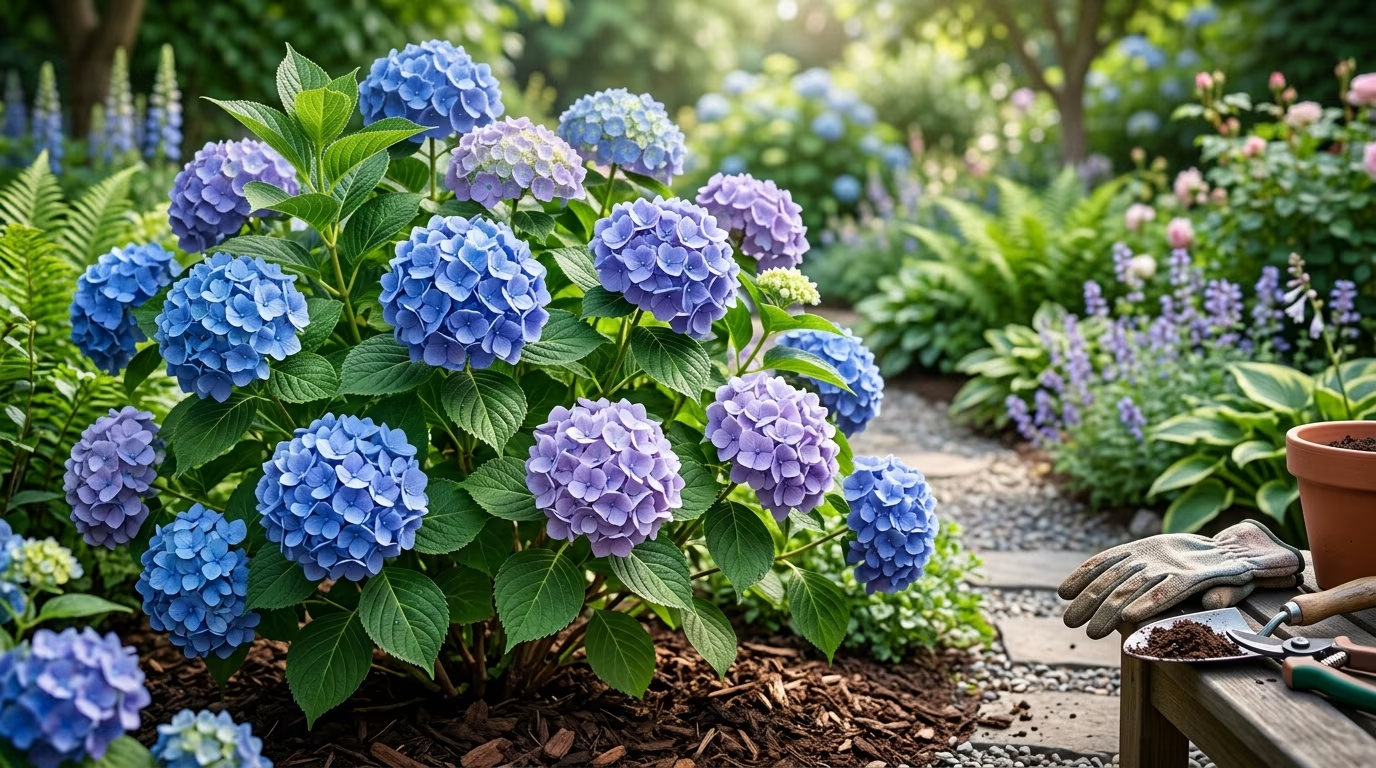
Every summer, I walk through my garden and check on my hydrangeas first. There is nothing quite like those big, lush flower heads blue, pink, white, and purple all at once. But I have also had seasons where I stood in front of a perfectly green, perfectly healthy-looking shrub and thought: “Where are the flowers?”
If that sounds familiar, I want you to know you are not doing anything terribly wrong. Most hydrangea blooming problems come down to a few common causes: pruning at the wrong time, winter or spring frost damage, not enough sunlight, too much nitrogen, or growing the wrong type of hydrangea for your climate. Once you know what you are dealing with, the fix is usually straightforward.
Let me walk you through every major reason and exactly what to do about it.
Quick Diagnosis: Why Is My Hydrangea Not Blooming?
| Symptom | Likely Cause | Quick Fix |
|---|---|---|
| Lots of leaves, no flowers | Too much nitrogen or shade | Switch fertilizer, improve light |
| Plant leafed out but no buds | Wrong pruning time or frost damage | Adjust pruning schedule |
| New plant, no blooms at all | Too young / still establishing | Be patient, give 2 5 years |
| Bloomed before, now nothing | Harsh winter killed buds | Protect buds next winter |
| Buds appear but don’t open | Drought stress or overwatering | Water 1 2 inches per week |
1. You Pruned at the Wrong Time (The #1 Mistake)
This is the one I see most often, and honestly, it is the one I made myself years ago. One of the most common reasons for hydrangeas failing to bloom is improper pruning. Hydrangeas actually bloom best with little or no pruning, so it is important to give plants enough room to grow into their mature size.
Here is the key thing to understand: Depending on the type, hydrangeas bloom on either old wood (growth from the previous season) or new wood (growth from the current season), so make sure you know which kind you have before cutting plants back.
Old Wood Bloomers
Bigleaf (H. macrophylla), oakleaf (H. quercifolia), climbing (H. anomala), and mountain (H. serrata) hydrangeas all bloom on old wood. Lightly prune these back immediately after flowering before plants develop buds for the following growing season.
Real-world example: If you have a big-leaf hydrangea and you cut it back every March “to tidy it up,” you are cutting off every single flower bud that formed the autumn before. The plant looks great by June big and leafy but there are no flowers. I know because I did exactly this with my own mophead for two years before I figured it out.
New Wood Bloomers
Panicle hydrangea (H. paniculata) and smooth hydrangea (H. arborescens) bloom on the current season’s growth. Prune these in late winter or early spring as plants are breaking dormancy.
Reblooming Varieties: The Forgiving Option
There are a few reblooming varieties, such as the Let’s Dance® series or Endless Summer®, that bloom on both old and new wood. These require no pruning, except to trim out any dead, damaged, or diseased branches as needed.
Pro Tip: When in doubt skip pruning for a full season. A year without pruning will not hurt your hydrangea. A year of wrong pruning costs you all your blooms.
2. Winter Cold or Late Spring Frost Killed the Buds
The most popular type of hydrangea the bigleaf hydrangea (Hydrangea macrophylla) with its softball-sized blue or pink orbs blooms on “old” wood. That means the flower buds develop the previous fall on last year’s branches. If we have a colder-than-usual winter, the dormant flower buds may be frozen, leading to few or no blooms the following early summer.
A late spring freeze can damage flower buds even if the plant survives. This often happens after a warm spell causes the hydrangea to start growing, followed by freezing temperatures.
What to do:
- Wrap hydrangeas with burlap during harsh winter months to protect sensitive buds from temperature swings that can damage next year’s flowers.
- Even then, a late spring frost that happens right when the plant is budding could kill the buds. If a frost is forecasted, cover hydrangea shrubs with a sheet until morning.
- If your winters are reliably harsh, consider switching to panicle or smooth hydrangeas they bloom on new wood and are far more cold-reliable.
3. Not Enough (or Too Much) Sunlight
Though hydrangeas prefer protection from hot direct sun, too much shade can prevent them from forming flower buds. Ideal light conditions for hydrangeas are several hours of direct morning sun with afternoon shade, or dappled shade that allows plenty of bright indirect light.
Too little light can hinder blooming, while too much direct sunlight can stress the plant, especially in hot climates. Ensure your hydrangea receives at least 3 4 hours of sunlight daily.
A hydrangea planted in deep shade may grow large green leaves with very few flowers. This is especially common near large trees, on the north side of a house, or in areas that have become shadier over time as nearby plants matured.
If your garden has grown over the years and a once-sunny spot is now shaded by a large tree, that is almost certainly your culprit. I relocated a lacecap hydrangea from under a maple to a brighter border, and it bloomed the very next season.
4. Too Much Nitrogen Fertilizer
Nitrogen is essential for healthy leaf and plant development, but too much nitrogen can cause plants to produce excessive leaf growth at the expense of flowers.
A tell-tale sign: your plant is lush, almost too lush dark green, full, beautiful leaves, but not a single flower head. The most likely culprit is an excess of nitrogen, probably caused by regular fertilizing of nitrogen-craving lawns next to the hydrangea bed. Nitrogen produces dense vegetative growth and dark green leaves, at the expense of flowers.
What to do:
- Use a slow-release fertilizer with a higher phosphorus content to promote flowering.
- Do not use a fertilizer high in nitrogen; use one that is high in phosphorus (P) in the early spring and midsummer.
- Avoid fertilizing with nitrogen nearby; better yet, test the soil to see how the nutrition profile fares. County Extension offices and most garden centers offer do-it-yourself test kits.
5. Soil Problems: pH and Poor Fertility
Hydrangeas prefer fertile, well-draining soil with a slightly acidic pH. Extreme pH levels may impair the absorption of nutrients, which can affect a plant’s ability to form flower buds.
It is worth noting: soil pH affects flower color, not whether the plant blooms. Bloom failure is usually caused by pruning, sunlight, or winter damage, not pH. But extreme pH swings can make nutrients unavailable to the plant, indirectly reducing bloom potential.
Acidic soils with a pH of less than 5.5 produce blue flowers; soils with a pH greater than 6.0 produce pink flowers. Do a soil test to determine the existing pH and amend as indicated to change it.
For soil improvement, add compost, leaf mold, or aged manure hydrangeas respond beautifully to rich, organic soil.
6. Drought Stress and Watering Problems
Hydrangeas need consistent moisture to bloom. Both drought stress and overwatering can cause issues, as stressed plants will focus on root and foliage production rather than flowers.
When they experience prolonged periods of drought stress, their energy shifts to survival rather than bloom production. Without adequate water, buds may fail to develop, or existing buds may wither before they can bloom.
My watering rule of thumb:
- Ensure your hydrangeas receive about 1 2 inches of water per week, including rainfall.
- Water deeply and at the base. Hydrangeas thrive when their roots receive a slow, deep soak. Use a soaker hose or water directly at the soil line rather than sprinkling from above, which can cause fungal issues.
- Keep the soil evenly moist but well-drained. Use mulch around the base to retain moisture and protect the roots from temperature fluctuations.
7. Deer and Wildlife Damage
This one surprises a lot of people. For gardeners who live in rural or suburban areas, the tender new leaf growth and young flower buds of hydrangeas are appealing to deer. Grazing can result in partial or total loss of flowers for the growing season. Plants are most susceptible in late winter or early spring when food sources for deer are scarce.
Deer and other common garden animals often browse the plants. Both deer and rabbits can damage flowers produced on old wood before shrubs even have the opportunity to bloom.
Fix: Protect plants with repellent, barriers, or other remedies to discourage deer. A simple wire cage or garden fence around vulnerable plants in early spring can make all the difference.
8. Your Plant Is Simply Too Young
Patience is an underrated gardening skill. Newly planted hydrangea shrubs can take 2 to 5 years before they begin blooming. Purchase larger specimens if you do not want to wait, or simply enjoy the establishment of smaller specimens. Be patient and make sure there are not other issues preventing plants from flowering.
Young hydrangeas, particularly those planted within the last one to three years, often prioritize root development and foliage growth over flowering. During this establishment phase, the plant is busy adapting to its environment, which can delay blooms.
New hydrangeas often skip a year or two of blooming while they establish roots. This is completely normal. Keep the soil evenly moist, avoid fertilizing the first year, and give the plant time to settle in.
Choosing the Right Hydrangea for Your Climate
Sometimes the problem is not care it is the type of hydrangea you planted. Some hydrangeas are more reliable bloomers in cold climates than others. Bigleaf hydrangeas are beautiful, but they can be frustrating in areas with harsh winters or late spring freezes. If the stems die back every winter, the plant may keep regrowing from the base without blooming well.
| Hydrangea Type | Blooms On | Best For | Prune When? |
|---|---|---|---|
| Bigleaf (H. macrophylla) | Old wood | Milder climates | Right after flowering |
| Panicle (H. paniculata) | New wood | Cold climates, beginners | Late winter / early spring |
| Smooth (H. arborescens) | New wood | Cold-hardy gardens | Late winter / early spring |
| Oakleaf (H. quercifolia) | Old wood | Shade-tolerant spots | Right after flowering |
| Reblooming (Endless Summer®, Let’s Dance®) | Old & new wood | Most climates | Minimal pruning only |
In colder climates, panicle hydrangeas and smooth hydrangeas are often more dependable because they bloom on new wood. Reblooming bigleaf and mountain hydrangeas (e.g., Let’s Dance, Endless Summer, and Tuff Stuff Series) can also be good options because they have a better chance of flowering even if some old buds are damaged.
Your Simple Hydrangea Bloom Troubleshooting Checklist
Before you panic or pull out your plant, run through this checklist:
- ✅ Pruning timing: Did you prune at the right time for your variety?
- ✅ Sunlight: Is the plant getting at least 3 4 hours of gentle morning sun?
- ✅ Fertilizer: Are you avoiding high-nitrogen fertilizers near your hydrangeas?
- ✅ Winter protection: Were the buds protected during last winter’s cold snaps?
- ✅ Watering: Is the plant consistently getting 1 2 inches of water per week?
- ✅ Age: Has the plant had 2 5 years to establish itself?
- ✅ Wildlife: Are deer or rabbits browsing on your plant in late winter?
- ✅ Variety match: Is the hydrangea type suited to your climate zone?
Remember: If your hydrangea is not blooming, do not give up on it. With the right pruning schedule, better placement, proper feeding, and a little winter protection, most hydrangeas can return to reliable flowering.
Final Thoughts From the Garden
I have been growing hydrangeas for well over a decade and the one lesson that keeps coming back to me is this: most bloom problems are human-made, not plant-made. We over-prune. We over-feed nitrogen. We plant in too much shade. And then we wonder what went wrong.
The good news? Every single one of these problems is fixable. Even if you lose a bloom season this year, with a little patience and a few adjustments, you can have those gorgeous flower heads back next summer often bigger and better than before.
Take notes on your plant: what variety it is, when it bloomed last, and what you did (or did not do) last autumn. That information alone will tell you most of what you need to know.
Happy growing and may your hydrangeas reward you with the summer show they are capable of.
References
- “Why Doesn’t My Hydrangea Bloom?” Penn State Extension, Penn State University. Last reviewed June 2026.
- “Hydrangeas: Planting, Growing, and Pruning Hydrangea Shrubs” The Old Farmer’s Almanac. Updated 2025.
- “8 Reasons Hydrangeas Won’t Bloom & How to Make Them Flower” Garden Design Magazine. Updated November 2025.
- “Hydrangea Care & Planting Guide” Garden Design Magazine. Updated November 2025.
- “Here’s What to Do If Your Hydrangea Is Not Blooming” Platt Hill Nursery. Published April 8, 2025.