
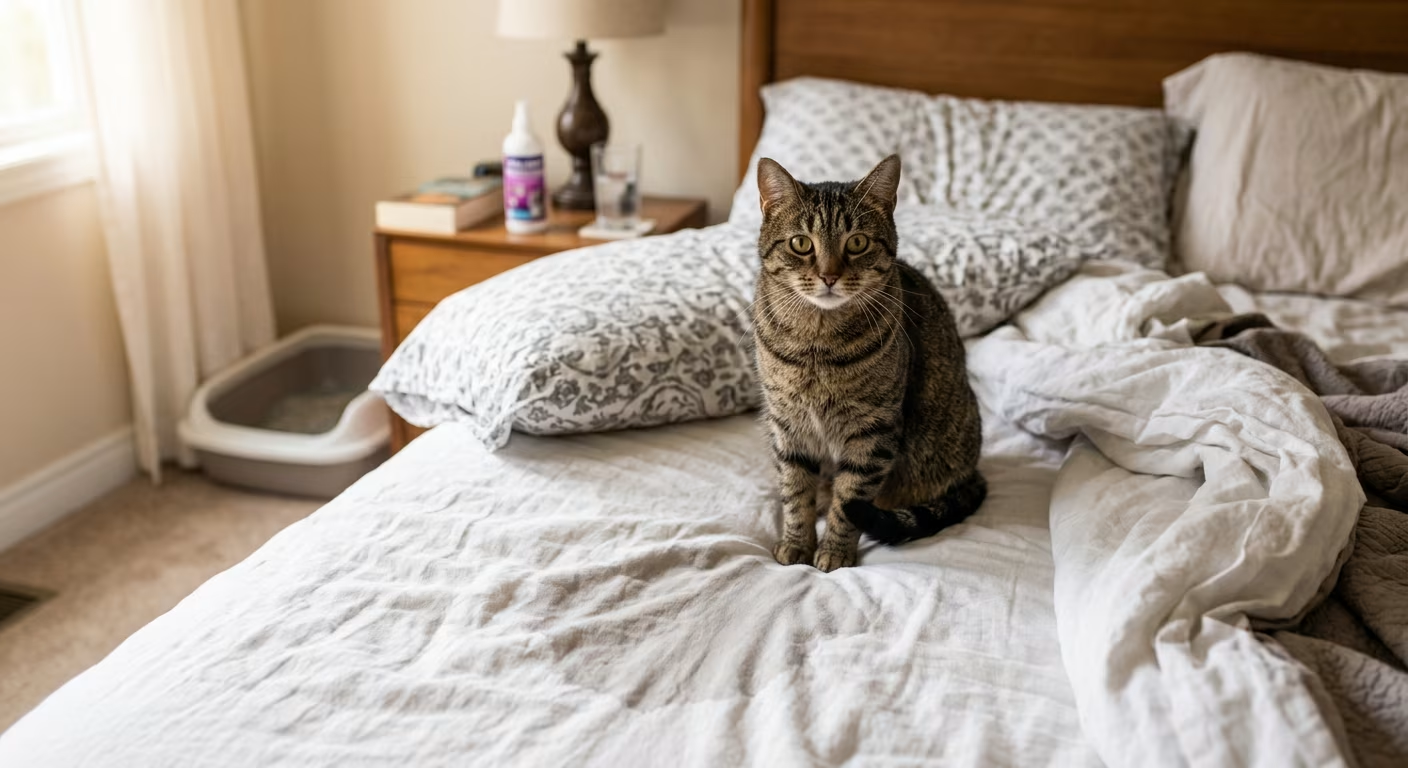
I’ve been working with cats for over a decade as a feline behavior consultant and a lifelong multi-cat household owner. The number-one question I get from desperate pet parents? “Why is my cat peeing on my bed?” Trust me, I’ve been there myself. One morning I woke up to a soaking wet duvet, courtesy of my 7-year-old tabby, Miso. I was frustrated, confused, and honestly a little heartbroken. But that experience and everything I’ve learned since is exactly why I’m writing this guide for you today.
If you’re reading this at midnight, furiously stripping your bed sheets, take a breath. Your cat is not doing this out of spite. They’re trying to tell you something important and this guide will help you figure out exactly what that is.
🐾 First Things First: It’s Never “Just Revenge”
A lot of cat owners assume their cat is “mad” at them and peeing on the bed as payback. I thought the same thing when Miso did it after I came back from a week-long trip. But here’s what the science says:
Cats do not pee outside the litter box including on beds out of anger or to punish you. Urinating on a bed instead of in the litter box is almost always the result of either a medical condition or stress and anxiety.
Understanding this is the first step to actually solving the problem. Let’s break it all down.
🏥 Part 1: Medical Causes (Always Rule These Out First)
In my experience, the very first thing you should do before anything else is call your vet. I know that sounds like the boring answer, but it matters enormously. Here’s why:
Many serious health conditions show up first as a change in bathroom behavior. Your cat can’t tell you their bladder hurts. Peeing on your soft, warm bed is often the only signal they have.
Common Medical Causes at a Glance
| Medical Condition | Why It Causes Bed Peeing | What To Watch For |
|---|---|---|
| Urinary Tract Infection (UTI) | Causes pain & urgency cat can’t reach the box in time | Straining, blood in urine, frequent small trips to litter box |
| Bladder Stones / Crystals | Irritates bladder lining, creates urgent urge to pee | Crying when peeing, reduced urine output |
| Kidney Disease | Diseased kidneys can’t concentrate urine → more frequent urination | Increased thirst, weight loss, vomiting |
| Diabetes Mellitus | Excess blood sugar = higher urine volume = urgency | Drinking a lot, increased appetite, weight loss |
| Arthritis (Senior Cats) | Painful joints make getting into litter box difficult | Stiffness, reluctance to jump, slow movement |
| Feline Idiopathic Cystitis (FIC) | Stress-triggered bladder inflammation with no infection | Frequent trips to box, crying, blood in urine |
| Cognitive Dysfunction (Senior Cats) | Cat forgets where the litter box is | Confusion, disorientation, changes in sleep patterns |
⚠️ Emergency Warning: If your cat is repeatedly going to the litter box but producing little or no urine, this could be a life-threatening urethral blockage. Seek emergency veterinary care immediately.
I had a client let’s call her Sarah whose 4-year-old male cat, Biscuit, started peeing on her pillow every morning. She assumed it was behavioral. Three days later, Biscuit was in an emergency vet clinic with bladder crystals. The early warning was the bed-wetting. Always get a vet check first.
😰 Part 2: Stress & Behavioral Causes
Once your vet gives your cat a clean bill of health, it’s time to play detective at home. In my years of work, I’d say about 40% of bed-peeing cases that aren’t medical come down to stress, anxiety, or environmental issues.
Why Does Stress Send Cats to Your Bed?
Your bed smells powerfully of you. To a stressed or anxious cat, that scent is incredibly comforting. By peeing there, your cat is mixing their scent with yours a way of creating a shared, safe-smelling territory. It’s not a personal attack. It’s actually a strange kind of compliment.
Common stress triggers I’ve seen include:
- 🏠 Moving to a new home everything smells wrong and unfamiliar
- 👶 A new baby or person in the household
- 🐕 A new pet (especially a dog or another cat)
- ⏰ Changes in your work schedule suddenly being away more hours
- 🛋️ Rearranged furniture yes, really! Cats are creatures of habit
- 🧳 Your absence going on vacation can trigger anxiety-peeing
I once moved my couch three feet to the left. Within two days, my cat Miso had peed on my bed. Cats thrive on predictability even small changes can feel destabilizing to them.
Territory Marking
In multi-cat households, competition is real. If a new cat joins the home, your existing cat may start marking high-value spots like your bed to reassert their claim. Your bed is prime real estate in cat territory because it smells most strongly of the person they love most: you.
🚽 Part 3: Litter Box Problems
This is the most overlooked cause and one of the easiest to fix. I can’t count how many times a simple litter box change resolved months of bed-peeing drama.
Here’s a blunt truth: if the litter box is unpleasant, your cat will find somewhere better to go. And your soft, clean bed is a very attractive alternative.
Common Litter Box Mistakes
- Not enough boxes: The golden rule is one litter box per cat, plus one extra. Two cats = three boxes minimum.
- Wrong location: Near loud appliances (like a washing machine), in high-traffic areas, or too close to food bowls.
- Not cleaned frequently enough: Scoop daily. Full litter changes weekly. Cats are clean animals they won’t use a dirty box.
- Wrong type of litter: Some cats hate scented litter. Others dislike coarse textures. Experiment to find what your cat prefers.
- Box too small or hard to enter: Especially important for senior cats with arthritis or kittens with short legs.
- Covered litter boxes: Many cats feel trapped inside covered boxes and will refuse to use them.
“I use the analogy of a Porta Potty,” one vet famously put it. “Who wants to use one of those when it’s dirty, and you can smell it before you see it?” PetMD
✅ Part 4: How to Stop Your Cat Peeing on the Bed Step by Step
Here’s the action plan I give every client who comes to me with this problem:
Step 1: Visit the Vet First
Before anything else, rule out medical causes. A urinalysis, blood panel, and physical exam can identify UTIs, crystals, kidney disease, and diabetes. Most of the time, once the underlying condition is treated, cats go right back to their litter box habits.
Step 2: Audit Your Litter Box Setup
Use this quick checklist:
- ☐ One box per cat, plus one extra
- ☐ Scooped at least once daily
- ☐ Full litter replacement every 1 2 weeks
- ☐ Placed in quiet, private locations
- ☐ Away from food and water bowls
- ☐ Large enough for your cat to turn around comfortably
- ☐ Low sides for senior or arthritic cats
- ☐ Unscented, fine-grained litter (most cats prefer this)
Step 3: Identify and Reduce Stress
Think back: when did this start? Did anything change around that time? New pet, new person, new schedule, moved furniture? Address the root cause. Offer extra play sessions, maintain consistent feeding times, and keep your cat’s favorite spots stable.
Step 4: Clean the Bed Thoroughly
This is critical. If your cat can smell even a trace of previous urine on your bed, they will return to the same spot. Regular laundry detergent won’t cut it you need an enzyme-based pet urine cleaner that breaks down urine at the molecular level. Wash all bedding, and if possible, use a waterproof mattress protector going forward.
Step 5: Change the Meaning of the Bed
This is one of my favorite tricks: feed your cat small treats on your bed, and play with them there regularly. Cats naturally avoid urinating where they eat or play. By turning the bed into a positive “food and fun” zone, you can break the association with urination.
Step 6: Temporarily Block Access
If the problem persists, close your bedroom door while you’re working on the other steps. Gradually reintroduce access once your cat is consistently using the litter box. Don’t do this long-term if it causes extra anxiety pair it with extra affection and playtime elsewhere.
Step 7: Consider a Feline Pheromone Diffuser
Products that mimic natural feline calming pheromones (available from your vet or pet store) can help reduce stress-related marking. They won’t fix a medical problem, but for anxiety-driven cases, many of my clients have seen real improvement.
🔴 When Should You Call the Vet Urgently?
Some signs should never wait for a regular appointment:
- 🚨 Cat is straining to urinate but producing little or no urine
- 🚨 Blood visible in urine
- 🚨 Cat is crying out in pain when trying to urinate
- 🚨 Sudden complete change in bathroom habits in an otherwise healthy cat
- 🚨 Cat appears lethargic, is vomiting, or refusing food alongside the behavior change
These can be signs of a urethral blockage a life-threatening emergency, particularly in male cats. Don’t wait.
💡 Quick-Reference Summary
| Cause | What To Do | Urgency |
|---|---|---|
| UTI / Bladder Stones | Vet visit diagnosis & medication | 🔴 High |
| Kidney Disease / Diabetes | Vet visit bloodwork & treatment plan | 🔴 High |
| Arthritis (Senior Cat) | Low-sided litter box, vet pain management | 🟡 Medium |
| Stress / Anxiety | Identify trigger, extra play, pheromone diffuser | 🟡 Medium |
| Dirty / Wrong Litter Box | Scoop daily, try new litter type/location | 🟢 Low (fix today) |
| Territory Marking | Spay/neuter, add resources in multi-cat home | 🟡 Medium |
🐱 Final Thoughts From Someone Who’s Been There
Dealing with a cat who pees on the bed is exhausting and demoralizing but please don’t give up on your cat. In almost every case I’ve worked through, there was a clear, solvable reason behind the behavior. It just took some detective work and patience.
Your cat isn’t broken. They aren’t punishing you. They’re asking for help. And now you have the tools to answer that call.
Start with a vet visit. Audit the litter box. Reduce stress. Clean thoroughly. With a little patience, most cats come right back to their good habits.
You’ve got this and so does your cat. 🐾
References
- Cornell University College of Veterinary Medicine “Feline Behavior Problems: House Soiling” Cornell Feline Health Center (no date; authoritative institutional source, regularly maintained)
- PetMD “10 Reasons Why Your Cat Is Peeing on the Bed and How To Stop It” PetMD Editorial Team, reviewed by veterinarians. Published May 14, 2024.
- Aloha Veterinary Hospital “6 Reasons Your Cat Is Peeing Outside the Litter Box” March 16, 2023.
- Gardens Animal Hospital “Why Is My Cat Peeing Outside the Litter Box? Causes & Symptoms” February 16, 2026.
- Brinker Veterinary Hospital “Cat Peeing Outside of Their Litter Box: Causes and Solutions” December 20, 2024.
- PetMD “6 Reasons Your Cat Is Peeing Outside the Litter Box and How To Stop It” July 18, 2025.