
Written from years of hands-on veterinary experience helping dog owners navigate one of the most misunderstood parts of female dog ownership.
The first time I saw a panicked dog owner rush in because her 7-month-old Golden Retriever puppy was “bleeding and acting strange,” I knew this was a conversation I’d be having thousands of times. That puppy wasn’t sick she was simply in heat for the first time. The relief on that owner’s face when I explained what was happening told me everything: dog owners need clear, trustworthy information about the canine heat cycle.
Whether your dog just had her first heat or you’ve been through this before and want a refresher, this guide covers everything from the very first signs to keeping her safe and healthy throughout each stage.
What Does “In Heat” Actually Mean?
When we say a dog is “in heat,” we’re referring to the fertile phase of her reproductive cycle the time her body is biologically ready to become pregnant. The technical term is estrus, and the full reproductive cycle is called the estrous cycle.
Here’s something many owners don’t realize: dogs do not experience menopause. Unlike humans, dogs continue to go into heat and can become pregnant throughout their lives, even into their senior years. That’s why understanding this cycle and knowing when to intervene is so important for every dog owner.
“In all my years of practice, the biggest mistake I see owners make is assuming heat only happens when they see bleeding. The cycle actually starts before the visible bleeding becomes obvious.”
When Does a Dog First Go Into Heat?
Timing varies significantly based on breed size this is one of the first things I explain to new dog owners:
| Dog Size | First Heat (Approximate Age) |
|---|---|
| Toy / Small Breeds | 4 7 months |
| Medium Breeds | 7 9 months |
| Large Breeds | 12 16 months |
| Giant Breeds (e.g., Great Dane, Irish Wolfhound) | 18 24 months |
As a general rule, smaller breeds cycle earlier and more frequently, while giant breeds cycle later and less often. Some dogs can even experience their first cycle as early as 4 months, while others won’t cycle until they’re over 2 years old both can be completely normal depending on breed.
One important note: just because a dog can get pregnant during her first heat doesn’t mean she should. Her eggs may not yet be fully matured, and her body is still developing. I always advise owners to wait until at least the second or third cycle before considering breeding and only after full health screening.
How Often Do Dogs Go Into Heat?
Most female dogs go into heat approximately twice a year, roughly every 6 months. However, this isn’t a hard rule. Some important variations to know:
- Small breeds may cycle up to 3 times per year.
- Giant breeds may only cycle once every 12 months.
- Basenjis and Tibetan Mastiffs typically cycle only once a year a well-known breed exception.
- Young dogs often have irregular cycles for the first 1 2 years until their hormones stabilize.
Pro tip from my clinic: Keep a simple journal. Note the start date, how long bleeding lasts, and any behavioral changes. This record becomes invaluable both for tracking her individual rhythm and for helping your vet spot any irregularities early.
The 4 Stages of the Dog Heat Cycle (Estrous Cycle)
The canine estrous cycle has four distinct stages. Understanding each one helps you know exactly what to expect and when to be on high alert.
| Stage | Duration | Key Signs | Fertile? |
|---|---|---|---|
| Proestrus | 7 10 days (avg) | Swollen vulva, bloody discharge, attracts males | No |
| Estrus | 5 10 days (avg) | Discharge lightens, “flagging” tail, receptive to males | Yes peak fertility |
| Diestrus | ~60 90 days | Swelling reduces, no longer receptive; may show false pregnancy signs | No |
| Anestrus | 4 6 months | Rest phase; body prepares for next cycle | No |
Stage 1: Proestrus The Warning Signs Begin
This is the start of the heat cycle. You’ll notice your dog’s vulva beginning to swell and a blood-tinged vaginal discharge. Male dogs will be drawn to her sometimes aggressively but she’ll reject their advances at this stage.
What I always tell owners: Don’t be fooled into thinking she’s in the clear just because she’s not “standing” for males. She’s already emitting pheromones in her urine and discharge. Male dogs can detect a female in heat from an astonishing distance I’ve seen owners shocked when intact males appear seemingly out of nowhere. Keep her on a leash, always.
Stage 2: Estrus The Fertile Window (Most Critical Stage)
This is what most people mean when they say their dog is “in heat.” The discharge typically lightens from red to pink or straw-colored, and she becomes actively receptive to mating. You may notice her “flagging” holding her tail to the side which is her signal that she’s ready.
This is the phase when accidental pregnancies most commonly occur. Her eggs are released (ovulation typically happens around day 2 of estrus), and here’s the part many owners don’t know sperm can survive for up to a week inside the reproductive tract, meaning a single mating attempt can result in pregnancy even if timing seems off.
This is the stage that demands your full supervision. Not partial. Full.
Stage 3: Diestrus The Hormonal Aftermath
Whether your dog mated or not, her body now behaves as if she might be pregnant. Progesterone the pregnancy-maintaining hormone rises during this stage in all female dogs, regardless of whether conception occurred. This is why some dogs show signs of a false pregnancy: nesting, swollen mammary glands, or even lactation.
This is also the stage where pyometra a life-threatening uterine infection can develop. I’ll cover this in detail below.
Stage 4: Anestrus Rest and Recovery
This is the quiet period roughly 4 to 6 months where your dog’s reproductive system rests and resets. Hormone levels are low, and her body is preparing for the next cycle. Most owners won’t notice anything unusual during this phase.
How Long Is a Dog in Heat?
The visible bleeding phase (proestrus + part of estrus) typically lasts 14 to 21 days total. The full heat cycle from proestrus through anestrus can span several months when you include the resting phase.
Here’s the key takeaway: the entire period when your dog can become pregnant spans roughly 2 3 weeks. Don’t let your guard down just because bleeding appears to slow down that’s often when she’s at her most fertile.
Signs Your Dog Is in Heat
Not all dogs are obvious about it. I’ve had clients whose small dogs had what we call “silent heats” barely any visible discharge, very subtle behavioral changes. Here’s a full picture of what to watch for:
🔴 Physical Signs
- Swollen vulva (can be 2 3 times its normal size)
- Bloody or pinkish vaginal discharge
- Swollen nipples
- Increased genital licking
- Tail flagging (holding tail to one side)
🧠 Behavioral Signs
- Restlessness or agitation
- Increased urination (marking with pheromones)
- Clinginess or unusual affection or the opposite: withdrawal
- Reduced appetite
- Anxiety or mood swings
- Attempting to escape the yard or roam
- Mounting behavior or “humping” objects
A personal observation: Some of my most well-trained patients suddenly “forget” their commands during heat. This is entirely hormonal not disobedience. Be patient, reduce training pressure during this period, and know it will pass.
Do Dogs Get Periods? (A Common Question I Hear)
No and this distinction matters. Dogs do not menstruate like humans. The bleeding seen during a dog’s heat cycle is caused by hormonal changes signaling the body is entering fertility not the shedding of an unfertilized egg as in human menstruation. The two processes are biologically very different.
Caring for Your Dog During Heat: Practical Tips
Managing a dog in heat doesn’t have to be overwhelming. Here’s what I recommend to every owner in my practice:
✅ Keep Her Safe from Unintended Mating
- Always use a leash outdoors even in your own backyard. Male dogs can jump fences or dig under them when motivated.
- Avoid dog parks entirely during her heat cycle. Fights and unintended mating can both occur.
- If you have an intact male dog at home, use crates, baby gates, and closed doors. A diaper alone is not sufficient contraception.
✅ Manage the Mess
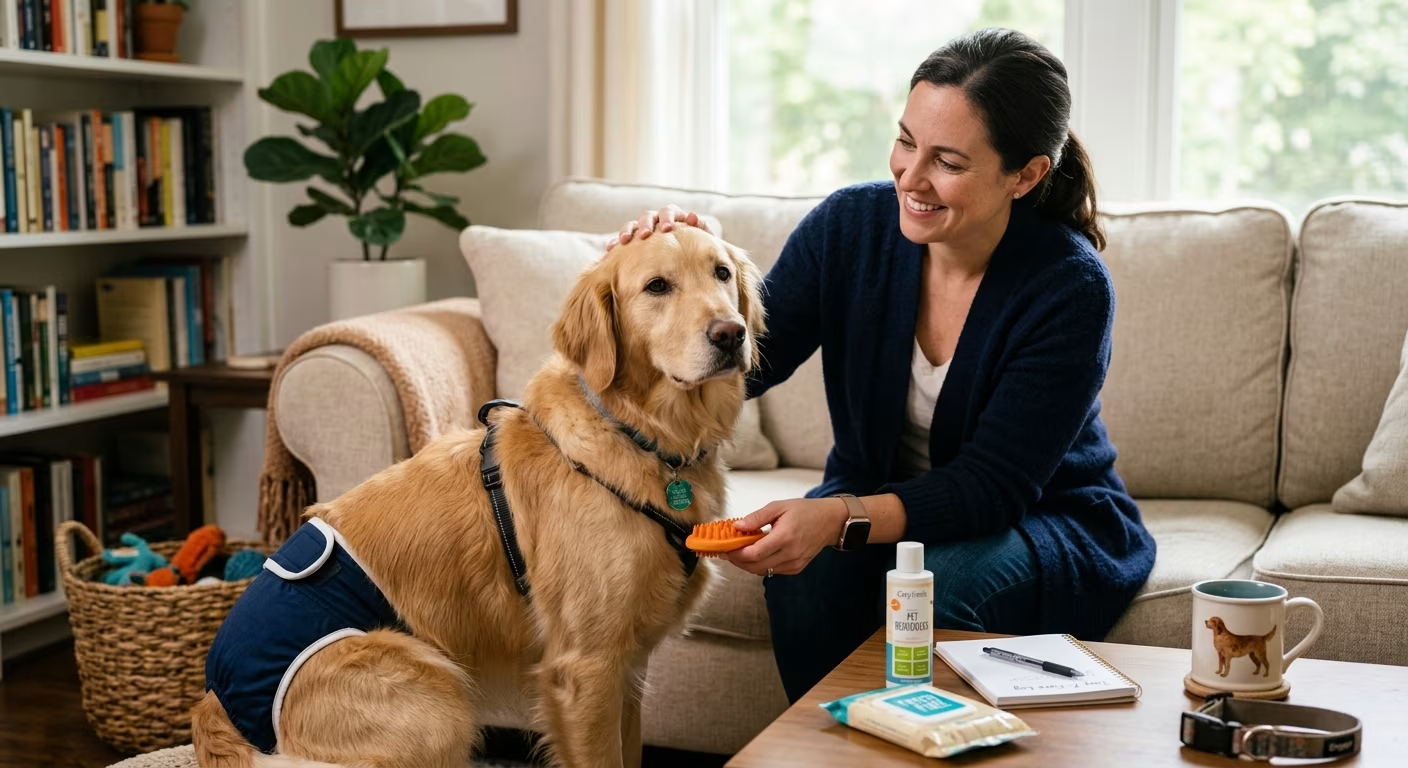
- Dog diapers or “heat pants” can help keep your home clean. Change them every 3 4 hours to prevent skin irritation and infection.
- Place washable covers on furniture she uses.
- Gently clean the genital area with a mild, vet-recommended cleanser if needed but don’t discourage natural self-grooming.
✅ Support Her Emotionally
- Maintain her normal routine as much as possible predictability helps reduce anxiety.
- Offer extra comfort if she’s clingy; give her space if she’s withdrawn.
- Short, calm walks are great for stress relief just keep her leashed and away from other dogs.
- Avoid high-intensity training sessions during peak heat.
✅ Watch for Warning Signs
These symptoms during or after a heat cycle warrant an immediate vet visit:
- Foul-smelling or thick, unusual discharge
- Lethargy, fever, or vomiting
- Excessive drinking or urination beyond what’s normal for heat
- Discharge lasting more than 21 days
- Complete loss of appetite
⚠️ The Serious Health Risk: Pyometra
This is the part I want every unspayed dog owner to read carefully.
Pyometra is a severe, potentially life-threatening infection of the uterus that can develop after heat cycles particularly in middle-aged to older dogs who have been through multiple cycles. In my career, I’ve seen this condition arrive fast and turn critical within 24 48 hours.
Signs of pyometra include:
- Lethargy and weakness
- Loss of appetite
- Vomiting
- Increased drinking and urination
- Pus-like or foul-smelling vaginal discharge
- Bloated abdomen (in “closed” pyometra where discharge can’t escape)
If you see these signs within 4 8 weeks after a heat cycle, go to your vet immediately. This is not a “wait and see” situation. Emergency surgery (spay) is typically the only effective treatment, and delaying care can be fatal.
According to veterinary experts at Cornell University College of Veterinary Medicine, pyometra is entirely preventable if a dog is spayed before the development of infection in the uterus.
Should You Spay Your Dog? What the Evidence Says
This is one of the most common questions I get and there’s no one-size-fits-all answer. Here’s an honest breakdown:
Benefits of Spaying
- Eliminates risk of pyometra entirely
- Reduces risk of mammary tumors especially significant if done before or shortly after the first heat
- Prevents unwanted pregnancies
- No more heat cycles to manage
- Removes risk of ovarian and uterine cancers
Timing Considerations
For small breeds, spaying at around 6 months is commonly recommended. For large and giant breeds, some research suggests waiting until skeletal maturity (which may be 12 18+ months) can reduce the risk of certain joint conditions. This is a nuanced conversation best had with your own vet, taking into account your dog’s breed, size, and health history.
My recommendation: Don’t let fear of the “right time” delay the conversation. Talk to your vet early, make a plan together, and revisit it as your dog matures. There’s no universal right answer but there are right answers for your dog.
For more guidance, see the American Veterinary Medical Association’s pet care resources and the Cornell University College of Veterinary Medicine guidance on canine estrous cycles.
When to Call Your Vet
Always contact your veterinarian if:
- You’re unsure whether your dog is in heat or experiencing a medical issue
- Heat cycles are irregular, very frequent, or stop altogether
- You notice any of the pyometra symptoms listed above
- Your dog seems to be in significant pain or distress
- You’re considering spaying and want personalized timing advice
- Your dog had a possible mating and you want to discuss options
Frequently Asked Questions (FAQ)
❓ Can a dog get pregnant on her first heat?
Yes. Dogs can become pregnant on their very first estrous cycle, which is why supervision is critical from the very beginning. However, breeding during the first heat is generally not recommended, as the dog’s body is still maturing.
❓ Do dogs feel pain during heat?
There’s no strong scientific evidence that dogs experience cramps like humans do during menstruation. However, some dogs do show signs of mild discomfort, restlessness, or irritability. If your dog seems to be in significant pain, consult your vet to rule out other causes.
❓ Can my dog be spayed while in heat?
Technically yes, but it carries increased surgical risk due to engorged blood vessels. Most vets prefer to wait approximately 2 months after the cycle ends to perform an elective spay, when hormones have returned to baseline and surgical risk is lower.
❓ Do dogs go through menopause?
No. Unlike humans, dogs do not experience menopause. They continue to cycle and can theoretically become pregnant into old age, though cycles may become less frequent and litters from senior dogs carry higher risks.
❓ How do I know when the heat is over?
Discharge stops, the vulva returns to its normal size, and she is no longer interested in or attractive to male dogs. If you’re unsure, your vet can confirm with a simple vaginal swab or exam.
Final Thoughts from the Exam Table
After seeing thousands of dogs through their heat cycles, I can tell you this: informed owners make all the difference. The dog owners who understand the cycle are the ones who catch early warning signs, prevent accidental litters, and know when something is actually wrong versus just hormonal and normal.
Your dog is counting on you to understand what her body is going through. You’ve taken the first step by reading this far. Keep her safe, keep her supervised, and don’t hesitate to call your vet when something doesn’t feel right.
Because at the end of the day, that’s what being a responsible dog owner is all about.
References
- Dog Estrous Cycles Cornell University College of Veterinary Medicine, Riney Canine Health Center. (Reviewed 2024)
- Estrous Cycles in Dogs VCA Animal Hospitals. (Reviewed 2023)
- How Long Are Dogs in Heat? What to Know About Heat Cycles American Kennel Club (AKC). (Updated March 2025)
- How Often Do Dogs Go Into Heat? American Kennel Club (AKC). (Updated May 2025)
- Pyometra Cornell University College of Veterinary Medicine, Riney Canine Health Center.
- Pyometra: Potentially Fatal Uterine Infection in Pets University of Illinois College of Veterinary Medicine. (Published July 2025)
- Pet Owner Resources American Veterinary Medical Association (AVMA).