
Been there. My first puppy, a golden retriever named Biscuit, turned my hands into a chew toy for the first three months of his life. Every morning I’d wake up with tiny scratch marks on my wrists. I tried everything I could find online some things worked, most didn’t. That experience set me on a path to understand the why behind puppy biting, not just the how. Now, after years of working with hundreds of pups, I want to share what actually works no gimmicks, no punishment, just clear, kind communication your puppy can understand.
If you’ve just brought home a new puppy, chances are those tiny teeth have already found your fingers, toes, or ankles. You are not alone and your puppy isn’t being mean. Let’s break this down together.
Why Do Puppies Bite? (It’s Not What You Think)
Before you can fix a behaviour, you need to understand it. Puppy biting isn’t aggression it’s biology. Puppies explore the world with their mouths because, unlike humans, they don’t have hands to pick things up or investigate objects.
The two main reasons a puppy bites are:
- Curiosity: They are learning about textures, pressure, and the world around them.
- Teething: Between 3 and 6 months, puppy teeth fall out and adult teeth push through. Chewing relieves the discomfort in sore gums.
“Puppy biting isn’t a sign that something is wrong. It’s simply how puppies explore their world.”
The good news? This phase passes. The challenge is teaching your puppy the right lessons before those needle-sharp teeth grow into adult ones attached to a 60-pound dog.
What Is Bite Inhibition And Why It Matters More Than Stopping Biting
Here’s something most articles skip: the real goal isn’t just to stop biting it’s to teach your puppy how hard is too hard. This is called bite inhibition.
Bite inhibition is a dog’s ability to control the force of their bite. It is one of the most critical safety skills a dog can develop not just for now, but for life. Even the most gentle, well-trained dog may accidentally bite if startled, in pain, or afraid. A dog with good bite inhibition will instinctively soften their grip, even in a reflex moment.
Think of it this way: Would you rather your dog never tries to bite, or that if they do, it causes zero injury? Ideally both but bite inhibition is your safety net.
How Puppies Naturally Learn Bite Inhibition
In a litter, puppies teach each other this lesson constantly. When one pup bites a sibling too hard, the sibling yelps and stops playing. The biter quickly learns: bite too hard = no more fun. That’s the entire framework we replicate with our hands-on training.
Once puppies leave the litter and come home with us, it becomes our job to continue that education.
Step-by-Step: How to Stop Puppy Biting
Here’s the exact sequence I use, and have taught to dozens of new puppy owners. Follow these steps consistently consistency is everything here.
Step 1: The Yelp Method Mimic the Litter
The moment your puppy’s teeth make contact with your skin, give a high-pitched, sharp “Ouch!” or yelp. Make it sound genuine you want to mimic the feedback puppies receive from littermates. Then immediately stop all play and withdraw your attention for 30 60 seconds.
Important caveat: This method doesn’t work for every puppy. Some pups actually get more excited by the noise and bite harder. If that’s your puppy, skip straight to Step 2.
Step 2: Attention Withdrawal The Silent Treatment
If your puppy bites, stop moving, fold your arms, turn your back, and avoid all eye contact. No yelling, no scolding silence. This teaches your puppy the most powerful lesson: biting ends all fun immediately.
As soon as the puppy calms down, re-engage calmly. Repeat every single time.
I once worked with a family whose 10-week-old Lab mix was biting 40+ times a day. Within two weeks of strict attention withdrawal no exceptions, every family member doing the same thing the biting dropped by 80%. Consistency was the only variable that changed.
Step 3: Redirect to a Toy Give Them Something Legal to Bite
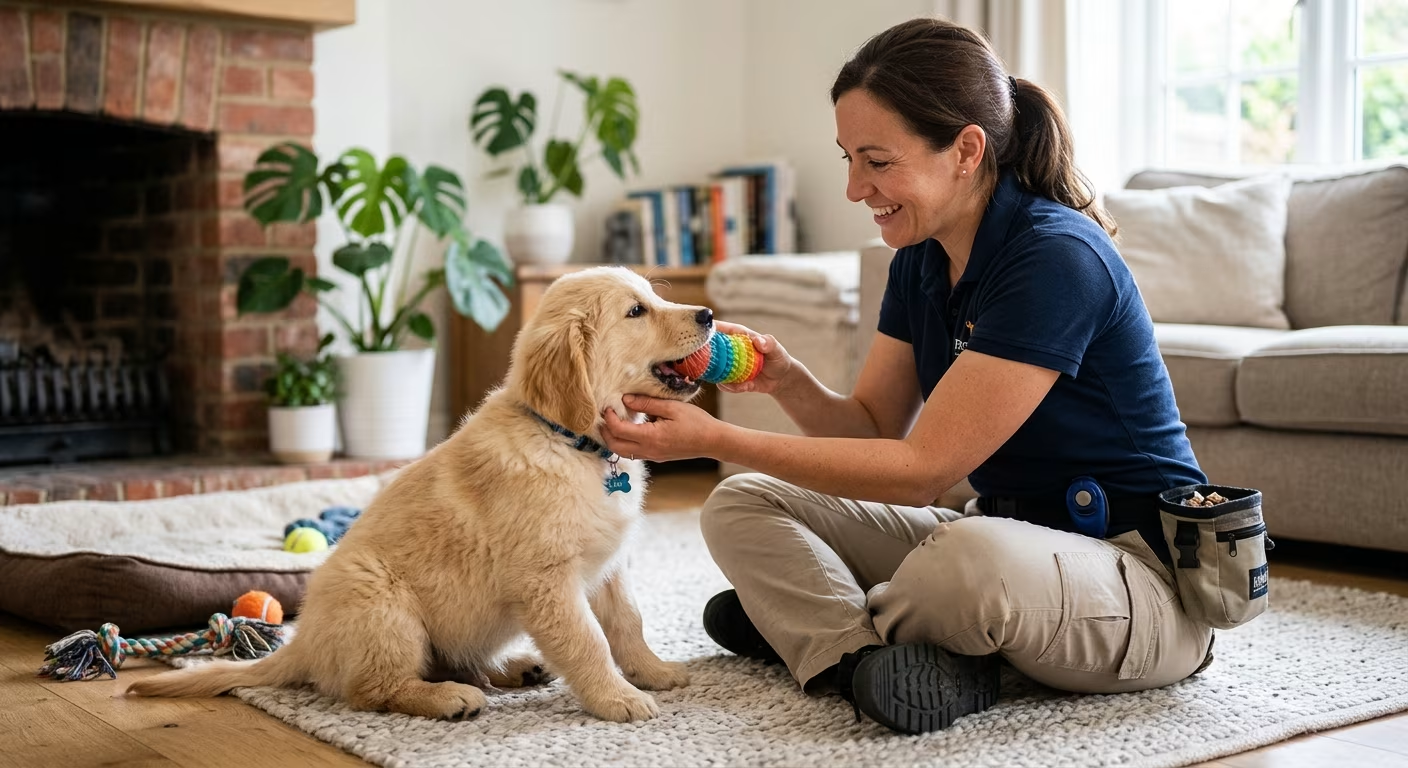
Always keep a chew toy nearby during play. The moment your puppy targets your hand or foot, swap it out for the toy immediately. Praise them enthusiastically when they bite the toy instead.
Over time, your puppy learns: hands are off-limits, but this rope toy? Completely fine.
Pro tip: Rotate toys to keep them interesting. A puppy bored with yesterday’s chew toy will come back for your fingers.
Step 4: Use a Time-Out Calmly
If redirecting doesn’t work and the biting continues, calmly place your puppy in their crate for a 2 3 minute time-out. The key word here is calmly. Never use the crate as punishment in an angry way you don’t want your puppy to dread their safe space.
Once they’re calm, let them out and start fresh. No grudges.
Step 5: Check Their Basic Needs First
Before assuming a biting episode is purely behavioural, ask yourself:
- Is my puppy overtired and overstimulated?
- Do they need a potty break?
- Are they hungry or thirsty?
- Have they had enough physical exercise or mental stimulation today?
Sometimes a biting puppy is simply a tired, bored, or overstimulated puppy. A short nap, a walk, or a puzzle toy can reset everything.
Techniques That ACTUALLY Work: At a Glance
| Technique | How It Works | Best For |
|---|---|---|
| Yelp + Withdraw | Mimics littermate feedback | Calm puppies, early training |
| Silent Attention Withdrawal | No reaction = biting is boring | Excitable, attention-seeking pups |
| Toy Redirection | Gives an appropriate biting outlet | All puppies always use alongside other methods |
| Crate Time-Out | Breaks overstimulation cycle | Overtired or overstimulated puppies |
| Command Redirect (“Sit”) | Replaces biting with a trained behaviour | Puppies with some basic training |
Common Mistakes That Make Puppy Biting WORSE
These are the mistakes I see almost every new puppy owner make I made some of them too:
- Yelling or scolding: Loud reactions can actually reward attention-seeking biters. Your puppy doesn’t distinguish between positive and negative attention reaction is reaction.
- Rough play with hands: If you wrestle with your puppy using bare hands, you are teaching them that hands are toys. Use actual toys during rough play always.
- Allowing it “just this once”: Inconsistency is the number one enemy of puppy training. If one family member allows biting and another doesn’t, your puppy gets confused and the behaviour persists.
- Physical punishment: Never hit, flick, or pinch your puppy’s nose or mouth. Beyond being unkind, it can cause fear and anxiety, and may make biting worse over time.
- Letting gentle mouthing slide: What feels harmless from a 10-pound puppy can become genuinely painful or dangerous as they grow. Set the boundary early teeth on skin is never okay.
When Does Puppy Biting Stop on Its Own?
Most puppies naturally begin to outgrow biting and mouthing as they mature. With consistent training, the biting phase typically becomes much more manageable by 5 6 months, when adult teeth are mostly in. The timeline does vary based on individual personality, training, and socialization.
The teething phase the most intense biting period generally lasts between 3 and 6 months. But don’t wait it out without training. Bad habits that aren’t corrected become deeply ingrained behaviours that are much harder to address in an adult dog.
Socialisation: The Secret Ingredient Most People Overlook
One of the most powerful tools in stopping puppy biting isn’t a technique at all it’s socialization with other puppies. Puppy classes provide supervised playtime where dogs teach each other natural bite inhibition exactly as they would have done in the litter.
I always recommend enrolling puppies in a group class not just for bite training, but for overall development. The lessons they learn from other dogs during that critical socialization window (up to about 16 weeks) can shape their behaviour for life.
Look for classes run by a Certified Professional Dog Trainer (CPDT-KA). You can find certified trainers through the Certification Council for Professional Dog Trainers (CCPDT).
When to Call a Professional
Normal puppy biting is manageable with the methods above. But there are times when it’s wise to bring in a professional:
- Your puppy’s biting is escalating in intensity despite consistent training
- Your puppy growls, snaps, or bites in non-play situations (e.g., when being handled, groomed, or when you approach their food)
- The biting is drawing blood regularly
- You have young children at home and feel unsafe
Repeated frustration-based biting is not something a puppy will simply outgrow. A qualified behaviourist or trainer can assess what’s really going on and create a tailored plan. The earlier you get help, the easier the fix.
Quick-Reference: Puppy Biting Do’s and Don’ts
| ✅ DO | ❌ DON’T |
|---|---|
| Keep chew toys within arm’s reach at all times | Yell, scold, or physically punish your puppy |
| React calmly and consistently every single time | Allow rough hand-play or wrestling with bare hands |
| Ensure ALL family members follow the same rules | Let gentle mouthing slide set the boundary early |
| Enroll in a supervised puppy class | Expect overnight results this takes weeks |
| Reward calm, gentle behaviour generously | Skip the crate it’s your best tool for calm time-outs |
Final Thoughts: From One Dog Lover to Another
I won’t sugarcoat it the puppy biting phase can be genuinely exhausting. But every bite your puppy gives you right now is a teaching moment, not a warning sign. Your puppy isn’t trying to dominate you or hurt you. They are a baby learning the rules of the world, and you are the most important teacher they’ve got.
Stay consistent. Stay calm. Keep those toys handy. And give yourself grace even the most experienced trainers occasionally come home with a few fresh teeth marks.
You’ve got this. And so does your puppy.
References
- Mouthing, Nipping and Biting in Puppies ASPCA (American Society for the Prevention of Cruelty to Animals). Updated 2024.
- How to Stop Puppy Biting and Train Bite Inhibition American Kennel Club (AKC). Updated November 7, 2025.
- Teaching Bite Inhibition Dr. Ian Dunbar, Veterinary Behaviourist. Published via Main Street Veterinary Services, 2024. (Cited for its foundational authority on bite inhibition methodology.)
- Mouthy Pups It’s Normal. Let’s Teach Them Bite Inhibition Seattle Humane Society. Updated November 19, 2024.
- Find a Certified Professional Dog Trainer Certification Council for Professional Dog Trainers (CCPDT). Official trainer directory.