
Last Updated: June 2026 | Category: Dog Nutrition & Health
If you’ve ever woken up at 6 a.m. to a very unhappy dog and a very messy floor, you know exactly how stressful this moment is. I’ve been there and over years of working alongside veterinary professionals and caring for dogs with sensitive stomachs, I’ve learned that the right food at the right time makes all the difference. This guide walks you through exactly what to feed a dog with diarrhea, step by step, in plain language.
“Most cases of mild diarrhea can be managed at home with the right diet but knowing what to feed, how much, and when to stop is where most dog owners go wrong.”
🐾 First: Why Does Your Dog Have Diarrhea?
Before you even think about food, it helps to understand what’s going on. Diarrhea isn’t a disease it’s a symptom. And it can be triggered by a surprisingly long list of things.
Common causes include:
- Dietary indiscretion your dog raided the trash, snatched something off the sidewalk, or stole your burger
- Sudden food changes switching kibble brands too quickly is a very common culprit
- Stress boarding, travel, fireworks, a new baby at home
- Intestinal parasites Giardia, roundworms, hookworms
- Viral or bacterial infections parvovirus, salmonella
- Medications especially antibiotics or NSAIDs
- Chronic conditions Inflammatory Bowel Disease (IBD), pancreatitis, Addison’s disease
Real talk: In my experience, the number one cause I see is dietary indiscretion a dog eating something they absolutely shouldn’t have. The second most common? A well-meaning owner switching their dog’s food overnight without a gradual transition.
🚦 Step 1 Should You Fast Your Dog First?
This is the question I get asked most often, and the answer is: it depends.
If your dog has diarrhea but is not vomiting, is drinking water, and is otherwise acting like themselves bright, alert, tail wagging then in most cases you do not need to withhold food. Skipping meals can actually make some dogs reluctant to eat when you finally offer food again.
However, in specific situations like when a dog has clearly eaten something they shouldn’t have a short fast of up to 12 hours can allow the digestive tract to settle and clear out the irritant. Think of it like rebooting a computer: you give the system a moment to reset.
And no matter what never withhold water. Fresh, clean water must always be available. Dehydration is the number-one danger with diarrhea, and it can happen faster than you think especially in small dogs, puppies, and seniors.
🍚 Step 2 The Bland Diet: What to Feed a Dog with Diarrhea
Once you’re ready to feed your dog (whether after a brief fast or straight away), the goal is simple: give food that is easy to digest, low in fat, and gentle on an inflamed gut.
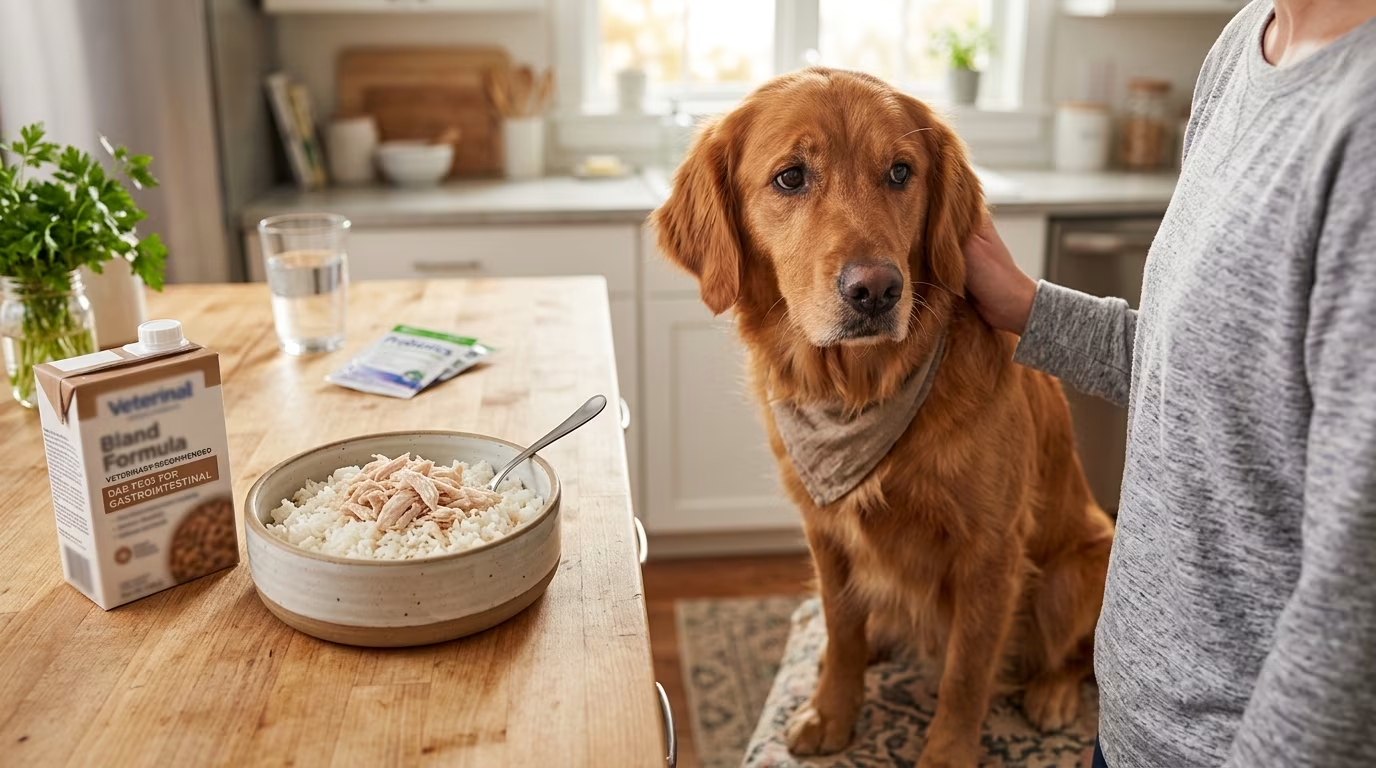
The classic recommendation one that has held up for decades in veterinary practice is boiled chicken and white rice. It works because both ingredients are easily broken down, put minimal load on a stressed GI tract, and give the body energy to heal.
✅ Best Foods to Feed a Dog With Diarrhea
| Food | Why It Works | How to Prepare |
|---|---|---|
| Boiled Chicken + White Rice | Easily digestible, low-fat protein + simple carbohydrates | Boneless, skinless breast boil only. No oil, salt, or seasoning. Use 1:1 ratio |
| Boiled Lean Ground Turkey | Great alternative for chicken-sensitive dogs | Fully cooked, no seasoning. Drain all fat thoroughly |
| Plain Canned Pumpkin | High soluble fiber helps firm up loose stools; contains potassium | Use 100% pure pumpkin NOT pumpkin pie filling. 1 4 tbsp depending on dog size |
| Plain Boiled Sweet Potato | High fiber, easily digestible, gentle on stomach | Boil or steam. Mash without butter, milk, or spices |
| Plain Cooked Oatmeal | High soluble fiber, gentle and easy to digest | Plain only no flavored packets, sweeteners, or toppings |
| Plain Greek Yogurt (small amounts) | Provides probiotics to help restore gut flora | Only 1 2 tablespoons; too much dairy can worsen diarrhea |
| Plain Mashed Potatoes | Carbohydrates + electrolytes (potassium); easy on the gut | No butter, milk, salt, or toppings. Use boiling water to moisten if needed |
Pro tip from experience: I always tell dog owners to prepare a big batch of the chicken and rice, divide it into small portions, and refrigerate. You’ll be feeding several small meals throughout the day having it ready prevents the temptation to reach for something less appropriate.
🥄 Step 3 How Much and How Often to Feed
This is where many well-intentioned owners make a mistake they either feed too much at once (overwhelming an already irritated gut) or they feed the right food but at the wrong frequency.
Here’s the approach I recommend:
- Start with 2 tablespoons of bland food per 10 lbs of body weight
- Offer these small meals every 2 3 hours on the first day
- It is always better to give too little than too much initially
- Over the next 2 3 days, gradually increase portions and reduce frequency as stools firm up
🔄 Step 4 Transitioning Back to Regular Food
This is one of the most overlooked steps and one I consider critical. I’ve seen dogs recover beautifully on a bland diet, only to relapse within 24 hours because their owner jumped straight back to regular kibble.
Once your dog’s stools have been normal for at least 24 48 hours, begin a slow, gradual transition back to their regular diet over 5 7 days:
| Day | Bland Diet | Regular Food |
|---|---|---|
| Days 1 2 | 75% | 25% |
| Days 3 4 | 50% | 50% |
| Days 5 6 | 25% | 75% |
| Day 7 | 0% | 100% |
Going too fast with this transition is one of the most common causes of repeat episodes. Slow and steady genuinely wins the race here.
🦠 Step 5 Don’t Forget Probiotics
Diarrhea disrupts the delicate balance of bacteria in your dog’s gut. Even after stools normalize, the microbiome may still be recovering. This is why I always recommend adding a dog-specific probiotic during and after recovery.
Look for products designed specifically for dogs human probiotics are not the same and may not be appropriate. Good probiotic products are often available through your vet and are easy to sprinkle on food. Used consistently, they can speed up recovery and reduce the chance of a relapse.
❌ Foods to Avoid When Your Dog Has Diarrhea
Just as important as knowing what to feed is knowing what NOT to give. During recovery, these foods can make things significantly worse:
- 🚫 Fatty meats bacon, sausage, skin-on chicken, greasy hamburger
- 🚫 Dairy products (in large amounts) milk, cheese, ice cream
- 🚫 Spicy or heavily seasoned food of any kind
- 🚫 Raw meat the American Veterinary Medical Association (AVMA) advises against raw diets due to infection risk
- 🚫 Table scraps or treats even small amounts can re-trigger GI upset
- 🚫 Onions and garlic toxic to dogs even in small amounts
- 🚫 High-fiber foods in large quantities counterintuitively, too much fiber at once can worsen loose stools
💊 When to Consider a Prescription GI Diet
For dogs with persistent, recurring, or severe diarrhea, a home-prepared bland diet may not be enough. In these cases, veterinary prescription gastrointestinal diets such as Hill’s i/d®, Royal Canin Gastrointestinal®, or Purina EN® are often the best option.
These diets are specifically formulated to be highly digestible, support a healthy gut microbiome, and reduce intestinal inflammation. They may also contain novel or hydrolyzed proteins for dogs with food allergies or intolerances. Your vet must prescribe them, but in my experience, they often work faster and more reliably than home cooking for dogs with complex GI issues.
🚨 When to Call Your Vet Immediately
Home care works well for mild, uncomplicated diarrhea. But there are clear warning signs that require prompt veterinary attention. Do not wait if your dog shows any of the following:
- 🔴 Diarrhea lasting more than 24 48 hours
- 🔴 Blood in the stool (red or black/tarry)
- 🔴 Vomiting alongside diarrhea dehydration risk escalates rapidly
- 🔴 Lethargy, weakness, or collapse
- 🔴 Loss of appetite persisting beyond one meal
- 🔴 Signs of dehydration: dry gums, sunken eyes, skin that doesn’t spring back when gently pinched
- 🔴 Your dog is a puppy, senior, or has a known health condition
📋 Quick-Reference Summary
| Situation | What to Do |
|---|---|
| Mild diarrhea, dog acting normal | Start bland diet (chicken + rice), small meals every 2 3 hrs |
| Dog ate something bad | Short fast up to 12 hrs (adults only), then bland diet + probiotics |
| Puppy, senior, or unwell dog | Call vet before fasting feed bland diet and monitor closely |
| Diarrhea > 48 hrs or blood present | Vet visit required immediately |
| Stools firming up | Begin gradual transition back to regular food over 5 7 days |
| Recurring or chronic diarrhea | Consult vet for prescription GI diet and diagnostic testing |
🐶 Final Thoughts
Dog diarrhea is stressful, messy, and worrying but in most mild cases, the right food choices and a little patience will have your dog back to normal within a day or two. The key principles are simple: keep it bland, keep portions small, keep water available at all times, and transition back to normal food slowly.
Trust your instincts about your dog. You know them better than anyone. If something feels off beyond just a loose stool if they seem tired, in pain, or just “not right” don’t hesitate to call your vet. That call is never wasted.
And the next time someone tries to slip your dog a greasy piece of bacon at a family barbecue? You have full permission to say no on your dog’s behalf. 🐾
References
- Diarrhea in Dogs Cornell University College of Veterinary Medicine, Riney Canine Health Center. (Reviewed 2024). https://www.vet.cornell.edu/departments-centers-and-institutes/riney-canine-health-center/canine-health-topics/diarrhea
- Diarrhea in Dogs VCA Animal Hospitals. (2024). https://vcahospitals.com/know-your-pet/diarrhea-in-dogs
- Acute Diarrhea in Dogs: Current Management and Potential Role of Dietary Polyphenols Supplementation Rossi G. et al., Veterinary Sciences, NCBI/PubMed Central. (Published 2020). https://pmc.ncbi.nlm.nih.gov/articles/PMC7465157/
- Dog Diarrhea: How To Identify, Diagnose, and Treat It PetMD (Reviewed October 2025). https://www.petmd.com/dog/symptoms/dog-diarrhea
- What To Feed a Dog With Diarrhea PetMD (Updated September 2025). https://www.petmd.com/dog/nutrition/what-to-feed-a-dog-with-diarrhea