
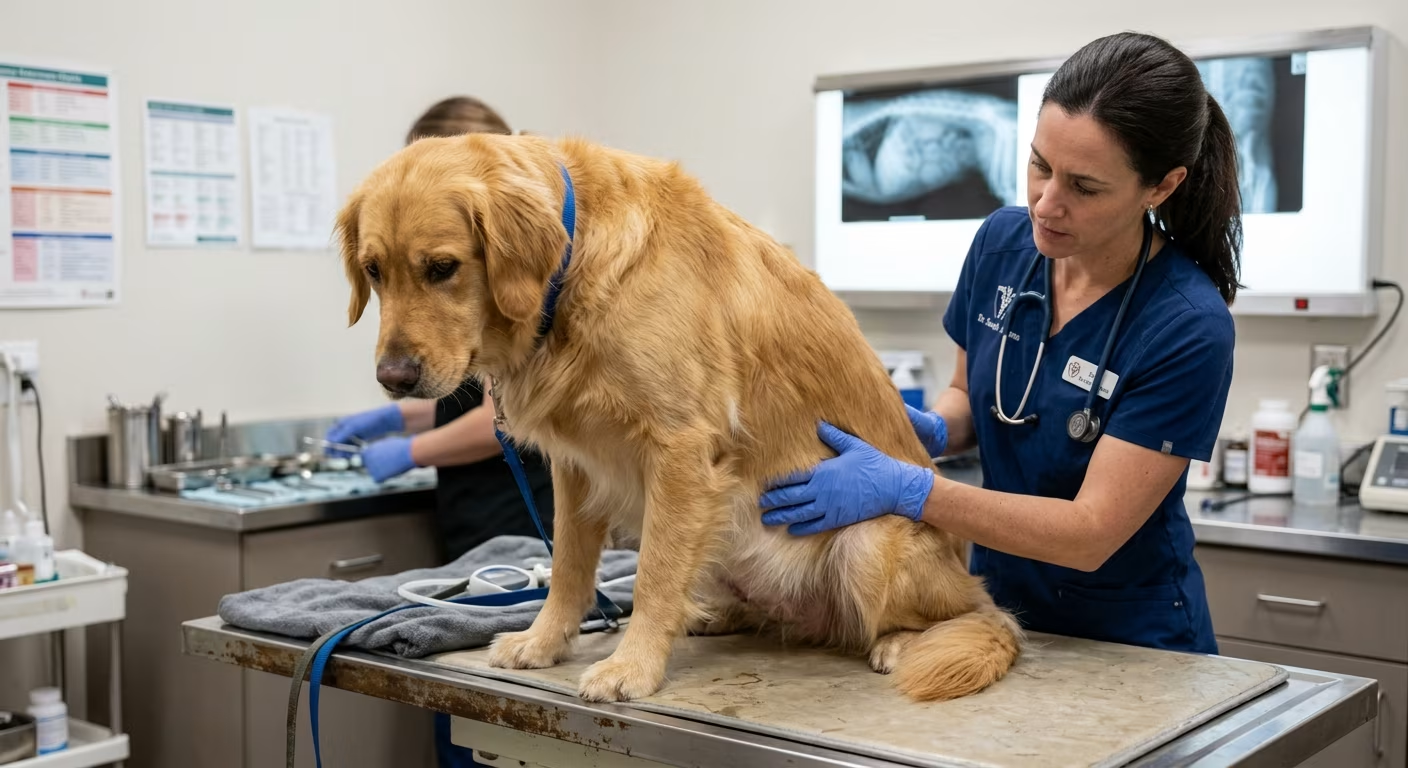
Written from over a decade of working alongside veterinary teams in small animal emergency care I’ve seen firsthand how fast a bowel obstruction can go from “probably nothing” to a life-or-death situation. This guide is for every dog owner who wants to be prepared.
I still remember a case from early in my career a young Labrador named Biscuit who came in looking tired and a little off. His owner thought it was just an upset stomach. Within hours, we had confirmed a complete intestinal blockage from a corn cob. Another few hours’ delay and Biscuit might not have made it. That experience changed how I counsel every pet owner I meet.
Bowel obstruction is one of those emergencies that can sneak up on you. The early signs look like a regular tummy ache. But knowing what to look for and acting fast is everything.
What Is a Bowel Obstruction in Dogs?
A bowel obstruction (also called a gastrointestinal or intestinal blockage) is exactly what it sounds like something is blocking the normal flow of food and waste through your dog’s digestive system.
Specifically, according to the AKC, a bowel obstruction is a complete or partial blockage in the stomach or intestines, which prevents solids or liquids from passing through the gastrointestinal tract. This blockage can also decrease blood flow and cause portions of your dog’s bowels to deteriorate, as well as the absorption of toxic contents.
Think of your dog’s digestive tract like a garden hose. When water flows freely, everything works perfectly. The moment something gets lodged inside that hose, pressure builds, flow stops, and the hose itself begins to suffer damage.
“Left untreated, it could result in extensive discomfort, severe fluid loss, intestinal rupture, and even death.” Dr. Jerry Klein, Chief Veterinary Officer, AKC
There are two types of obstruction:
- Partial blockage Some fluids can still squeeze past the obstruction
- Complete blockage Nothing can pass at all; this is an immediate emergency
How Common Is It? (The Numbers May Surprise You)
This isn’t a rare condition. Foreign body ingestion is one of the most common emergencies I’ve seen in small animal practice. Research published in the Journal of the American Veterinary Medical Association (JAVMA) confirms that dogs with gastrointestinal foreign bodies are commonly presented to emergency veterinarians, and that the majority of foreign body cases are found in the small intestine.
A peer-reviewed study in PMC/NCBI confirmed that intestinal obstruction caused by a foreign body accounts for approximately 80% of all canine intestinal blockages. That’s a striking majority and it means most of these cases are preventable.
Studies also show a high rate of affected dogs are young, male, and of a large breed though any dog at any age can be affected.
What Causes Bowel Obstruction in Dogs?
1. Foreign Objects (The #1 Cause)
Dogs are naturally curious, oral explorers especially puppies. Common culprits include:
| Category | Common Objects |
|---|---|
| Household Items | Socks, underwear, towels, hair ties, shoelaces, ribbon |
| Toys & Play Items | Tennis balls, stuffed animals, small rubber toys |
| Food-Related | Bones, corn cobs, fruit pits, rawhide |
| Outdoor Items | Rocks, sticks, wood pieces |
| Miscellaneous | Tampons, clothing, plastic packaging |
Note: Linear objects like string, rope, and carpet fibers are especially dangerous they can cause the intestines to bunch together like a telescope, a condition that dramatically raises surgical risk.
2. Intussusception (Telescoping Intestine)
This is when one segment of the intestine folds into another like a collapsing telescope. It’s a life-threatening mechanical blockage that requires emergency surgery.
3. Tumors or Masses
In older dogs, intestinal tumors can grow large enough to cause a blockage. If you have a senior dog showing unexplained GI symptoms, this needs to be on your radar.
4. Intestinal Twisting (Torsion/Volvulus)
The intestine can twist around itself, cutting off both blood flow and the passage of material. This is an extreme emergency.
5. Parasites
In severe infestations, clumps of intestinal parasites can physically block the intestine a less common but real cause, especially in young or unvaccinated dogs.
Warning Signs: Does Your Dog Have a Blockage?
Here’s the honest truth from experience: the first signs of a bowel obstruction look almost exactly like a regular upset stomach. This is why so many owners wait too long before calling their vet.
Watch for these symptoms:
| Symptom | What It Looks Like | Severity Signal |
|---|---|---|
| Vomiting | Persistent, may include bile | 🔴 High act quickly |
| Loss of Appetite | Dog refuses food or water | 🟡 Moderate monitor closely |
| Lethargy | Unusual tiredness, low energy | 🟡 Moderate warrants a vet call |
| Abdominal Pain | Hunching, guarding belly, whimpering | 🔴 High go to vet now |
| Constipation or Straining | Unable to defecate or producing tiny amounts | 🔴 High possible complete blockage |
| Diarrhea | Liquid squeezing past a partial blockage | 🟡 Moderate needs evaluation |
| Bloating / Swollen Abdomen | Visible distension of the belly | 🔴 Emergency go immediately |
| Weakness or Collapse | Dog cannot stand or is unresponsive | 🆘 Critical emergency vet NOW |
In my experience, if your dog vomits more than twice and is also refusing food don’t wait it out. Call your vet. A phone call costs nothing; a delayed diagnosis can cost everything.
Can a dog with a blockage still poop? Yes sometimes. Dogs with a partial blockage may still pass some feces with difficulty. Dogs with a complete blockage are unable to defecate at all, though they may still squat and try. Never assume that because your dog pooped, there isn’t a blockage.
What Happens If It’s Left Untreated?
This is the part that keeps me up at night when I think of owners who “wait and see.” Here’s how the timeline can unfold:
- Hours 1 12: Vomiting, discomfort, loss of appetite begin
- 12 24 hours: Pressure increases, blood flow to the intestine decreases, tissue begins to die (necrosis)
- 24 48 hours: Intestinal perforation can occur bowel contents leak into the abdominal cavity causing peritonitis (a severe infection)
- 48 72+ hours: Sepsis sets in; vital organs begin to shut down. Without treatment, death can occur within 3 4 days for complete blockages.
The leaked intestinal content can cause peritonitis (infection of the peritoneum lining the abdominal cavity), which can then spread as sepsis a systemic, potentially fatal infection. Time truly is the enemy here.
How Vets Diagnose a Bowel Obstruction
When you bring your dog in, here’s roughly what to expect:
- Physical Examination: Your vet will feel the abdomen carefully for masses, pain, or foreign objects
- Blood Work: To check for signs of infection, anemia, or organ involvement
- X-Rays (Radiographs): To identify the object, its size, and location
- Ultrasound: Can reveal soft-tissue obstructions that X-rays might miss
- CT Scan: In complex cases, CT provides detailed confirmation of the obstruction site and any strangulation
Cornell University College of Veterinary Medicine notes that GI obstructions are emergencies often requiring surgical removal, and that prompt veterinary intervention is critical to achieving the best outcome for your dog.
Treatment Options
Option 1: Inducing Vomiting
If the object was swallowed very recently and hasn’t yet caused a full blockage, your vet may induce vomiting to bring it back up. This must only be done by a vet never try to induce vomiting at home without veterinary guidance, as this can cause additional injury depending on what was swallowed.
Option 2: Endoscopy
For objects in the stomach or upper GI tract, endoscopic removal (a camera-guided tool inserted down the throat) can retrieve the object without any surgical incision. Research published in PMC/NCBI shows GI endoscopy has over 95% success rates for gastric foreign body removal.
Option 3: Surgery
If the object has moved deep into the intestine or caused tissue damage, surgery under general anesthesia is required. The vet opens the abdomen and either:
- Performs an enterotomy a small incision to remove the object
- Performs a resection and anastomosis removing a damaged section of intestine and reconnecting the healthy ends
Important: Never attempt to pull a foreign object protruding from your dog’s rectum this can cause serious internal damage.
Supportive Care
Alongside surgery, vets typically provide IV fluids to correct dehydration and electrolyte imbalances, pain management, and anti-nausea medication.
Recovery: What to Expect at Home
Recovery after a bowel obstruction especially surgery requires patience. Here’s a general post-treatment care guide:
| Recovery Area | What to Do |
|---|---|
| Activity | Keep it low no running, jumping, or long walks for several days |
| Diet | Bland diet (plain dry kibble, no treats) for several days, then slowly reintroduce regular food |
| Hydration | Offer plenty of fresh water; dehydration is a real risk post-obstruction |
| Monitoring | Watch for recurring vomiting, appetite changes, or failure to defecate |
| Vet Follow-Up | Attend all scheduled post-op checkups without fail |
It’s also completely normal for your dog not to defecate for up to a week following surgery as the GI tract recovers and inflammation settles. However, if you see concerning symptoms return call your vet immediately.
Prevention: How to Keep Your Dog Safe
Here’s the good news the majority of bowel obstructions are 100% preventable. These are the habits I recommend to every dog owner:
- ✅ Dog-proof your home Keep socks, underwear, hair ties, rubber bands, and small toys out of reach
- ✅ Supervise playtime Especially with toys that can be chewed into chunks
- ✅ Avoid dangerous chews Cooked bones, corn cobs, and hard rawhide are high-risk items
- ✅ Train the “leave it” command One of the most valuable commands for a dog’s safety
- ✅ Choose size-appropriate toys A toy too small for your dog’s mouth is a swallowing hazard
- ✅ Consider a basket muzzle For repeat offenders who have a habit of eating everything, Cornell University’s veterinary team recommends basket muzzle training as a preventive measure
- ✅ Watch outdoor areas Rocks, sticks, and debris in the yard are common culprits
In my years of experience, I’ve seen the “Labrador rule” hold true more often than not if it fits in their mouth, they’ll try to eat it. Puppies and young dogs especially need a puppy-proofed environment, just like you’d childproof a home for a toddler.
When to Call the Vet: A Quick Decision Guide
| Situation | Action |
|---|---|
| You witnessed your dog swallow a foreign object | Call vet immediately don’t wait for symptoms |
| Dog has vomited more than twice in 24 hours | Call vet don’t wait it out |
| Dog is not eating AND is lethargic | Call vet for advice same day |
| Dog has a visibly swollen or painful abdomen | Emergency vet go now |
| Dog is weak, collapsing, or unresponsive | Emergency vet this is critical |
Final Thoughts
Bowel obstruction in dogs is serious, fast-moving, and genuinely life-threatening but it is also very treatable when caught early. The key takeaway from my years working with dogs and their families is this: trust your gut. If something seems off with your dog, it probably is. A quick phone call to your vet is always the right move.
Prevention is your best tool. A dog-proofed home, size-appropriate toys, and a well-trained “leave it” can make all the difference. And if the worst happens act fast, stay calm, and get to your vet without delay.
Your dog is counting on you to be their advocate. You’ve got this.
References
- American Kennel Club (AKC) “Bowel Obstruction in Dogs: Symptoms, Treatment, and Prevention.” AKC Expert Advice, Updated February 23, 2026.
- Cornell University College of Veterinary Medicine “Gastrointestinal Foreign Body Obstruction in Dogs.” Richard P. Riney Canine Health Center, Cornell University.
- Journal of the American Veterinary Medical Association (JAVMA) “Clinical features and outcomes of dogs with attempted medical management for discrete gastrointestinal foreign material: 68 cases (2018 2023).” JAVMA, Volume 262, Issue 9, September 2024.
- PMC/NCBI “Endoscopic and Surgical Removal of Gastrointestinal Foreign Bodies in Dogs: An Analysis of 72 Cases.” Published via PubMed Central, 2022.
- PMC/NCBI “Hematological Markers to Predict Enterectomy Versus Enterotomy in Dogs with Foreign-Body Intestinal Obstruction: Preliminary Data.” PubMed Central, 2025.
- PMC/NCBI “Small Bowel Obstruction Induced by Concurrent Postoperative Intra-Abdominal Adhesions and Small Bowel Fecal Materials in a Young Dog.” PubMed Central, 2021.