

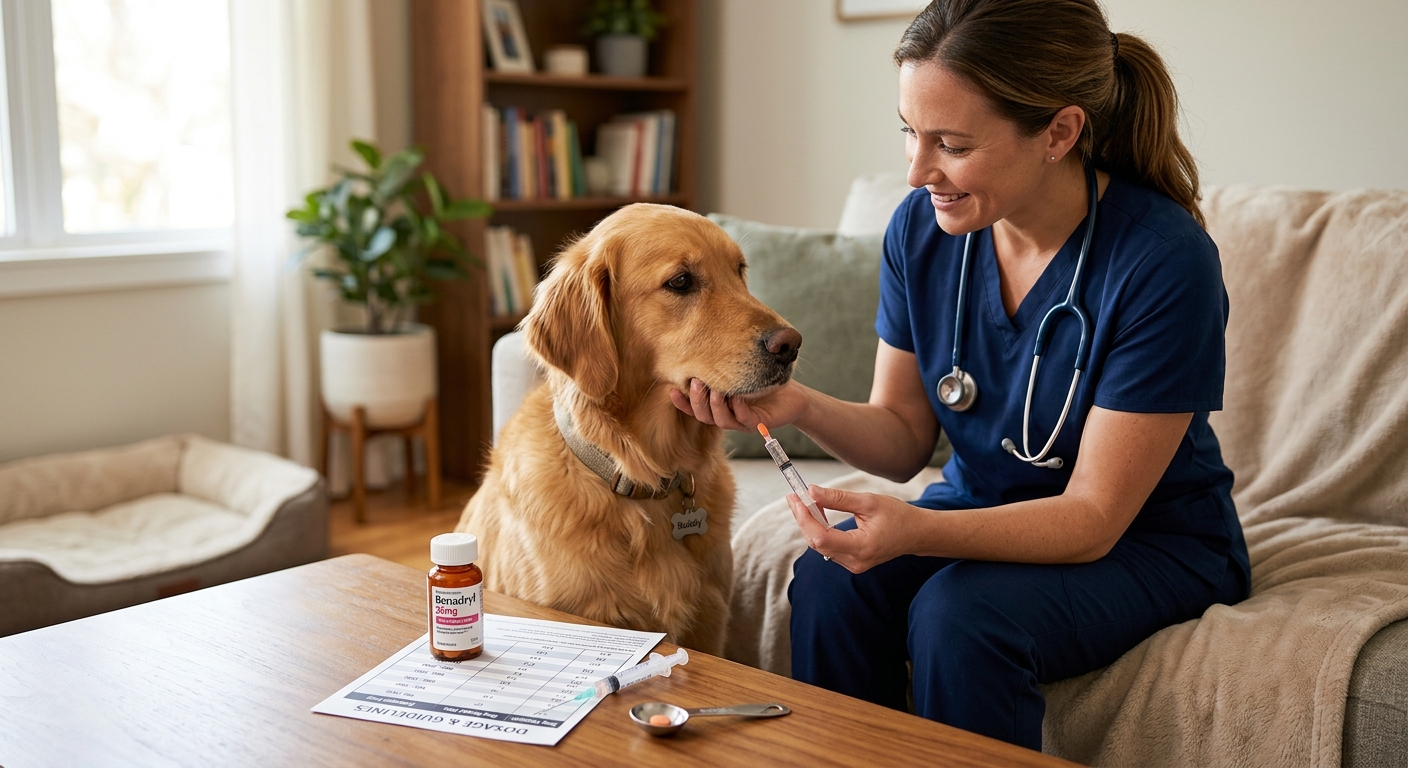
Benadryl for Dogs: Is It Safe, How Much to Give, and What You Must Know First
When your dog starts scratching uncontrollably, breaks out in hives after a bee sting, or gets queasy on a car trip, it’s natural to wonder whether the antihistamine sitting in your medicine cabinet could help. Benadryl — the well-known brand name for the active ingredient diphenhydramine — is one of the most commonly asked-about over-the-counter remedies in canine care. The short answer is: yes, it can be used for dogs under the right circumstances, but there are critical details every pet owner must understand before opening that bottle.
What Exactly Is Benadryl, and How Does It Work in Dogs?
Diphenhydramine is a first-generation antihistamine classified as an ethanolamine derivative, which means it can cross the blood-brain barrier — an aspect that makes it effective but also increases the risk of adverse side effects. When a dog’s immune system encounters an allergen, it triggers the release of histamine — a chemical that attaches to specific receptors throughout the body to produce itching, swelling, redness, and inflammation. Although Benadryl isn’t FDA-approved for veterinary use, it is considered safe for dogs and is commonly used in veterinary practices across the U.S. Diphenhydramine works by blocking the receptors that receive histamines in the body, relieving symptoms such as itching, sneezing, and hives. The body still produces histamines, but the receptor antagonist blocks the receptors from registering them.
Beyond its antihistamine function, Benadryl (diphenhydramine) can also ease nausea and vomiting by inhibiting the chemoreceptor trigger zone (the vomiting center in the brain) and reducing the way the vestibular apparatus — the balance center in the ear — responds to motion. This dual action makes it useful in a broader range of situations than just allergies alone.
One important pharmacological caveat: dogs absorb oral diphenhydramine poorly. Studies have measured less than 10 percent of an oral dose actually reaching the bloodstream, with a lot of variation from dog to dog. So while Benadryl can help, it is often weaker in dogs than people expect, and for some problems other options work better.
When Veterinarians Recommend Benadryl for Dogs
Veterinarians most commonly recommend that pet parents give their dogs Benadryl to prevent or treat mild allergic reactions and to reduce nausea and vomiting associated with motion sickness or vestibular disease. Taken orally, Benadryl can help ease mild allergic symptoms to common triggers such as pollen, mold, and house mites, particularly if used in combination with other allergy treatments. Benadryl can also be used for mild allergic reactions to insect bites or stings. Oral or injectable Benadryl can be used as a pre-treatment for mild allergic vaccine reactions.
Here is a breakdown of the primary situations where diphenhydramine may be appropriate for your dog:
- Seasonal & Environmental Allergies: Reactions to pollen, dust mites, or mold that cause skin itching or mild hives.
- Insect Bites & Stings: Localized swelling or itching from bee stings, wasp stings, or mosquito bites.
- Motion Sickness & Nausea: Car rides or travel that trigger vomiting or restlessness.
- Pre-Vaccine Preparation: Benadryl is commonly given prior to vaccines in dogs with a history of vaccine reactions.
- Mast Cell Tumor Management: The cells of mast cell tumors contain histamine. When histamine is released, it can cause widespread inflammation. Benadryl keeps the histamine from binding to its receptors.
- Vestibular Syndrome: Benadryl can be used in dogs with vestibular syndrome, a disorder that affects balance and equilibrium.
- Mild Travel Anxiety: Beyond allergies, Benadryl’s sedative properties make it useful for managing mild anxiety in dogs. The drowsiness effect can help calm nervous pets during stressful situations like thunderstorms, fireworks, or car rides. However, diphenhydramine should not replace proper behavioral training or prescription anxiety medications for dogs with severe anxiety disorders.
Correct Benadryl Dosage for Dogs: A Weight-Based Guide
According to the Merck Veterinary Manual, the standard dose for Benadryl is 2–4 milligrams per kilogram of body weight, or 0.9–1.8 milligrams per pound. A simple and practical dose is 1 mg of Benadryl per pound of your dog’s weight, given two to three times a day. For example, a 10-pound dog might receive a 10 mg dose in the morning, afternoon, and evening.
Doses can be repeated every 8 hours as needed. If your dog has mild symptoms, you can likely start at the lower end of the dosing range. If your dog is experiencing an allergic reaction, using the higher dose will be more beneficial.
Quick Reference Dosage Table
| Dog’s Weight | Minimum Dose (1 mg/lb) | Maximum Dose (2 mg/lb) | Frequency |
|---|---|---|---|
| 10 lbs (4.5 kg) | 10 mg | 18 mg | Every 8–12 hours |
| 25 lbs (11.3 kg) | 25 mg (1 tablet) | 45 mg | Every 8–12 hours |
| 50 lbs (22.7 kg) | 50 mg (2 tablets) | 90 mg | Every 8–12 hours |
| 75 lbs (34 kg) | 75 mg (3 tablets) | 135 mg | Every 8–12 hours |
| 100 lbs (45.4 kg) | 100 mg (4 tablets) | 180 mg | Every 8–12 hours |
Note: This table is for general informational purposes only. Always confirm with your veterinarian before administering any dose.
For liquid Benadryl, careful attention to concentration is essential. Liquid Benadryl is typically available in a concentration of 12.5 milligrams per teaspoon (5 ml). For a 20-pound dog, the targeted amount would be 20 to 40 milligrams. When utilizing over-the-counter options, it is imperative to use only children’s formulas, as adult liquid formulas often contain alcohol, which is toxic for dogs.
Which Benadryl Formulation Is Safe — and Which to Avoid
This is one of the most critical steps, yet it’s one that many dog owners overlook. Not all Benadryl products are created equal, and several contain ingredients that can be harmful — or even fatal — to dogs.
- ✅ Plain diphenhydramine tablets or capsules: Safe when the only active ingredient listed is diphenhydramine.
- ✅ Children’s liquid (alcohol-free, xylitol-free): Suitable for small dogs for precise dosing.
- ❌ Allergy + Sinus formulas: Never give your dog an “Allergy and Sinus” form of Benadryl or any antihistamine. The sinus component often refers to the addition of pseudoephedrine, which is extremely toxic to dogs.
- ❌ Combination products with acetaminophen or ibuprofen: Combination and “plus” products that add a decongestant such as phenylephrine or pseudoephedrine, or pain relievers like acetaminophen (Tylenol) or ibuprofen, can be toxic to dogs.
- ❌ Products with xylitol: Xylitol, an artificial sweetener found in some liquids and chewables, is highly toxic to dogs and can cause a dangerous drop in blood sugar.
- ❌ Time-release capsules: It’s never a good idea to use time-release capsules for dogs, as they are absorbed differently in dogs compared to humans. Capsules may also break open when chewed and deliver too much medication at one time, putting your dog at risk of an overdose.
Side Effects to Watch For
The most common side effects of Benadryl (diphenhydramine) in dogs include drowsiness, dry mouth, urinary retention, and gastrointestinal upset. These effects are typically mild and temporary, subsiding as the medication wears off.
However, responses to Benadryl are not uniform across all dogs. The sedating effects of Benadryl can and will vary between dogs — some dogs will show no sedation, others will be very sedated. Additionally, some dogs become anxious and hyper from Benadryl, which is the opposite of the intended calming effect.
These symptoms tend to present themselves within an hour of ingesting Benadryl. Always keep a close eye on your dog after their first dose. If you notice anything unusual or alarming, contact your veterinarian immediately.
When Benadryl Is Not Safe: Contraindications
You should not give Benadryl (diphenhydramine) to your dog if they have certain pre-existing health conditions, are pregnant or nursing, or are taking specific medications. Dogs with glaucoma, cardiovascular disease, or hyperthyroidism face increased risks when taking this antihistamine, making veterinary consultation essential before administration.
Older pets, those with heart conditions, liver disease, or urinary issues may be at higher risk for complications. Additionally, diphenhydramine may interact with other medications. Consult with your veterinarian to determine if drugs including epinephrine, tranquilizers, antifungals, heparin, barbiturates, and some antibiotics could cause side effects in your dog.
Signs of Benadryl Overdose in Dogs
Despite its wide safety margin, overdosing on Benadryl is a real risk, especially in small breeds or when an incorrect product is given. Dogs can overdose on Benadryl. Signs of an overdose include hyper-excitability of the central nervous system, which can be fatal.
Signs of overdose include rapid heartbeat, dilated pupils, agitation, seizures, and respiratory depression. If you have any suspicion that your dog has received too much Benadryl, do not wait for symptoms to worsen — immediately contact your veterinarian or an animal poison control center such as Pet Poison Helpline at 855-764-7661.
Benadryl for Anxiety: Does It Really Work?
Many pet parents turn to Benadryl when their dogs seem nervous, especially around fireworks, thunderstorms, or during travel. While the mild sedation can take the edge off in some dogs, it is not a clinically proven anxiety treatment. Prescription anti-anxiety medications for dogs combined with a behavioral modification program will do a much better job than Benadryl when it comes to helping dogs with anxiety. Common anti-anxiety medications often prescribed to dogs with anxiety include Clomicalm, Reconcile, or Sileo. Your vet can help you determine the best anxiety medication for your dog depending on their health.
Benadryl for Chronic Allergies: Why It Often Falls Short
While Benadryl can address sudden, acute allergic flare-ups effectively, its usefulness for long-term allergy management is much more limited. Benadryl is often less effective for chronic skin itchiness because long-term allergies are often driven by different chemical messengers in the body that Benadryl simply isn’t designed to stop. While it works great for a sudden bee sting (a histamine reaction), chronic itching usually requires a different type of treatment to address the root cause.
Some studies suggest that antihistamines are only effective in controlling symptoms of chronic allergies in 25% of dogs. For ongoing or severe allergy management, common medications successfully used for dog allergies include Oclacitinib (Apoquel®) and Cytopoint®. These targeted therapies work through entirely different mechanisms and are generally far more effective for recurrent or chronic conditions.
Frequently Asked Questions (FAQs)
Can I give my dog Benadryl every day?
Long-term use isn’t typically recommended without veterinary oversight, as it may mask underlying conditions. If your dog requires daily antihistamine support, speak with your vet about more appropriate long-term allergy solutions.
How long does Benadryl take to work in dogs?
Benadryl typically lasts 8–12 hours in dogs and begins working within 30–60 minutes of administration.
Can I use the generic version of Benadryl?
Generic forms of Benadryl with only diphenhydramine as the main active ingredient are just as effective as the brand name. The main difference is that generic forms are generally less expensive and often sold under various store brand names. Just ensure no other active ingredients are included.
Is Benadryl safe for all breeds and ages?
This dosage can vary depending on your dog’s age, weight, and accompanying health conditions. Puppies, senior dogs, and dogs with underlying health conditions require individual veterinary guidance before any medication is given.
What should I do if I miss a dose?
If you miss giving your dog a dose of Benadryl, give the missed dose as soon as possible, then continue with the regular dosage schedule provided by your veterinarian. Never double up on doses.
Final Thoughts: Always Put Your Vet First
Benadryl can be a valuable tool in a dog owner’s first-aid kit, but it is not a one-size-fits-all solution. While Benadryl is generally well tolerated by dogs and has a wide safety margin, it’s not necessarily the answer to your dog’s issue. Benadryl can be used to treat mild allergic reactions and motion sickness in dogs, but it’s not a cure-all, and may not be effective for managing anxiety in dogs.
Before reaching for any human medication, call your veterinarian. Getting the formulation right, the dose accurate, and confirming there are no contraindications is the only safe path forward for your dog’s health and well-being.
References
- Benadryl For Dogs: Uses, Side Effects, and Dosage Information — American Kennel Club (AKC). 2026-04-30. https://www.akc.org/expert-advice/health/benadryl-for-dogs/
- Merck Veterinary Manual: Antihistamine Dosages — Merck Veterinary Manual / Shipstone, M. 2022. https://www.merckvetmanual.com/pharmacology/antihistamines/antihistamines
- Benadryl® Dosing For Dogs: How To Use It Safely — Kingsdale Animal Hospital / Dr. Brad Hinsperger, DVM. 2023-10-05. https://www.kingsdale.com/benadryl-dosing-for-dogs-how-to-use-it-safely
- Benadryl for Dogs: Uses, Dosage, and Side Effects — GoodRx Health. 2024-09-23. https://www.goodrx.com/pet-health/dog/benadryl-for-dogs
- Benadryl For Dogs: Is It Safe? Uses, Dosage, & Side Effects — Vetnique Labs. 2026-04-03. https://vetnique.com/blogs/vets-corner/benadryl-for-dogs-is-it-safe-how-much-can-i-give-my-dog-vetnique

Comments are closed, but trackbacks and pingbacks are open.