
By an experienced aquarist with over a decade of hands-on betta fish keeping
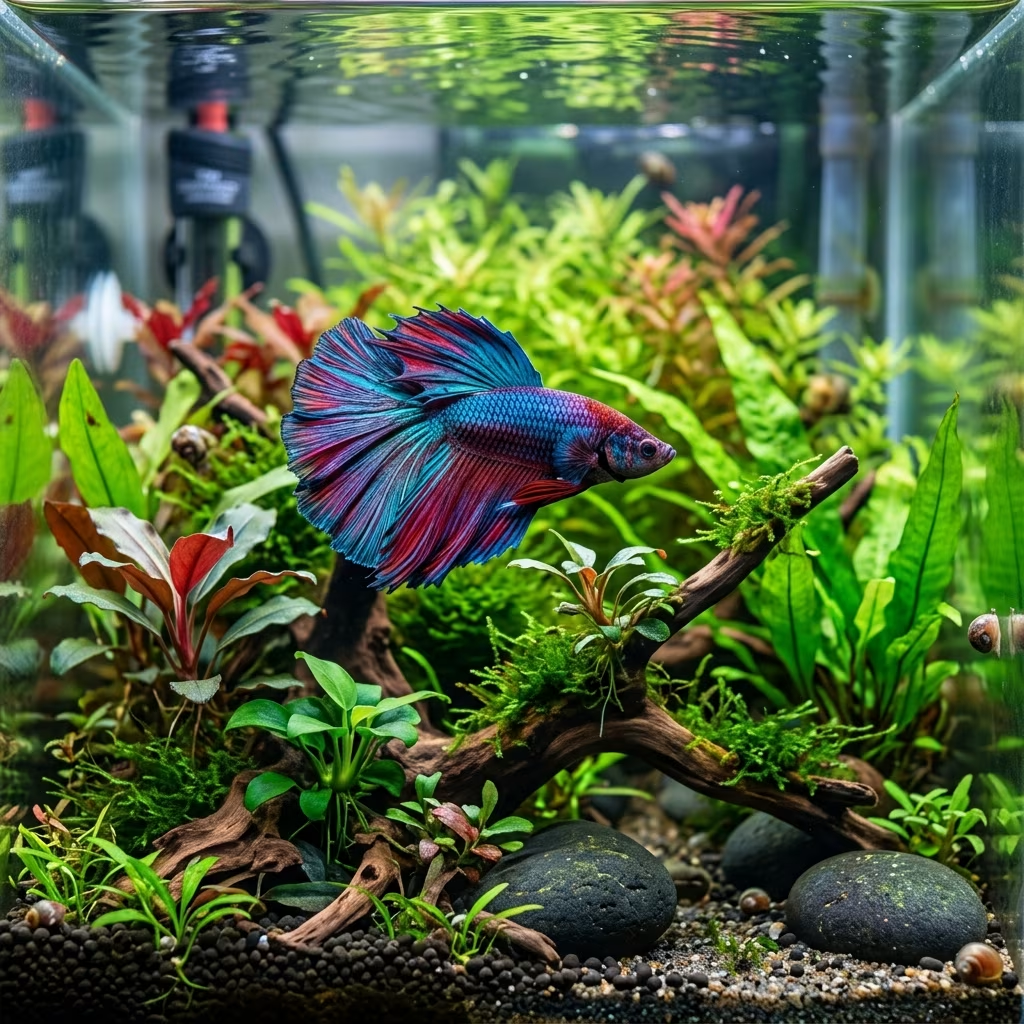
I still remember the first betta fish I ever brought home a deep blue male with fins like silk curtains. I plopped him into a tiny bowl, just like the pet store suggested, and within two weeks he was sluggish, pale, and barely eating. That was my wake-up call. Since then, I’ve kept dozens of bettas, learned from my mistakes, and watched these incredible fish thrive for four or even five years when given proper care.
If you’re new to bettas or if you’ve had one that didn’t last very long this guide is for you. Let’s go through the essential betta fish facts you need to know.
🐟 What Is a Betta Fish?
Betta splendens, commonly known as the Siamese fighting fish, is one of the most popular pet fish in the world. They are known for their bright colors, unique fin shapes, and relatively easy care requirements, making them a great fish for beginners. But “easy” doesn’t mean “zero effort” and that’s a distinction I wish someone had made clear to me when I started out.
Bettas belong to the family Osphronemidae and are native to the warm, shallow waters of Southeast Asia rice paddies, slow-moving streams, marshes, and drainage ditches in Thailand, Cambodia, Laos, Vietnam, Malaysia, and Indonesia.
Fun fact: The Siamese fighting fish is the national aquatic animal of Thailand, which remains the primary breeder and exporter of bettas for the global aquarium market.
📊 Quick Betta Fish Facts at a Glance
| Feature | Details |
|---|---|
| Scientific Name | Betta splendens |
| Average Lifespan | 3 5 years (up to 10 with excellent care) |
| Adult Body Size | ~2.5 inches (not including tail) |
| Minimum Tank Size | 5 gallons (10+ gallons ideal) |
| Water Temperature | 76 81°F (24 27°C) |
| Ideal pH | 6.5 7.5 |
| Origin | Southeast Asia (Thailand, Cambodia, etc.) |
| IUCN Status (Wild) | Vulnerable |
| Known Species | Over 70 recognized species |
⏳ Betta Fish Lifespan How Long Do They Really Live?
This is the #1 question I get from new betta owners, and honestly, it’s also where the most misinformation lives.
Most bettas live three to five years, though some have been known to live up to 10 years with excellent care. I personally had a red crowntail betta named Blaze who made it to about 6 years and he was still swimming laps every morning until his last few weeks.
In the wild, bettas typically survive for only about 2 3 years, exposed to predators, disease, and fluctuating water conditions. In captivity, we can eliminate most of those hazards but only if we do our homework.
The sad reality? With improper care, bettas are more susceptible to developing diseases or illness, which can shorten their lifespan considerably. Most early betta deaths are caused by poor water quality, wrong temperature, or inadequate tank size all preventable with the right setup.
📏 Betta Fish Size What to Expect
Most betta fish will reach about 2.5 inches long as adults, not including their tails. Depending on the tail type, the overall appearance can vary dramatically some look enormous because of their long, flowing fins, while others have a more compact silhouette.
There are over 70 different types of bettas that have been selectively bred for specific traits, including fin appearance, pattern, and coloration. Common tail types you’ll encounter include:
- Veiltail the most common, with a long drooping tail
- Crowntail spiky, dramatic fin edges
- Halfmoon 180° tail spread, like a half-moon shape
- Plakat short-finned, closest to wild bettas
- Double Tail two distinct tail lobes
I personally love Plakats because they’re less prone to fin damage and tend to be more active swimmers.
🏠 Betta Fish Natural Habitat Why It Matters for Your Tank
Understanding where bettas come from is the single best guide to setting up a proper tank. They live in shallow, slow-moving, warm waters with lots of aquatic vegetation, shaded by overhanging trees and shrubs. The water is often low in dissolved oxygen which is exactly why bettas evolved their remarkable labyrinth organ.
Bettas are anabantoids, meaning they can breathe atmospheric air using a unique organ called the labyrinth. This accounts for their ability to thrive in low-oxygen water conditions that would kill most other fish such as rice paddies, slow-moving streams, and drainage ditches. It also means bettas must have access to the water surface at all times to gulp air. Never cover the tank in a way that restricts surface access.
⚠️ Important: Despite their ability to survive in low oxygen, this does NOT mean bettas are happy in a tiny bowl. That bowl is a survival situation not a home.
🛁 Tank Setup Getting It Right the First Time
This is where most new owners go wrong, and I was no exception. Let me walk you through what I now know works.
Tank Size
The ideal tank size for a betta is at least 10 gallons, though larger tanks provide more space and enrichment. A 20-gallon tank may have enough space for decorations such as rocks and driftwood, which can provide a great ecosystem for your betta. At minimum, each betta should have about 5 gallons of space.
From my experience, bettas in 10-gallon or larger tanks are noticeably more active, show brighter colors, and live longer than those in smaller setups. The water stays stable longer, which reduces stress dramatically.
Water Temperature
Bettas are tropical fish and thrive in warm water between 76 81°F. Use a thermometer to confirm the temperature stays in range at all times. Even if your home is generally in the safe temperature range, you should still provide a heater to prevent temperature fluctuations, which are very stressful to fish.
Cold water is dangerous: a betta’s immune system will slow down and make them susceptible to disease. Water that’s too hot speeds up their metabolism and ages them prematurely.
Filtration
Even in smaller aquariums, a filter helps keep water parameters stable and supports the tank’s beneficial bacteria. Choose a filter rated for your tank size and aim for low or adjustable flow, since strong currents can stress bettas especially long-finned varieties who struggle to swim against the current.
Air-driven sponge filters or box filters are ideal for bettas. I’ve used sponge filters for years and they’re my go-to recommendation for beginners: gentle, reliable, and easy to clean.
Water Quality
Test tank water weekly and focus on key parameters like ammonia, nitrite, nitrate, and pH. While a pH near 7 is ideal, a range of 6.5 7.8 is generally fine.
Always treat new water with a water conditioner to remove chlorine and chloramine, which are toxic to fish. Tap water often contains chlorine for killing harmful pathogens, and this chemical is also lethal to betta fish.
My Recommended Maintenance Routine
| Frequency | Task |
|---|---|
| Daily | Feed betta; check equipment; confirm temperature |
| Weekly | Test water; siphon substrate; change 15 25% of water |
| Monthly | Clean algae from glass/décor; replace filter media as needed |
⚠️ Avoid “deep cleaning” that strips everything at once your tank’s beneficial bacteria live on surfaces like filter media and décor. Wipe those out and you’ll be starting your nitrogen cycle over from scratch.
🍽️ Feeding Betta Fish Quality Over Quantity
Bettas are carnivores. In the wild, they eat insects and other invertebrates. So a high-protein diet is non-negotiable. Feed your betta once or twice per day, only as much as they can eat in 1 2 minutes. Remove any uneaten food promptly to prevent water quality issues.
It’s very easy to overfeed betta fish. If his belly looks swollen, you’re feeding too much this can lead to constipation and serious health issues.
Recommended Diet Mix
- ✅ High-quality betta pellets the daily staple
- ✅ Freeze-dried bloodworms great protein boost (2 3x per week)
- ✅ Frozen brine shrimp or daphnia excellent for variety
- ❌ Flake food low in protein, often causes bloat in bettas
- ❌ Goldfish pellets not formulated for bettas, avoid
I fast my bettas one day a week this mimics natural feeding patterns and helps prevent digestive issues. It sounds counterintuitive but it works wonders.
⚔️ Betta Fish Behavior Understanding the “Fighting Fish”
Bettas are known as fighting fish due to the territorial nature of male bettas. Male bettas should never be housed together, as they will often fight, sometimes fatally. This territorial aggression originally evolved in the wild when ponds containing bettas dried up and fish became isolated in smaller pools, forcing confrontations.
This fighting became so popular historically that the King of Siam started to regulate these fights and owned personal fighting fish. Bettas were one of the first fish species to be domesticated about 1,000 years ago.
Can Bettas Live With Other Fish?
Male bettas can often coexist with peaceful community fish in a tank of 15 gallons or larger. Good tank mates include tetras, calm barbs, rasboras, Corydoras catfish, and livebearers. Avoid fin-nippers like tiger barbs, male gouramis, and fancy guppies (whose flowing fins may trigger aggression).
Female bettas can be kept together in a “sorority” setup, but this requires a minimum of 15 gallons with numerous hiding places. Even then, monitor closely females can also become territorial in cramped conditions.
💡 Pro tip from experience: When introducing any new fish to a tank with a betta, watch for 15 20 minutes at a time for the first few days. If your betta flares repeatedly or chases the other fish, separate them immediately. It’s better to act early than to find an injured fish later.
🩺 Signs of a Healthy vs. Unhealthy Betta
Knowing what a healthy betta looks like is crucial. A happy, healthy betta will exhibit strong coloration, intact fins, and smooth, uniform scales. They will also be eager to eat and can be seen swimming actively around their tank.
| Healthy Signs ✅ | Warning Signs ⚠️ |
|---|---|
| Vibrant, rich color | Fading or pale coloration |
| Active swimming | Lethargy, lying at bottom |
| Eating eagerly | Refusing food |
| Smooth, intact fins | Torn, frayed, or clamped fins |
| Investigates surroundings | Hiding constantly |
| Regular surface breathing | Gasping at surface excessively |
If your betta is showing warning signs, the first thing to check is water quality. Test for ammonia, nitrite, nitrate, and temperature. In many cases, a 25 50% water change will turn things around quickly.
❓ Betta Fish FAQs
Can betta fish live in a bowl?
No. Bettas should not be kept in bowls. They require properly filtered tanks with enough space ideally 10 gallons or more to maintain healthy water conditions. A small, unfiltered bowl may seem convenient but can significantly shorten a betta’s life.
How long do betta fish live?
Most bettas live three to five years. Some have been known to live up to 10 years with excellent care. The biggest factors are tank size, water quality, diet, and stable temperature.
Can two male bettas live together?
No. Male bettas should never be housed together. They are highly territorial and will fight often to the death.
Do bettas need a heater?
Yes. Unless your room stays at a consistent 80°F year-round, a heater is essential. Bettas are tropical fish and suffer in cold water, which suppresses their immune system.
How often should I feed my betta?
Once or twice per day, only what they can consume in 1 2 minutes. Remove uneaten food promptly. Consider fasting one day per week to support digestive health.
🌿 Final Thoughts From One Fish Keeper to Another
Bettas are extraordinary fish. They’re curious, responsive, and full of personality my bettas have always recognized me and come to the front of the tank at feeding time. But they deserve better than a tiny vase or an unheated bowl.
The truth is, caring for a betta fish isn’t that hard once you establish a routine and separate the myths from the facts. Get the right tank, keep the water warm and clean, feed a high-protein diet, and you’ll have a companion that could live five or more years.
I hope this guide saves you from the mistakes I made early on. If you have questions, drop them in the comments I read and respond to every one.
References
- 7 Betta Fish Facts: Lifespan, Size & Care PetMD (Dr. Sean Perry, DVM). Updated April 23, 2026.
- Betta Fish Care Sheet PetMD (Maria Zayas, DVM). Updated April 27, 2026.
- Tate, M. et al. (2017). “Life in a bubble: the role of the labyrinth organ in determining territory, mating and aggressive behaviours in anabantoids.” Journal of Fish Biology, 91(3): 723 749. Wiley Online Library / PubMed PMID 28868750.
- “Exploring freshwater soundscapes of tropical marshland habitats in Southeast Asia: insights into auditory sensory adaptation of wild Siamese fighting fish Betta splendens” NCBI/PMC, 2025.
- Betta Care Guide Aqueon (manufacturer care documentation). Accessed June 2026.