
Written from real experience working with cat owners and their feline companions every day because I know how frustrating that smell can be at 7 AM on a Monday morning.
You walk into your living room, and there it is that unmistakable sharp, pungent odor hitting you right in the face. Your cat has sprayed again. I’ve been there, and so have hundreds of cat owners I’ve worked with. The good news? Cat spraying is not random, and it is absolutely manageable once you understand what is driving it.
In this guide, I’ll walk you through everything you need to know from what spraying actually is, to the real reasons your cat is doing it, to the practical, vet-backed steps that actually work. Let’s dig in.
🐱 What Is Cat Spraying (And Is It the Same as Peeing)?
One of the most common mistakes I see cat owners make is confusing spraying with regular urination. They look similar, but they are very different behaviors with different causes and solutions.
Cat spray is a foul-smelling liquid projected onto a vertical surface by a male or female cat. It is not the same as peeing outside the litter box. As one Cornell University veterinarian explains, “Cat spray is made of urine, but it is believed that there are subtle chemical differences between urine released as part of normal elimination when squatting versus cat spraying, also called urine marking.”
Here is how to tell them apart quickly:
| Feature | Spraying (Marking) | Regular Urination |
|---|---|---|
| Surface | Vertical (walls, furniture) | Horizontal (floor, carpet) |
| Posture | Standing, tail raised & quivering | Squatting |
| Amount of Urine | Small amount | Larger amount (full bladder) |
| Purpose | Communication / territory | Bladder relief |
| Odor | Very strong, pungent | Typical urine smell |
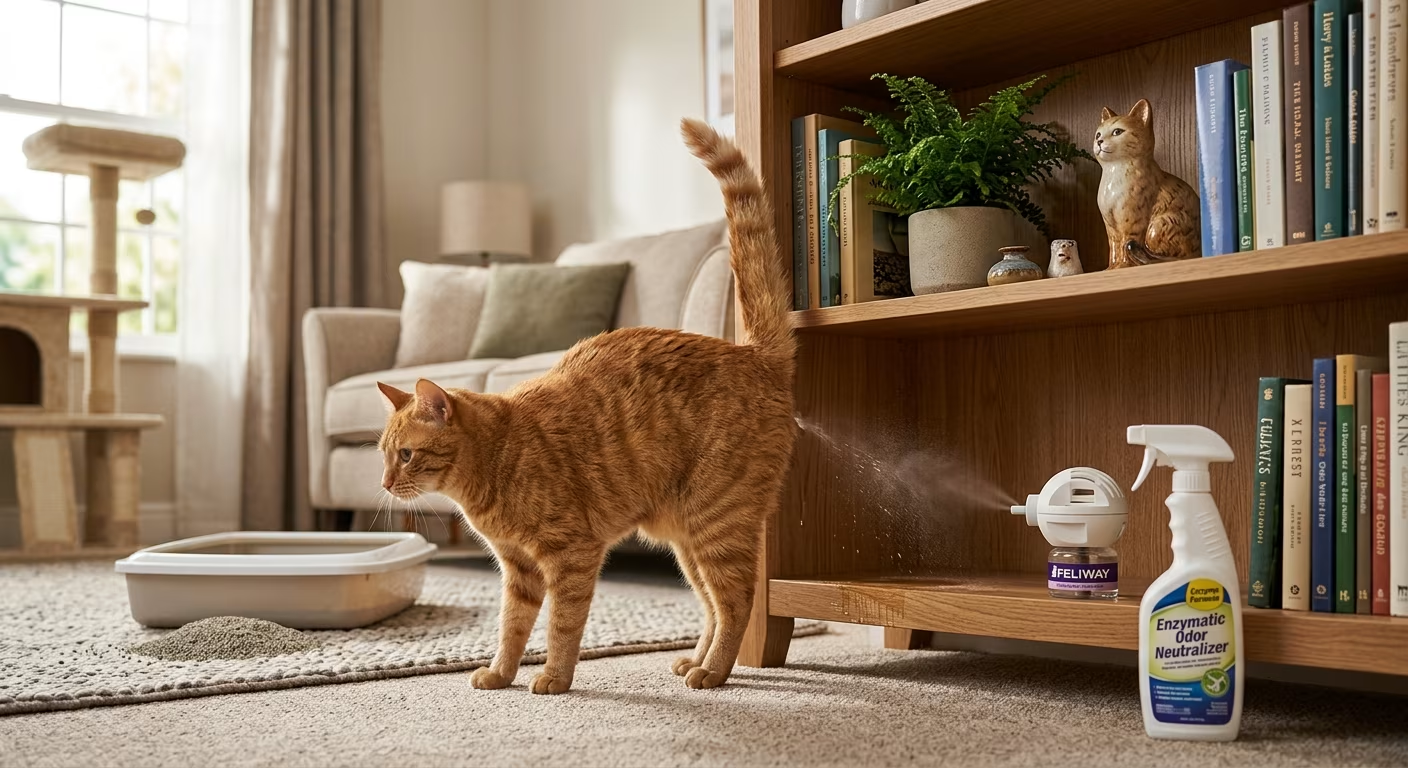
When a cat sprays, they will usually sniff intently or rub on the surface, back up to it, and raise their tail. Their tail then quivers back and forth and they release a small amount of urine. A cat’s back feet may also tread on the floor.
💡 Quick tip from experience: If you find a large wet puddle on the floor, that’s likely a litter box problem, not spraying. Spraying leaves a small, damp patch usually at nose height on a wall or door.
🔍 Why Do Cats Spray? The Real Reasons
Understanding why your cat sprays is the real key to stopping it. Territorial marking, also known as urine marking or spraying, is the act of purposefully urinating in an area as a way of communicating and this behavior is normal in cats and used commonly in the wild or in outdoor settings.
Here are the most common triggers I see:
1. 🏠 Territorial Communication
Cats communicate with each other through urine spraying. In general, cats are solitary creatures, and even with multiple cats in a household, they will seek out areas to claim as their own. If one cat feels like another is encroaching on her space or trying to take her resources food, toys, cat trees, litter boxes she may spray urine.
Real example: I worked with a family who adopted a second cat. Within a week, their older cat started spraying the sofa. The older cat was simply telling the newcomer: “This is mine.” Sound familiar?
2. 🐾 Response to Outdoor Cats
Indoor cats that live in proximity to neighborhood cats may also spray. The presence of cats outside the house creates a perceived territorial threat to an indoor cat, who will then spray as a sign that the territory is occupied with the idea of discouraging the outside cat from hanging around.
3. 😰 Stress and Anxiety
Cats are very sensitive to their physical and social environment. Remodeling, purchasing new furniture, adding or losing a pet or person these may all be important triggers.
A hungry cat that is faced with an empty food bowl, or an indoor/outdoor cat that is waiting for a door to open, may spray urine usually close to the source of frustration.
Real example: I once consulted with a cat owner who changed her work schedule. Her previously well-behaved cat started spraying the front door every afternoon. The cat was anxious about the change in routine. Once we established a consistent feeding and play schedule, the spraying stopped within two weeks.
4. 🧬 Hormonal Drive (Intact Cats)
Both male and female cats can mark with urine. Urine marking is most common in intact (non-neutered) male cats. When an intact male sprays urine, it will have the characteristic “tom cat” odor that is strong and pungent.
Female cats spray too, particularly when they are in heat or receptive to mating. Some may also spray as a way to mark territory or because they’re feeling anxious most common in unspayed cats, but spayed females may also spray due to an underlying behavioral or medical issue.
5. 🩺 Medical Issues
Even though cats who urine mark have not been shown to be more likely than other cats to have abnormalities on a urinalysis, medical causes can contribute to the underlying stress or anxiety. Urinary tract infections, metabolic diseases, and neurological disorders can also play a role in a cat starting to spray.
In one study of urine marking cats, 38% were found to have a urogenital medical condition and/or crystalluria a striking statistic that reinforces why a vet visit should always be the first step.
✅ How to Stop Cat Spraying: Proven Steps That Work
Here is the action plan I recommend always starting with your veterinarian and moving step by step from there.
Step 1: Visit Your Veterinarian First
If your cat is spraying, it’s first recommended to have your cat examined by the veterinarian to rule out an underlying medical issue. Your veterinarian will likely recommend blood work and a urinalysis.
If an owner notices symptoms of a urinary problem or is concerned about their pet’s peeing habits, a urine test can reveal whether there is a health concern. “A urinalysis can show us many things,” as veterinary professionals at Texas A&M note.
⚠️ Never skip the vet check. I cannot stress this enough. A spraying cat is sometimes a sick cat. Treating it as a pure behavior problem when there’s an underlying UTI or kidney issue will only prolong your cat’s discomfort.
Step 2: Spay or Neuter Your Cat
This is one of the single most effective interventions available. Neutering is the best way to stop a male cat from spraying, and in female cats only a small percentage will continue to spray after being spayed.
There are also welfare reasons and health benefits for spaying and neutering, like decreasing the likelihood of certain cancers, pyometra in female cats, and increasing life expectancy.
What about cats that are already fixed? According to research, 10% of neutered males spray and 5% of spayed females spray so neutering helps significantly but is not always a complete solution on its own.
Step 3: Reduce and Eliminate Stressors
Stress can trigger cat spraying. To help your stressed cat, start by identifying and eliminating stressors in your cat’s environment.
Ask yourself these questions (I use this checklist with every client):
- Has anything changed at home recently new baby, new pet, new furniture?
- Has your schedule shifted? Are you home at different times?
- Cats feed off of our energy is the stress level in your home higher than usual?
- Is there a new outdoor cat your indoor cat can see through the window?
Ensure your cat feels safe and secure in their environment. Provide plenty of hiding spots, perches, and cozy beds. Using pheromone diffusers like Feliway can help create a calming atmosphere.
Synthetic cat pheromones are available in a spray, diffuser, or collar. Pheromones can help decrease some of the stress that causes marking and can promote calming and secure feelings in cats.
Step 4: Manage Your Multi-Cat Household Carefully
Anxiety between cats in a space can cause cat spraying. If spraying is a problem in your multi-cat household, make sure that every cat feels like she has the important resources available to be comfortable. Be aware of the number of litter boxes, food bowls, and separate areas every cat should feel like their requirements are being met.
The golden rule on litter boxes: Make sure your cat’s litter boxes are clean, accessible, and appealing. The general rule is to have one litter box per cat, plus one extra.
Step 5: Block Views of Outdoor Cats
Cats who spray near a door or window usually are doing so in response to seeing outdoor cats roaming near the house. To deter this behavior, try to block visual access by closing curtains, pulling down shades, or even physically barring the cat’s access to the door or window.
You can also deter outdoor cats from your property by trying these techniques:
- Get motion detectors that release a spray of water, which repels cats without harming them.
- Remove bird feeders and garbage, which attract cats. Spread orange or lemon peels, cayenne pepper, or coffee grounds in your yard cats don’t like the smell of these substances.
Step 6: Clean Sprayed Areas Properly
This step is more important than most people realize. Any time you are cleaning areas that your cat has marked, use an enzymatic cat cleaner to neutralize organic debris and smell. Clean as much of the mess as possible first, then apply the cleaner, work it into the area, and allow the required time prior to blotting up with a clean cloth.
Do not use an ammonia-based cleaner, which may attract your cat to continue to mark the affected area. If not cleaned thoroughly, lingering scent can continue to attract the cat to spray in the area.
Step 7: Enrich Your Cat’s Environment
Boredom can contribute to spraying, so make sure your cat has plenty of stimulation. Interactive toys, puzzle feeders, and regular playtime can help keep your cat mentally and physically engaged.
Enhancing your cat’s environment with toys, climbing structures, and scratching posts can keep them stimulated and reduce the urge to spray.
Step 8: Never Punish Your Cat
I say this to every single cat owner I work with. Never punish your cat for spraying. This will not reduce the behavior it will only result in negative outcomes, such as your cat becoming fearful of you and more stressed.
Punishment increases anxiety and anxiety is one of the main drivers of spraying. You’ll make the situation worse, not better.
📋 Quick Reference: Cat Spraying Solutions at a Glance
| Problem | Solution |
|---|---|
| Hormonal spraying (intact cat) | Spay or neuter |
| Stress-related spraying | Identify & remove stressors, use Feliway diffuser |
| Multi-cat tension | Add litter boxes, separate feeding areas |
| Outdoor cat trigger | Block window views, deter outdoor cats |
| Medical cause | Vet visit with urinalysis & blood work |
| Boredom / under-stimulation | Puzzle feeders, climbing structures, playtime |
| Persistent marking odor | Enzymatic cleaner only (never ammonia-based) |
📊 Track Your Progress
One piece of advice I always give: keep a log. Note the place and number of times your cat sprays, along with the steps you’ve taken to curb the behavior. This will give you a record, so you’ll know if your strategies are working.
Track: date, time, location, and what happened in the hours before. You’ll likely start to see a pattern and patterns lead to solutions.
When to Seek Professional Help
If you have tried the steps above consistently for several weeks and your cat is still spraying, do not give up but do escalate. One study utilizing pheromones for the treatment of urine marking showed a long-term improvement in marking behavior in 77% of cats, which means treatment works sometimes it just requires a more tailored approach.
Sometimes, urinary tract infections or other underlying health issues can contribute to spraying-like behavior. Your veterinarian can also provide behavior support or recommend a referral to a veterinary behaviorist.
Sometimes, behavior modification therapy or medication may be necessary. There is no shame in that it means you are taking your cat’s wellbeing seriously.
🐾 Final Thoughts
Cat spraying feels personal, but it is not. Territorial marking is a natural behavior in cats, and they are not doing it to spite you. Your cat is communicating the only way they know how using the tools evolution gave them.
The key takeaways I want you to walk away with:
- ✅ Always rule out medical causes with your vet first.
- ✅ Spay or neuter if you haven’t already it’s the most effective single step.
- ✅ Reduce stress at home for both your cat and yourself.
- ✅ Clean correctly with an enzymatic cleaner.
- ✅ Never punish. Always redirect with patience.
- ✅ Track everything patterns reveal solutions.
You’ve got this. And so does your cat. 🐱
References
- Cat Behavior Problems Marking and Spraying Behavior. VCA Animal Hospitals. (Reviewed by VCA veterinarians). URL: https://vcahospitals.com/know-your-pet/cat-behavior-problems-marking-and-spraying-behavior
- Urine Marking in Cats. ASPCA (American Society for the Prevention of Cruelty to Animals). URL: https://www.aspca.org/pet-care/cat-care/common-cat-behavior-issues/urine-marking-cats
- The Difference Between Cat Urine Marking and Urinary Problems. Texas A&M College of Veterinary Medicine & Biomedical Sciences. Published July 20, 2023. URL: https://vetmed.tamu.edu/news/pet-talk/urine-marking-vs-problems/
- Diagnosis and Management of Feline Urine Marking. Today’s Veterinary Practice (peer-reviewed clinical journal). Published/Updated February 2022. URL: https://todaysveterinarypractice.com/behavior/on-your-best-behavior-diagnosis-management-of-feline-urine-marking/
- Territorial Marking in Cats. Veterinary Partner Veterinary Information Network (VIN). URL: https://veterinarypartner.vin.com/default.aspx?pid=19239&catId=102901&id=9031530
- Why Is My Cat Spraying in the House and How Do I Stop It? Best Friends Animal Society. URL: https://bestfriends.org/pet-care-resources/why-my-cat-spraying-house-and-how-do-i-stop-it