
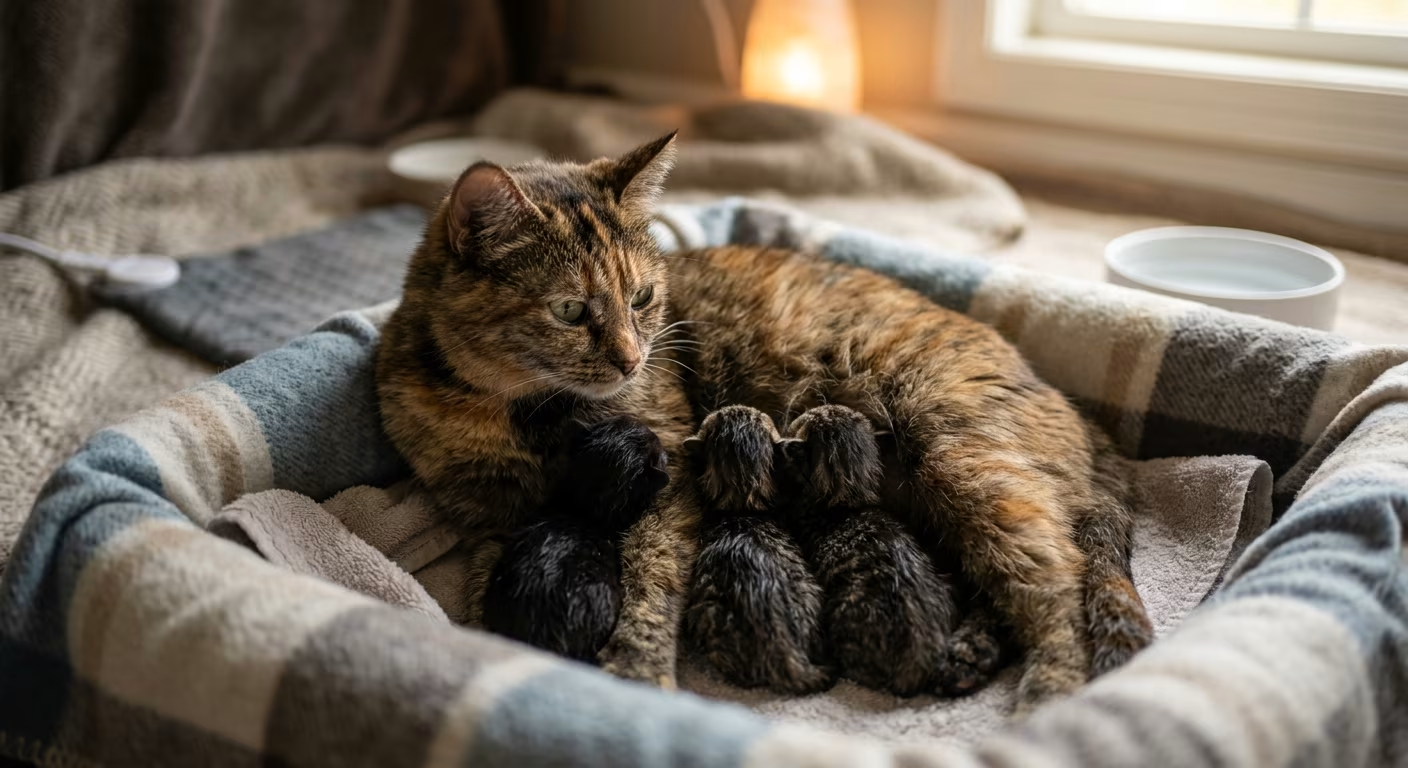
Written from years of hands-on experience supporting queens through labour because knowing what is normal is the best gift you can give your cat on her big day.
I still remember the first time I sat beside a queen in labour. It was 2 a.m., a tortoiseshell called Marble was pacing her nesting box, and her owner was frantically googling “is this normal?” on her phone. The truth is, most cat births go smoothly but knowing exactly what to expect makes all the difference between calm confidence and unnecessary panic. This guide is everything I wish every cat owner knew before their cat went into labour.
🐱 How Long Is a Cat Pregnant Before Giving Birth?
Cat gestation is shorter than you might think. A typical cat pregnancy lasts around 63 65 days (roughly nine weeks). VCA Animal Hospitals and International Cat Care (iCatCare) both confirm this, and it means that from around day 63 after mating, your cat could give birth at any time.
In my experience, keeping a calendar note of when mating occurred (if known) is one of the most practical things a cat owner can do. It removes a lot of guesswork later.
🐾 Setting Up a Nesting Area
Before anything else: prepare a kittening box. This is not optional if you don’t give your cat a safe nesting spot, she will find one herself (often the back of a wardrobe, behind the washing machine, or inside a suitcase you forgot to zip up trust me, I’ve seen it all).
A simple cardboard box lined with old towels, newspapers, or pillowcases works perfectly. VCA Animal Hospitals recommends the box be “warm, cozy, and private, but must be observable.” Place it in a quiet corner away from household traffic, but somewhere you can keep an eye on it.
Pro Tip: Introduce the nesting box at least two weeks before the due date so she becomes comfortable with it. Cats are creatures of habit the earlier she claims it as “hers”, the better.
⚠️ Signs Your Cat Is About to Give Birth
In the days and hours leading up to birth, you will likely notice several behavioural and physical changes. These are your early warning system pay attention to them.
| Sign | When It Typically Occurs | What It Means |
|---|---|---|
| Loss of appetite | 24 48 hours before | Labour is approaching |
| Nesting behaviour | Days before | Instinct to prepare a safe space |
| Restlessness & pacing | Hours before | Contractions beginning |
| Increased vocalization | Hours before | Discomfort from uterine activity |
| Drop in rectal temperature (below 37.8°C / 100°F) | 12 24 hours before | Strong predictor of imminent labour |
| Milk production (drops on nipples) | Days before | Body preparing for nursing |
| Licking genitals excessively | Hours before | Vulva discharging pre-birth fluid |
The temperature drop is one of the most reliable indicators. If you are monitoring your cat’s temperature rectally, a reading below 100°F (37.8°C) usually means labour will begin within 24 hours. It’s not essential to do this, but it’s a useful tool if you want to be more prepared.
🐣 The 3 Stages of Cat Labour What Actually Happens
Cat labour is divided into three stages. Understanding these stages helps you know when things are progressing normally and when something might be wrong.
Stage 1: Cervix Relaxation & Uterine Contractions (Preparation)
This is the “hidden” stage. The cervix and vagina relax, the uterus begins to contract, and the kittens start repositioning for birth. You won’t see your cat straining yet. What you will see is restlessness, repeated visits to the nesting box, panting, and possibly some meowing.
This stage typically lasts between 6 to 24 hours, and it can feel like nothing is happening. Many owners panic during this phase and assume something is wrong. Don’t. Your cat is doing exactly what she should be doing.
Think of it like the warm-up before a marathon the real effort is still to come.
Stage 2: Active Delivery of Each Kitten
Now things get real. Strong abdominal contractions become visible. Your cat will strain actively to push each kitten out. The first kitten is normally the hardest and takes the longest subsequent kittens usually follow more easily.
Each kitten is born inside a sac of fetal membranes and normally arrives headfirst. The mother will usually tear open this sac herself, clearing the kitten’s mouth and nose. The time from the start of active straining to kitten delivery is typically 5 to 30 minutes per kitten.
Between kittens, your cat may rest sometimes for as little as 5 minutes, sometimes for up to an hour or more. This is completely normal. In fact, cats can even pause labour entirely for up to 24 36 hours if they feel unsafe or disturbed so keep noise and activity levels low.
Stage 3: Placenta Delivery
After each kitten, your cat will pass the placenta (afterbirth). It has a distinctive greenish-black appearance which is alarming if you’re not expecting it, but perfectly normal. Your queen will likely eat some or all of the placentas; this is instinctive behaviour from the wild, even if it seems unpleasant to watch.
Try to count the placentas. Ideally, there should be one placenta per kitten. If the number doesn’t match, note it and mention it to your vet a retained placenta can cause serious complications.
Important: Stages 2 and 3 repeat for every kitten in the litter. Most cats deliver their entire litter within 6 hours, though this can vary.
🩺 When to Call the Vet Red Flag Signs During Labour
This is the section I want every cat owner to read and remember. Most cats give birth without any help from you at all. Your job is largely to observe quietly and stay calm. But there are specific warning signs that require immediate veterinary attention.
⚠️ Call Your Vet Immediately If:
- Your cat has been straining intensely for 20 30 minutes without producing a kitten
- A kitten is visible at the vulva but hasn’t been delivered after 10 minutes of strong straining
- Your cat is crying out in obvious pain
- There is fresh blood loss from the vulva for more than 10 minutes
- Your cat appears exhausted, depressed, or has stopped trying to push
- Your cat has a fever (temperature above 39.4°C / 103°F)
- More than 4 hours pass between kittens with visible straining
- You know there are more kittens to come but labour has completely stopped
In my experience, the biggest mistake owners make is waiting too long because they don’t want to “bother” the vet. Please don’t do this. Early intervention can save both the mother and her kittens. Your vet would always rather take a call that turns out to be nothing than be called too late.
🔍 What Is Dystocia? (Difficult Birth in Cats)
Dystocia is the medical term for a difficult or obstructed birth. It can occur when a kitten is malpositioned, too large for the birth canal, or when the uterus fails to contract properly (a condition called uterine inertia).
Certain breeds are at higher risk particularly flat-faced (brachycephalic) breeds like Persians, where the kitten’s large, round head can make passage through the birth canal more difficult. Older queens and obese cats are also at increased risk.
If dystocia is suspected, your vet may use an X-ray or ultrasound to assess the position and size of remaining kittens. In some cases, medications such as oxytocin may be used to stimulate contractions. In severe cases, a caesarean section (C-section) may be required.
🍼 After the Birth: Caring for Mum & Kittens
What’s Normal After Birth
- Small amounts of reddish-brown vaginal discharge for a few weeks this is normal. It should not smell offensive.
- Increased appetite nursing kittens is extremely energy-demanding. Switch to a kitten or pregnancy/lactation formula food for mum.
- Fatigue mum will spend a lot of time resting and sleeping with her kittens. This is expected.
- Occasional vomiting or soft stools after eating placentas usually self-limiting. If it persists beyond one episode, call your vet.
Post-Birth Complications to Watch For
| Condition | Signs to Look For | Action |
|---|---|---|
| Retained placenta | Restlessness, brownish discharge, won’t settle with kittens | Call vet immediately |
| Metritis (uterine infection) | Lethargy, fever, foul discharge, ignoring kittens | Emergency vet visit |
| Mastitis | Hot, swollen, painful mammary glands, foul discharge | Vet treatment needed |
| Eclampsia (Milk Fever) | Panting, muscle tremors, incoordination (3 5 weeks post-birth) | Life-threatening emergency vet immediately |
| Uterine prolapse | Visible tissue protruding from vulva | Rare but critical call vet now |
Eclampsia (milk fever) deserves a special mention because it is often underestimated. It typically occurs 3 5 weeks after birth when a nursing queen’s calcium levels drop due to the demands of milk production. Early signs include restlessness, panting, and muscle tremors it can rapidly progress to seizures and coma if untreated. If you see these signs, stop the kittens from nursing and get to a vet immediately.
🧡 Supporting Mum and Kittens in the First Days
- Keep the environment quiet and warm. Limit visitors and household disruption for at least the first week.
- Monitor kitten weight weekly. Kittens should be gaining weight steadily. A kitten that isn’t nursing well or is losing weight needs veterinary attention quickly.
- Don’t rush to handle the kittens let mum bond with them first. Excessive handling in the early days can stress a new mother and in rare cases lead to rejection of the litter.
- Watch first-time mothers closely. Occasionally, an anxious first-time mum may not instinctively know what to do. First-time mothers should be attended more carefully by their owners.
- Keep fresh water available at all times nursing is incredibly dehydrating for mum.
📋 Quick Reference: Cat Birth at a Glance
| Topic | Key Facts |
|---|---|
| Gestation length | ~63 65 days (58 70 day range) |
| Stage 1 duration | 6 24 hours |
| Time per kitten (Stage 2) | 5 30 minutes each |
| Total labour duration | Usually under 6 hours (pauses possible) |
| Intervention needed? | Rarely most cats birth unassisted |
| Emergency threshold (straining) | 20 30 mins with no kitten = call vet |
💬 Final Thoughts From Someone Who’s Seen Many Litters Born
Cat birth is one of nature’s most efficient processes. Cats are remarkably capable mothers, and the vast majority of births happen without any drama or need for human intervention. Your role is to observe, keep things calm and quiet, and know when to reach out for help.
The most important things you can do are: prepare a good nesting space, know the warning signs, have your vet’s number on hand, and trust your instincts. If something feels wrong, it probably is don’t hesitate to make that call.
And if everything goes smoothly? Sit back, stay quiet, and enjoy the miracle of a litter of kittens arriving into the world. There’s nothing quite like it.
References
- International Cat Care (iCatCare) “Cat Birth.” International Cat Care. Last updated June 5, 2024. https://icatcare.org/articles/cat-birth
- VCA Animal Hospitals “Pregnancy and Parturition in Cats.” VCA Animal Hospitals. https://vcahospitals.com/know-your-pet/pregnancy-and-parturition-in-cats
- PDSA (People’s Dispensary for Sick Animals) “Cat Labour: A Guide to Your Cat Giving Birth.” PDSA. https://www.pdsa.org.uk/pet-help-and-advice/pet-health-hub/other-veterinary-advice/cat-labour-a-guide-to-your-cat-giving-birth
- PetMD “Cat Pregnancy: Signs, Stages and Care.” PetMD. Updated August 17, 2023. https://www.petmd.com/cat/conditions/reproductive/cat-pregnancy-and-kittens-complete-guide
- Lein, D.H. “Estrous length, pregnancy rate, gestation and parturition lengths, litter size, and juvenile mortality in the domestic cat.” Journal of the American Animal Hospital Association, 31(5), 429 433. 1995. https://doi.org/10.5326/15473317-31-5-429