
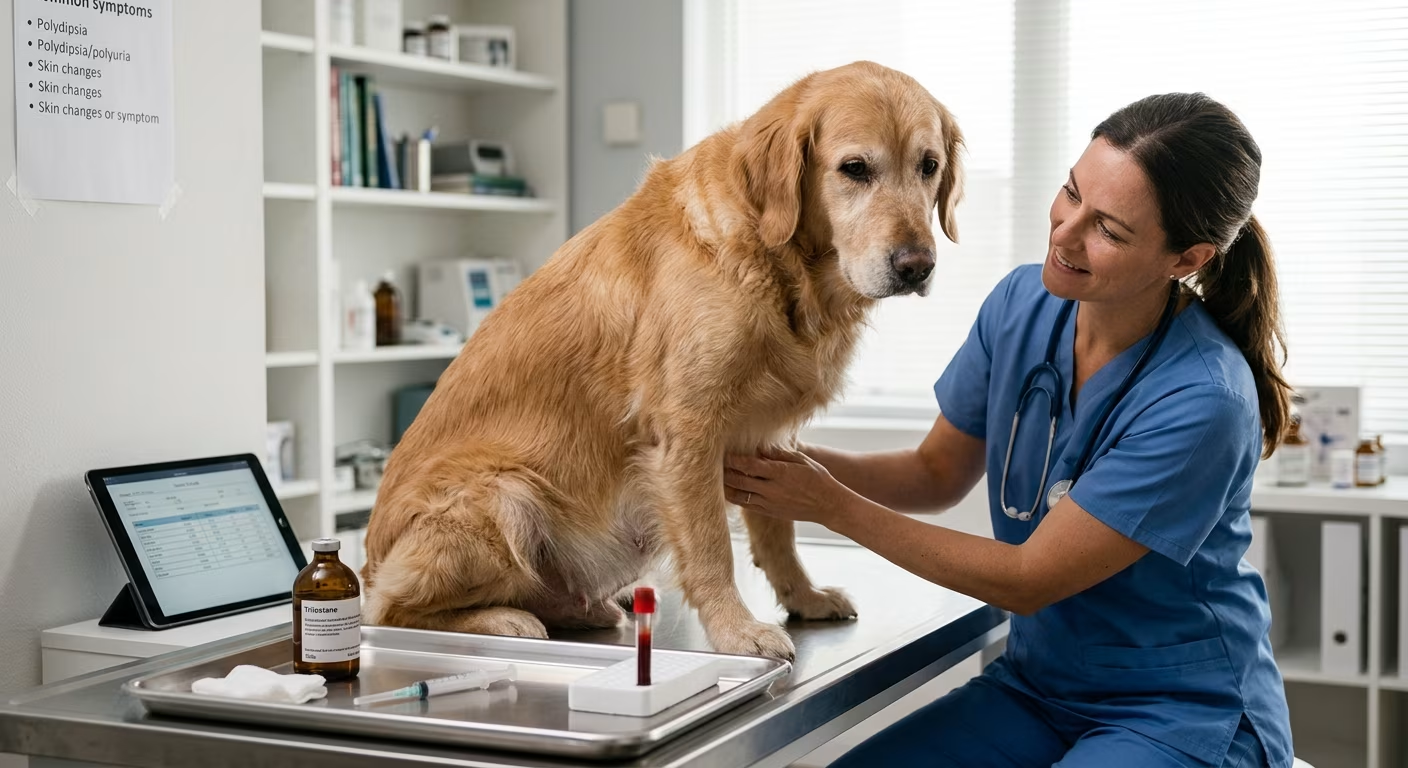
As someone who has worked alongside veterinary teams for years, one of the most common conversations I have with worried dog owners goes something like this: “He’s just getting old, right?” And my answer is always the same “Maybe. But let’s rule out Cushing’s first.”
Cushing’s disease (also called hyperadrenocorticism or hypercortisolism) is one of those conditions that quietly creeps up on dogs and their owners. It mimics normal aging so well that many dogs are already in advanced stages before anyone realizes something is wrong. The good news? Once diagnosed, it can be managed and your dog can have a good quality of life.
In this guide, I’ll walk you through everything you need to know: what Cushing’s actually is, how to recognize it, how vets diagnose it, and what treatment looks like in the real world.
What Is Cushing’s Disease in Dogs?
Cushing’s disease occurs when a dog’s body produces too much of the hormone cortisol. Cortisol is your dog’s natural stress hormone it helps regulate metabolism, immune response, blood sugar, and the body’s reaction to stress. In the right amounts, it’s essential. In excess, it wreaks havoc.
The adrenal glands (two small glands that sit just above the kidneys) are responsible for producing cortisol. They receive their “instructions” from the pituitary gland, a pea-sized structure at the base of the brain. When something goes wrong in this communication system, cortisol production spins out of control.
“Think of cortisol as the volume dial on your dog’s stress response. Cushing’s is what happens when that dial gets stuck on full blast permanently.”
Types of Cushing’s Disease
There are three main types, and understanding which type your dog has directly affects their treatment plan:
| Type | Cause | How Common? |
|---|---|---|
| Pituitary-Dependent (PDH) | Benign tumor in the pituitary gland overproduces ACTH hormone | ~85% of cases |
| Adrenal-Dependent (ADH) | Tumor on the adrenal gland itself (can be benign or malignant) | ~15% of cases |
| Iatrogenic Cushing’s | Caused by long-term use of steroid medications | Less common; fully reversible |
The pituitary-dependent form is by far the most common. That benign brain tumor sounds alarming, but it’s typically very small and, other than driving the overproduction of cortisol, rarely causes neurological issues.
Which Dogs Are Most at Risk?
I’ve seen Cushing’s in all kinds of dogs, but there are clear patterns. Certain breeds show up in my clinic far more often than others when it comes to this condition.
Most commonly affected breeds (pituitary-dependent):
- Miniature and Toy Poodles
- Dachshunds
- Yorkshire Terriers
- Bichon Frises
- Miniature Schnauzers
- Jack Russell Terriers
- Lhasa Apsos
Age: Cushing’s disease predominantly affects middle-aged to older dogs, typically between 7 and 12 years old. I always tell owners of dogs over 7 to keep Cushing’s on their radar during routine checkups.
Size: Smaller breeds tend to develop pituitary-dependent Cushing’s. Adrenal-dependent Cushing’s is more often seen in medium to large breeds.
Sex: Research suggests females may be slightly overrepresented, though this varies across studies.
That said any dog can develop Cushing’s. Don’t dismiss symptoms just because your dog isn’t a “typical” candidate.
Signs & Symptoms: What to Watch For
Here’s the tricky part. Cushing’s symptoms develop gradually over months or even years. Because the changes are slow, many owners chalk them up to normal aging. I can’t tell you how many times a dog has come into my clinic at an advanced stage simply because the owner thought their dog was “just getting older.”
The most common signs include:
| Symptom | What You Might Notice |
|---|---|
| 🚰 Increased thirst & urination | Water bowl constantly empty; needing to go out at night; accidents indoors |
| 🍖 Increased appetite | Dog seems insatiably hungry; begging more than usual |
| 🐾 Pot belly appearance | Round, sagging abdomen even without weight gain |
| 🐕 Hair loss / thinning coat | Symmetrical hair loss on the body (not head or legs), dull brittle coat |
| 😴 Lethargy & muscle weakness | Tires quickly; difficulty climbing stairs or getting up |
| 💨 Excessive panting | Panting even when cool or at rest |
| 🔬 Skin changes | Thin, fragile skin; bruising easily; calcium deposits under skin |
| 🔁 Recurrent infections | Frequent UTIs, skin infections that keep coming back |
Real-world example: One of my clients brought in her 9-year-old Miniature Poodle, Bella, because she’d been having “accidents” at night. The owner assumed it was just bladder weakness from old age. But Bella was also constantly thirsty, had noticeably thinned out on her flanks, and had a slightly distended belly. Classic Cushing’s presentation confirmed within a week of testing.
⚠️ Important: Not every dog with Cushing’s will show all of these signs. Some dogs may only have two or three subtle symptoms. When in doubt, see your vet.
Why Early Detection Matters
Cushing’s left untreated doesn’t just make your dog uncomfortable it can lead to serious, life-threatening complications. These include:
- High blood pressure (hypertension)
- Blood clots in the lungs or legs
- Kidney damage
- Diabetes mellitus
- Recurrent and severe skin or urinary tract infections
The sooner Cushing’s is identified and managed, the better the outcome. This is why I always emphasize routine wellness checkups for middle-aged and senior dogs early blood work changes can hint at Cushing’s even before obvious symptoms appear.
How Is Cushing’s Disease Diagnosed?
This is where I need to be honest with you: diagnosing Cushing’s is not simple. It takes a layered approach, and no single test is 100% definitive. Here’s how we work through it:
Step 1: Physical Exam & History
Your vet will examine your dog and ask about symptoms you’ve noticed at home including how long they’ve been going on. Details like when the excessive thirst started, or when the pot belly developed, really help build the picture.
Step 2: Basic Blood Work & Urinalysis
The first tests ordered are a complete blood count (CBC), chemistry panel, and urinalysis. These won’t diagnose Cushing’s on their own, but they provide important clues such as elevated liver enzymes (especially alkaline phosphatase), high cholesterol, changes in white blood cell counts, and dilute urine.
Step 3: Specific Hormone Tests
If basic tests raise suspicion, your vet will move to targeted hormone testing:
| Test | What It Does |
|---|---|
| ACTH Stimulation Test | Measures adrenal gland response to a dose of ACTH hormone; blood drawn before and after injection |
| Low-Dose Dexamethasone Suppression Test (LDDST) | Currently the preferred screening test; assesses how the body responds to a synthetic cortisol injection |
| Urine Cortisol:Creatinine Ratio (UCCR) | Highly sensitive but not specific; best collected at home to avoid stress affecting results |
| High-Dose Dexamethasone Test (HDDST) | Helps differentiate pituitary-dependent from adrenal-dependent Cushing’s |
Step 4: Imaging
An abdominal ultrasound is commonly used to check the size and shape of the adrenal glands, and to look for adrenal tumors. An MRI may be recommended in some cases to look at the pituitary gland directly.
Pro tip from experience: The UCCR urine sample should ideally be collected at home, not at the vet clinic. The stress of a vet visit can elevate cortisol levels and skew the results something I always remind owners about!
Treatment Options: What Are the Choices?
I want to be upfront here most cases of Cushing’s can be managed, but not fully cured (unless the dog has adrenal-dependent disease and surgery is an option). The goal of treatment is to improve quality of life and reduce the risk of complications.
Medication (Most Common Approach)
Two main drugs are used:
- Trilostane (Vetoryl): This is the FDA-approved first-line treatment for both pituitary and adrenal-dependent Cushing’s in dogs. It works by blocking an enzyme needed for cortisol production. Given orally, usually once daily.
- Mitotane (Lysodren): A chemotherapy-type drug that selectively destroys cortisol-producing cells in the adrenal gland. Used less frequently today but still an option.
Dogs on trilostane need regular monitoring typically blood tests every 3 months for the rest of their lives to ensure cortisol is being appropriately controlled and dosages are correct.
Surgery
For adrenal-dependent Cushing’s where a tumor is localized and hasn’t spread, surgical removal of the adrenal tumor is the only potential cure. However, this surgery is complex and carries significant risks, so it’s typically performed at specialist referral centers.
Iatrogenic Cushing’s
If Cushing’s developed due to long-term steroid medication, the treatment is to gradually taper and discontinue the steroids under veterinary supervision. Never stop steroid medications abruptly always follow your vet’s instructions.
Supportive Nutrition
Dogs with Cushing’s tend to have elevated cholesterol and triglycerides, so a low-fat, high-fiber diet is often beneficial as a complement to medical treatment.
Prognosis: What to Expect
This is the question every owner asks me, and I always try to give an honest, balanced answer.
Cushing’s disease does shorten a dog’s lifespan, but with proper management, many dogs live comfortably for years after diagnosis. Expected survival following diagnosis typically ranges from one to five years, depending on the type of Cushing’s, the dog’s overall health, and how well treatment is managed.
The most important thing you can do? Keep those follow-up appointments. Medication dosages often need adjustment as the disease progresses, and consistent monitoring is what keeps your dog comfortable and safe.
Frequently Asked Questions
Can Cushing’s disease be cured in dogs?
For most dogs (those with pituitary-dependent Cushing’s), the condition can be managed but not cured. If your dog has an adrenal tumor that hasn’t spread, surgical removal may offer a cure.
Are there natural remedies for Cushing’s in dogs?
No. There are currently no proven natural remedies for Cushing’s disease. Dogs require veterinary-prescribed oral medication or surgery. Please don’t delay treatment while trying unproven alternatives it can seriously harm your dog.
Can a dog with Cushing’s live a normal life?
Yes, with proper treatment and monitoring, many dogs with Cushing’s maintain a very good quality of life. The earlier it’s caught and managed, the better the outcome.
Is Cushing’s disease painful for dogs?
Cushing’s itself isn’t typically painful, but the complications (infections, blood clots, weakness) can significantly affect comfort and quality of life if left unmanaged.
When Should You See a Vet?
If your dog is over 7 years old and you’ve noticed any combination of the following, it’s time to book an appointment:
- Drinking and urinating more than usual
- A pot-bellied appearance
- Hair thinning or loss on the body
- Increased appetite despite no change in food
- Unexplained lethargy or muscle weakness
- Recurrent skin or urinary infections
Don’t wait for all the signs to appear. One or two symptoms in an older dog warrant a conversation with your vet.
References
- U.S. Food & Drug Administration. Treating Cushing’s Disease in Dogs. FDA Consumer Updates. Last reviewed 2023.
- Merck Veterinary Manual. Cushing Disease (Pituitary-Dependent Hyperadrenocorticism) in Animals. Updated September 2024.
- University of Illinois College of Veterinary Medicine. Cushing’s Disease in Dogs: It’s Not Normal Aging. January 2026.
- Cornell University College of Veterinary Medicine Riney Canine Health Center. Cushing’s Syndrome.
- O’Neill DG et al. Epidemiology of hyperadrenocorticism among 210,824 dogs attending primary-care veterinary practices in the UK from 2009 to 2014. Journal of Small Animal Practice, 2016. DOI: 10.1111/jsap.12523
- Scudder CJ et al. Survival analysis of 219 dogs with hyperadrenocorticism attending primary care practice in England. PMC / Veterinary Record, 2020.